Skip to content
Home
About
The Editors
The Paul A. Baran—Paul M. Sweezy Memorial Award
Privacy Policy
Magazine
__________
Subscribe
Back Issues
Archives
__________
Submit an Article
My MR Subscription Account
My MR Press Store Account
Contact
Press
__________
Browse Store
New Books
Catalogs
__________
Submit a Book Proposal
Request an Exam, Review or Desk Copy
Sales and Distribution
Help
Donate
MR Online
SEARCH
Home
About
The Editors
The Paul A. Baran—Paul M. Sweezy Memorial Award
Privacy Policy
Magazine
__________
Subscribe
Back Issues
Archives
__________
Submit an Article
My MR Subscription Account
My MR Press Store Account
Contact
Press
__________
Browse Store
New Books
Catalogs
__________
Submit a Book Proposal
Request an Exam, Review or Desk Copy
Sales and Distribution
Help
Donate
MR Online
Close Menu
Books
Authors
On The Site
Also in this issue
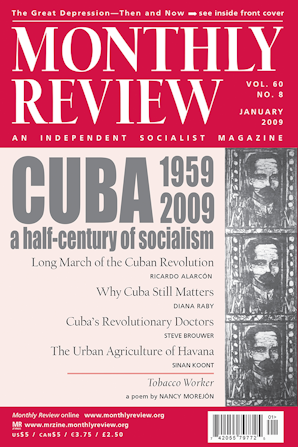
Why Cuba Still Matters
The Long March of the Cuban Revolution
The Cuban Revolutionary Doctor: The Ultimate Weapon of Solidarity
The Urban Agriculture of Havana