Did Karl Marx have a theory of race and capitalism? Not exactly, but he theorized on these issues over four decades and much of what he wrote still speaks to us today. At a time of global and U.S. struggles for liberation in the face of a deeply racialized fascist threat, these writings are worth revisiting. | more…
The reissuing of Reluctant Reformers can inform our attempts to grapple with how the unity of the oppressed can be forged in such a way that the interests of the historically marginalized do not continue to get…well, marginalized. | more…
The COVID-19 pandemic has brought into sharp relief the deep structural problems affecting nonwhite racialized workers in the core and periphery. Yet, many social scientific analyses of the global political economy, at least in the pre-COVID era, are race neutral or willfully indifferent to the persistent racial pattern of global inequalities. Even if they do address legacies of colonialism, they ignore the ongoing racial logics of oppression embedded therein. | more…
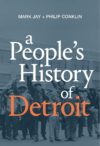
It is a testament to the clarity and scope of Mark Jay and Philip Conklin’s vision that A People’s History of Detroit is replete with insights for those trying to make sense of these deeply uncertain and troubling times. In it, Jay and Conklin show that “in order to give a true ‘people’s history,’ one must do more than condemn the malevolence of those in power and celebrate the activists who have struggled for justice; one must also come to terms with the social system in which these people lived. In our case, this means confronting the logic of capital.” | more…
The story of the Indigenous movement to stop the Dakota Access Pipeline in 2016 and 2017 has been the subject of numerous articles and documentaries, many of which depict it mainly as an environmental and climate justice campaign to stop the pipeline from crossing the Mni Sose (Missouri River), just north of the Standing Rock Sioux Reservation in North Dakota. Nick Estes and Jaskiran Dhillon’s edited collection Standing with Standing Rock tells a richer and more complex story of decolonization and indigenization from the frontlines. | more…
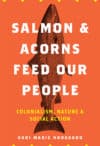
Fundamental to Kari Marie Norgaard’s Salmon and Acorns Feed Our People is the seizure of land most evident in the overtly violent era of state-sanctioned frontier genocide and forced relocation of the Karuk. Settler colonialism, Norgaard reminds us, is an ongoing state-led project up to this day—it is not just a moment relegated to the past and, thus, the inherent treatment of Native Americans as relics of U.S. history must be challenged. | more…
In his book Chicano Communists and the Struggle for Social Justice, Enrique M. Buelna examines the life of Ralph Cuarón, a Mexican-American or Chicano seaman, furniture maker, father, husband, and lifelong activist who joined the Communist Party at age 19 during the Second World War. The Communist Party, however, largely ignored Mexican workers and local members were not pleased with his organizing of that segment of the working class. In the early twenty-first century, the Mexican question remained, although it became known as the “Latino question” after considerable immigration from Central America in the 1980s and ’90s. In their book The Latino Question: Politics, Labouring Classes, and the Next Left, Armando Ibarra, Alfredo Carlos, and Rodolfo D. Torres deconstruct the word Latino, arguing that it homogenizes an extremely diverse population. | more…
Among ethnic disasters of the past few decades, few can match in intensity or have been reported in the media more extensively than those of the Indigenous in Guatemala. The social structure of the nationÑits hierarchy, driven by a light-skinned population, most of whom are ethnically mestizo but who do not identify with the purely IndigenousÑits history, and its small size make it an important site for the documentation and reporting of ethnic disputes and differences. | more…
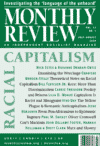
The entire United States has been upended by weeks of protests, extending to over 150 cities, sparked by the racist police murder of George Floyd. The present special issue of Monthly Review is devoted to exploring the complex interweaving of the classical Marxian critique with the rapidly developing critique of racial capitalism. | more…
Indigenous and African resistance and intellectual traditions provide key insights to the very nature of capitalism and how it has unfolded throughout space and time, its tentacles emanating from Europe and stretching across the globe in the forms of imperialism and colonialism. | more…