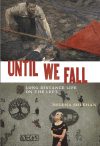
NEW! Until We Fall: Long Distance Life on the Left
Offers vivid first hand accounts of encounters with fellow socialists following the fall of the Soviet Union
Most westerners glimpsed the breakup of the Soviet Union at a great distance, through a highly distorted lens which equated the expansion of capitalism with the rise of global democracy. But there were those, like Helena Sheehan, who watched more keenly and saw a world turning upside down. In her new autobiographical history from below, Until We Fall, Sheehan shares what she witnessed first-hand and close-up, as hopes were raised by glasnost and perestroika, only to be swept away in the bitter and brutal counterrevolutions that followed.
In Until We
October 2023 (Volume 75, Number 6)
At the center of the United States’s New Cold War MR editors write, is the World Trade Organization, “the crown jewel of the liberal international order.” After China’s admittance into the WTO did not lead to the collapse of socialism in that country, presidents from Obama to Biden have gutted the institution and escalated the tariff war, all in the name of protecting the so-called rules-based international order. | more…

Unequal Value Transfer from Mexico to the United States
Matteo Crossa reveals the true nature of unequal value transfer from Mexico to the United States. Going beyond a simple tally of wages lost versus remittances, Crossa’s research demonstrates the true magnitude of the value stolen from Mexico, negating the claim that its manufacturing sector is a boon to the Mexican working class. | more…
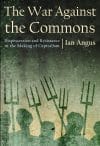
New! The War Against the Commons: Dispossession and Resistance in the Making of Capitalism
A unique historical account of poor peoples’ self-defence strategies in the face of the plunder of their lands and labor
For five centuries, the development of capitalism has been inextricably connected to the expropriation of working people from the land they depended on for subsistence. Through ruling class assaults known as enclosures or clearances, shared common land became privately-owned capital, and peasant farmers became propertyless laborers who could only survive by working for the owners of land or capital.
As Ian Angus documents in The War Against the Commons, mass opposition to dispossession has never ceased. His dramatic account provides new insights into an opposition that ranged
September 2023 (Volume 75, Number 4)
What is the New Washington Consensus? In this month’s Notes from the Editors, MR editors discuss Washington’s fundamental shift in its approach to China, moving from an emphasis on neoliberal globalization toward a new, more aggressive policy pursuing U.S. military and industrial supremacy. | more…

New! The Prosecution of Professor Chandler Davis: McCarthyism, Communism, and the Myth of Academic Freedom
The Prosecution of Professor Chandler Davis tells the true tale of a mathematician who found himself taking an involuntary break from chalking equations to sit opposite a row of self-righteous anti-Communist congressmen at the height of the McCarthy era. Courageously asserting the First Amendment to confront a system rapidly descending into fascism, Davis testified before the House Un-American Activities Committee (HUAC). He became one of a small number of left wingers who served time for contempt of Congress. | more…
July-August 2023 (Volume 75, Number 3)
Writing at the end of the nineteenth century, Frederick Engels foresaw that without disarmament, Europe would soon be plunged into war. Modern weaponry has made the question of disarmament even more urgent. In this month’s “Notes from the Editors,” the editors put forward the objectives for a contemporary socialist disarmament strategy. | more…
June 2023 (Volume 75, Number 2)
As the Pentagon gains approval for yet another record-breaking budget, the editors examine a perennial question: Why does the United States oligarchy need such an outsized military machine in the modern era? The answer is found in the current era of naked imperialism, accompanied, as always with deadly militarism. | more…
Essays on The Political Economy of Africa
These essays, by two of the foremost scholars who worked in the Marxist tradition on African economic and social issues, offers an overview of socialism and economic development, and of nationalism and revolution in sub-Saharan Africa; of labor, peasantries, and populism. It includes case studies of Tanzania, Rhodesia, and Mozambique.
May 2023 (Volume 75, Number 1)
This month, MR editors examine elements of the New Cold War rarely discussed in the mainstream media: the U.S. sabotage of the Nord Stream pipeline, which ensured Europe’s continued reliance on U.S. natural gas, and U.S. plans to transport B61-12 nuclear warheads to locations within striking distance of Russian targets. | more…
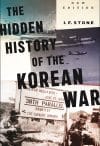
Introduction to the New Edition of ‘The Hidden History of the Korean War’
First published in 1952, I. F. Stone’s Hidden History of the Korean War was a stunning indictment of the U.S. war machine and the mass media’s unquestioning acceptance of the government’s deception. In their new introduction, Tim Beal and Gregory Elich explore Hidden History‘s continuing relevance to current events, including the rapidly escalating New Cold War. | more…
April 2023 (Volume 74, Number 11)
“There is no longer any question that the United States is waging a New Cold War,” MR editors write in this month’s “Notes from the Editors.” This war, waged not only against Russia, but increasingly against China, whose approach to global governance is seen as a threat to U.S. imperialism. | more…