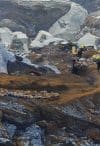
Arianto Sangadji traces the relationship between the state and mining capital in Indonesia throughout the historical capitalist development of the country from Dutch colonialism to the contemporary practices of multinational mining corporations. While these powerful firms have generated significant profits, they are also associated with dispossession, environmental degradation, and ruthless labor exploitation, spurring resistance from the local populations. | more…
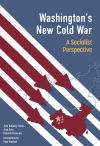
As the American people delude themselves once more into thinking of the United States as a liberating force for peace in the world, Waging a New Cold War invites us, instead, to think for ourselves. Behind the scenes the plans to wage war have been laid—either by proxy, as in Ukraine, or directly, against the U.S.’s old twentieth-century foes. Waging a New Cold War: A Socialist Perspective makes astrong case that, as the official story is laid out by government propagandists, and as the mainstream media provides cover, the aim of this latest set of American military escapades remains the same as ever: Maintenance of U.S hegemony in the global financial system. Foregrounded with an introduction by Vijay Prashad, this cogent collaboration puts forth three essays that illustrate clearly that, while the Cold War against the Soviet Union ended, the “cold war” against the “enemies” of the United States did not. Furthermore, its authors lay out evidence that the U.S. establishment has been willing to risk nuclear winter—in other words, mutual annihilation—to hold onto economic primacy. And they show that, while Russia and China can each be criticized, justifiably, for their violations of human life and dignity, neither, on its own, threatens the eruption of a Third World War and the end of the human race as we know it. Just in time, we have in our hands an intelligent text that strengthens our struggle against the cynical machinations of the American military behemoth and its propaganda machine. | more…
In this reprint of the February 1994 “Notes from the Editors,” former MR editors Harry Magdoff and Paul M. Sweezy ask: “The United States could not have won a more decisive victory in the Cold War. Why, then, does it continue to act as though the Cold War is still on?” | more…
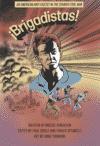
In this exhilarating graphic novel about the Spanish Civil War, three American friends set off from Brooklyn to join in the fight—determined to make Spain “the tomb of fascism” for the sake of us all. Together they defy the U.S. government and join the legendary Abraham Lincoln Brigade, throw themselves into battle, and conduct sabotage missions behind enemy lines. As Spain is shattered by the savagery of combat during the Spanish Civil War (1936-1939), readers see the darkening clouds of the World War to come. | more…
For nearly sixty years, H. Bruce Franklin has built a body of work that touches on everything Herman Melville to the military-industrial complex to a lowly, little-known fish that is a historical keystone of the U.S. fishing history. | more…
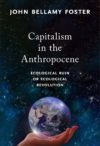
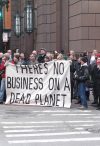
Over the last 11,700 years, during which human civilization developed, the earth has existed within what geologists refer to as the Holocene Epoch. Now science is telling us that the Holocene Epoch in the geological time scale ended, replaced by a new more dangerous Anthropocene Epoch, which began around 1950. The onset of the Anthropocene Epoch is characterized by an “anthropogenic rift” in the biological cycles of the Earth System, marking a changed reality in which human activities are now the main geological force impacting the earth as a whole, generating at the same time an existential crisis for the world’s population. | more…
Climate imperialism has emerged as a new—and potentially even the most lethal—form of imperialism in the world economy today. Confronting it requires recognizing and dealing with all its different aspects. But it also requires addressing the monopolies of knowledge created by the global regime of intellectual property rights that has been instituted and cemented by hegemonic world powers. | more…
Through this dramatic history by Stefan Heym, we become intimate with the story of the maverick and internationalist Karl Radek, known as the editor of the newspaper of record throughout the Soviet era, Isvestia. Beginning as Lenin’s companion at the dawning of the October Revolution, Radek later became Stalin’s favorite intellectual – only to find himself entangled in the great purges of the late 1930s and scripting his own trial. In this, his last historical novel, Heym reveals Radek as a brilliant Bolshevik journalist and politician who found himself at every turn of the wheel of fate. | more…
Increasing numbers of left-wing activists around the world are turning to Vincent Bevins’s The Jakarta Method to learn more about the horrific atrocities committed by the United States against peoples’ struggles for the right to self-determination in the so-called postcolonial era. In particular, the book describes how imperialist expansion destroyed revolutionary struggles in the third world. | more…
To get a firm grasp on the current situation in Ukraine, we must understand the central role that the United States and NATO have played in the conflict from the start, beginning in 2014 with the U.S.-engineered Maidan coup. | more…
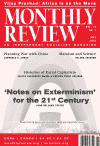
In 1980, the great English historian and Marxist theorist E. P. Thompson wrote the pathbreaking essay “Notes on Exterminism, the Last Stage of Civilization.” Although the world has undergone a number of significant changes since, Thompson’s essay remains a useful starting point in approaching the central contradictions of our times, characterized by the planetary ecological crisis, COVID-19 pandemic, New Cold War, and current “empire of chaos”—all arising from features deeply embedded in the contemporary capitalist political economy. | more…
The Council on Foreign Relations (CFR) is the ultimate agenda-setting, strategic planning, and consensus-forming organization of the U.S. capitalist ruling class. The latest book to come out of the CFR orbit, Strategy of Denial (2021), thus provides an opportunity to concretely observe how the monopoly capitalist ruling class is preparing the people of the United States for what could be a catastrophic world war. | more…