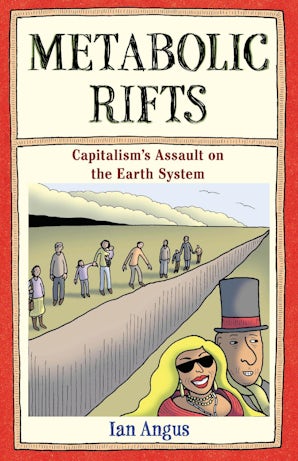
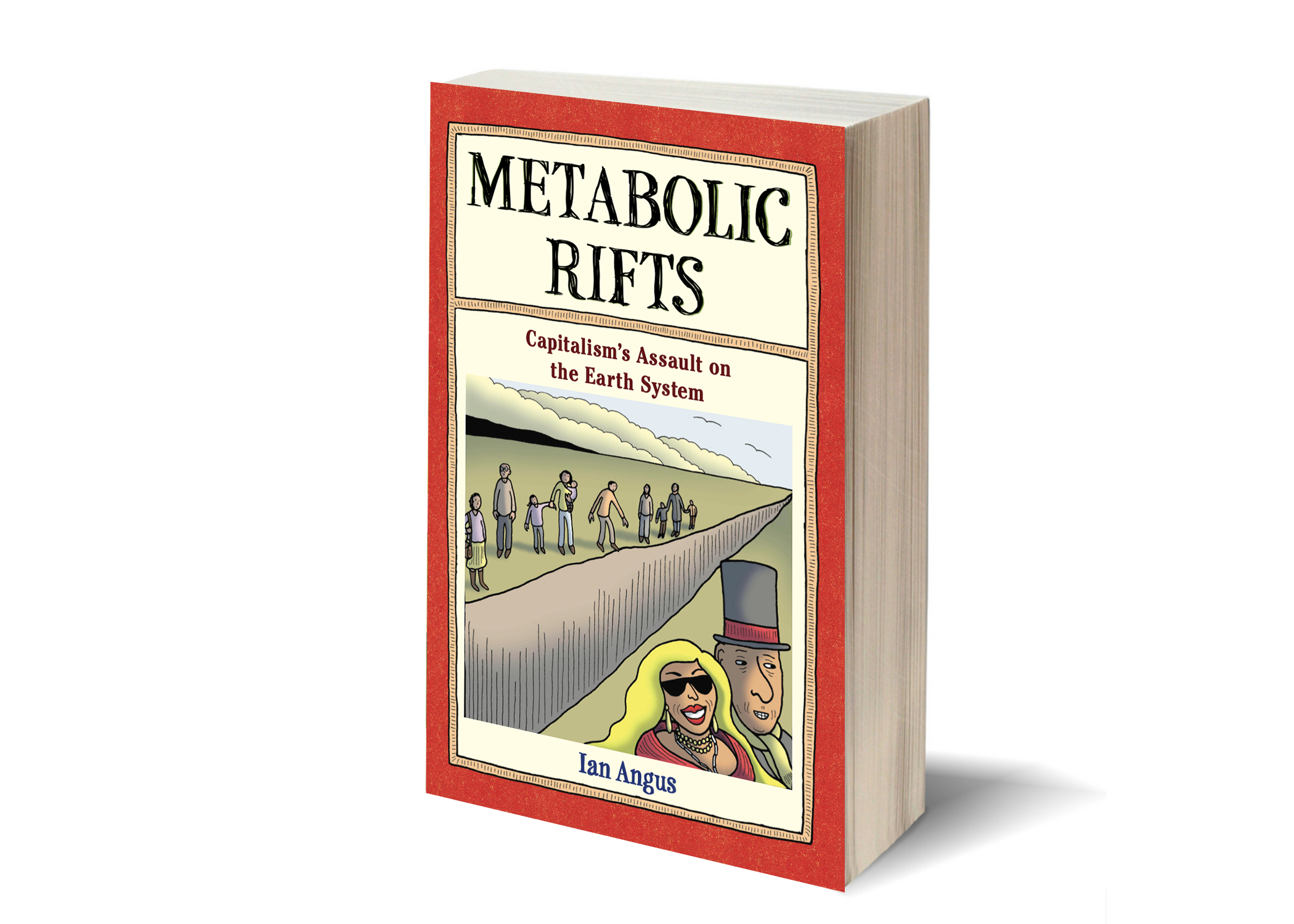
Recent release: Ian Angus’ “Metabolic Rifts”
REVIEWS
Tempest Mag, “Confronting the ecological crisis”, by Paul Fleckenstein
“The book accessibly explains metabolic rift theory, the key insight of Marxist ecology. For Karl Marx, Frederick Engels, and subsequent Marxists in this tradition, the Earth’s metabolism is not a metaphor but a material reality. Interacting social, biological, chemical, and geological processes make life possible….”
Counterpunch, “Ecology and Humanity: Reviewing Metabolic Rifts: Capitalism’s Assault on the Earth System” by Seth Sandronsky
“With a planetary heat wave causing wildfires to ravage Europe and the western U.S., as droughts pummel the African continent and Latin America, and glaciers collapse in the Himalayas, humanity is at-risk of runaway climate chaos like never before. There’s a history here of how our environment arrived at this breaking point…”
Yorkshire Bylines, “Capitalism’s fundamental conflict with the environmental limits of our planet” by Bryn Glover
“The general lack of awareness among the public, the popular press and politicians of the challenges posed by the so-called ‘nine planetary boundaries’ is a source of great concern. To paraphrase Greta Thunberg, with all the available data, ‘it is difficult to believe either in general ignorance or in wilful disregard by those who could make changes’. It was therefore heartening to come across a new publication entitled ‘Metabolic Rifts: Capitalism’s Assault on the Earth System’, by Ian Angus, editor of the online ecosocialist journal, ‘Climate and Capitalism’…”
A Marxist View of Current Events, by Steve Leigh
“Marx and Engels were committed to the idea that humans are part of nature. Their undeserved reputation as wanting industry to ride roughshod over the earth needs refutation. This is not only important for historical accuracy. The main reason for clarification of the record is to chart a way forward. Rejecting Marx and Engels on Ecology means rejecting the only possible solution to the crisis assaulting the earth system, socialist revolution. If capitalism is the cause of the crisis, it is capitalism that needs to be abolished. Those who oppose that solution will turn to methods that will fail or end up in despairing abstention from the struggle. This is the main reason that the work of Ian Angus, John Bellamy Foster and others around Monthly Review is so vital. They have systematically rehabilitated the Marxist tradition on Ecology. There are of course long running left wing debates about MR’s politics on economics, imperialism, China as socialist etc. However, the contribution of books by MR on Ecology is on solid ground….”
Ecology, Economy and Society, the INSEE Journal, “Severed Universal Metabolism and Predatory Logic: Groundwork for an Ecosocialist Critique of Capitalism” by Varun Wigmal:
“The bulk of the book is an attempt to explain the core concepts of ecological Marxism and political ecology by detailing the metabolic processes vital to Earth’s systems. In Chapter 10, Angus discusses the carbon cycle’s breakdown—which is driving climate change—and in Chapter 11, he describes how industrial agriculture is pumping nitrogen into Earth’s systems faster than any natural process through fertilizers, disrupting the nitrogen cycle. Angus proposes a radical reduction in the use of nitrogen and chemical fertilizers as a solution to environmental damage, and envisions a time when it will be possible to feed people without them. These chapters are the strength of Angus’ book. They demonstrate how Marxists should use science to understand the complexity of the damage inflicted by capitalism on the Earth’s systems and develop viable solutions based on the idea of hope without optimism, i.e., confronting adversity rather than denying it, as promulgated by Marxist literary critic Terry Eagleton (2015). This is explored more prominently in the final chapter of the book, “A Fight for Survival”, which explores how scientists often come close to recognizing that the environmental crises we face are systemic ones, but seldom draw radical conclusions that require structural changes. This chapter also demonstrates that although science tells us that we need to take urgent measures, real and substantial change requires a long-term, cooperative approach between scientists, activists, and workers. Angus emphasizes that the reordering of capitalism through investing in green energy is nothing but a smokescreen, obscuring its systemic logic of appropriating nature and labour. He reminds us of the importance of living in tune with the natural world…..”
The Resolute Reader:
“In Metabolic Rifts Ian Angus reminds us that there is a deep tradition of revolutionary politics closely engaged with scientific research, that offers an understanding of the chaos around us. It also offers us a strategy to change it. I urge readers to read it….” Read more…
Socialist Worker-UK, an interview by Martin Empson:
“At the heart of your analysis is Karl Marx’s ‘metabolic rift’ theory. Can you explain its relevance for activists today?“
Metabolic rift theory provides an essential framework for understanding environmental crises. It shows how and why capitalism is engaged in an unceasing war against nature. Life and the environmental conditions that sustain life depend on metabolic cycles, in which essential materials are constantly recycled. For example, through natural processes, including the breath of plants and animals, our planet emits and absorbs over 350 billion tons of carbon dioxide every year. For millions of years, emission and absorption have been roughly balanced. The carbon cycle makes life on earth possible by constantly circulating and reusing the matter and energy that life requires. Capitalism, in contrast, is linear—any part of production that doesn’t contribute to profit is discarded, not recycled. As the Marxist philosopher Istvan Meszaros wrote, the measure of capitalism’s advance is “the efficacy with which waste can be generated and dissipated on a monumental scale”. Most notably, capital’s dependence on fossil fuels produces carbon dioxide as waste, far more than natural processes can absorb.”‘ Read more…
APPEARANCES
Ecosocialism 2026: Resistance, Decolonisation, Liberation
Ian Angus was at Ecosocialism 2026, representing the journal Climate and Capitalism, and offering his book in person! Capitalist imperialism is promoting the far right everywhere, enforcing neoliberal policies, and imposing military aggression and recolonisation on weaker nations. It has no answers to the climate crisis and no solutions for housing and cost of living. The Ecosocialism 2026: Resistance, decolonisation, liberation conference will bring together activists from across the Asia-Pacific and beyond to share experiences in how we can resist Capitalism’s depravity and build the mass movements we need for system change. Featuring: Sabrina Fernandes; Ian Angus; Ayesha Ahmad; Remah Naji; and more.
Marxist Education Project:
“The MEP’s Ecosocialist Study Group, hosted by Fred Murphy, welcomed new participants as they read and discussed a range of important new works on the science and politics of the climate emergency, the nature of economic and ecological crises, and related topics….” More here
Ecosocialism Forum:
Ian Angus introduced his new book Metabolic Rifts: Capitalism’s Assault on the Earth’s System, in an event cosponsored with, and hosted by, Jess Spear of the Global Ecosocialist Network. They were joined by Helena Sheehan, Inea Lehner, and David McNally.
Green Left
Listen! Macro N Cheese
On a podcast that critically examines the working-class struggle through the lens of MMT or Modern Monetary Theory, host Steve Grumbine spoke with Ian in an interview which explored the deep, sometimes invisible ways that capitalism disrupts the planet’s fundamental life cycles –– from soil depletion and artificial fertilizers to the carbon cycle driving global warming. Listen on Angus’ website, Climate and Capitalism if you prefer not to use spotify, or below…
EXCERPT
(As republished in Canadian Dimension)
Karl Marx famously wrote that we humans make our own history but not under conditions of our own choosing. He was referring to the limits that the recent past imposes on our thinking and ability to act, but his insight also describes the restrictions that the Earth System placed on our ancestors for hundreds of thousands of years.
The first modern humans evolved from earlier primates about 300,000 years ago. These homo sapiens were every bit as intellectually and physically capable as we are: place them in the 21st century and they could quickly learn to use smartphones and automobiles. But for 300,000 years, all of our ancestors lived in small groups of hunter gatherers until, beginning about 11,000 years ago, agriculture was invented in Mesopotamia and then independently invented in parts of China, Central America, India, Africa, North America, and South America.
The world’s first great cities—Çatalhöyük in Turkey; Eridu, Uruk, and Ur in Mesopotamia; Ain Ghazal in Jordan; Mehrgarh in Pakistan; Memphis in Egypt, and more—were built during the same period of rapid economic and social change.
Global climate played a critical role in this worldwide change from small nomadic groups to farming and the first great civilizations. A study of ice-core data by scientists at the Potsdam Institute for Climate Impact Research, shows the average annual temperature in Greenland over the past 100,000 years. The first 90 percent of that time was characterized by repeated glacial advances and retreats: the global climate was not only cold, it was in general extremely variable.
Climate historian William J. Burroughs, who calls that time the reign of chaos, argues compellingly that so long as rapid and chaotic climate change continued, agriculture and settled life were impossible. To succeed, agriculture needs not just warm seasons, but a stable and predictable climate—and indeed, not long after the chaos ended, humans on five continents independently took up farming as their permanent way of life. “Once the climate had settled down into a form that is in many ways recognizable today, all the trappings of our subsequent development (agriculture, cities, trade etc.) were able to flourish.”
The Holocene epoch, which began when the ice last retreated, has been one of the longest stable warm periods in the last half million years. From 11,700 years ago to the 20th century, the average global temperature didn’t vary by more than one degree Celsius—up or down half a degree. That is not to say that Holocene weather was without extremes: the one-degree average variation included droughts, famines, heat waves, cold snaps, and intense storms. But overall, it was marked by a not-too hot, not-too cold Goldilocks climate.
Rarely has a new scientific concept won wide support as quickly as the Anthropocene. The decade following Paul Crutzen’s spontaneous declaration produced a large body of research that explored aspects of the Earth System’s fast-changing state. In 2012, when the International Geosphere-Biosphere Programme (IGBP) and other Earth System science organizations held a conference on global change in London, over 3,000 people attended in person and 3,000 more attended online. The meeting’s final declaration was unequivocal:
Research now demonstrates that the continued functioning of the Earth system as it has supported the well-being of human civilization in recent centuries is at risk. Without urgent action, we could face threats to water, food, biodiversity and other critical resources: these threats risk intensifying economic, ecological and social crises, creating the potential for a humanitarian emergency on a global scale.
Breaking planetary boundaries
Where human well-being is concerned, everything we can see in the Anthropocene points to serious deterioration of the conditions that have supported large and complex human societies for 10,000 years. That insight led a commission of leading Earth scientists to research and define the specific limits within which Holocene-like conditions would continue.
They developed the “Planetary Boundaries framework,” which identifies nine systems and processes that determine the environmental limits within which humanity can safely operate, without risking catastrophe.
The boundaries are not themselves tipping points—they can better be compared to guardrails on a mountain road that keep cars from getting dangerously close to the cliff edge.
By combining improved scientific understanding of Earth System functioning with the precautionary principle, the Planetary Boundaries framework identifies levels of anthropogenic perturbations below which the risk of destabilization of the Earth System is likely to remain low—a ‘safe operating space’ for global societal development. A zone of uncertainty for each Planetary Boundary highlights the area of increasing risk.
The initial framework, published in 2009, identified nine critical Earth System processes, three of which had already been crossed. Subsequent updates have refined most of the definitions and proposed hard numbers for all of them.
For information on the current status of the Planetary Boundaries, I recommend the annual Planetary Health Check, edited by Planetary Boundaries Science, an international scientific partnership established in 2023 “to elevate global awareness and drive action towards maintaining planetary stability.” The following summary is based on their 2024 report, and from the more technical report published in the journal Science Advances in September 2023.
Of the nine boundaries, only two are within the safe level. The Ozone layer in the upper atmosphere has stopped shrinking and is becoming thicker, providing improved protection from harmful ultraviolet radiation. This is a result of the 1987 Montreal Protocol, which outlawed the chemicals that were destroying ozone.
Atmospheric aerosol loading, the amount of small particle pollution in the air, varies a from place to place, but is within the safe level globally, although the researchers report “high uncertainty” about where the zone of increasing risk starts.
Of the rest, the 2023 update found that one—ocean acidification—was “at the margin of the safe operating space, and the trend is worsening.” Subsequent research, not yet formally incorporated in the framework, shows that ocean acidification crossed into the danger zone as early as 2000.
Climate change: Atmospheric CO2 levels are at a 15-million-year high, and global radiative forcing continues to drive the warming trend that has accelerated since the late-20th century. The planetary boundary is 350 parts per million, and the zone of increasing risk is from 350 4o 450. It reached 430 in July 2025, and global average temperatures are now higher than at any point since human civilizations emerged on Earth.
Change in biosphere integrity: Of the world’s estimated eight million plant and animal species, around one million are currently threatened with extinction, and the current rate of actual extinctions is 100 times greater than the historic background rate. At the same time, the proportion of food energy (net primary production) consumed by humans is increasing, squeezing out other species. The decline in the diversity, extent, and health of living organisms and ecosystems threatens the biosphere’s ability to regulate the state of our planet by impacting the energy balance and chemical cycles on Earth.
Land system change: The transformation of natural landscapes, such as through deforestation and urbanization, diminishes ecological functions like carbon sequestration, moisture recycling, and habitats for wildlife. Global and regional forests have been steadily declining over the last few decades across all major forest biomes. Most regions are already in the High Risk Zone, well beyond their safe boundaries.
Freshwater change: Alteration of the global hydrological cycle impacts all natural functions on land including carbon sequestration and biodiversity, and can lead to large ecological shifts. Local streamflow and soil moisture loss have been in the increasing risk zone since early in the 20th century.
Biogeochemical flows: Massive overuse of mined phosphorus and synthetic nitrogen in agriculture has exceeded safe boundary levels, driving significant ecological change, including air and water pollution, eutrophication, poisonous algal blooms, and dead zones in lakes and oceans—as well as contributing to global heating. Current annual use is about 23 million metric tons of phosphorus and 190 million metric tons of nitrogen: the safe levels would be under 11 million tons of phosphorus and 62 million tons of nitrogen.
Novel entities: As we’ve seen with the ozone layer, and with pesticides and bees, synthetic chemicals can disrupt essential Earth System processes, and yet hundreds of thousands of artificial substances have been released into in the environment, including microplastics, endocrine disruptors, nuclear waste and genetically modified organisms, that have never been tested singly or in combination, and many more are released every year. The risks are unknown, but potentially so high that the Planetary Boundary for untested novel substances has been set at zero. ***
In The Ecological Rift: Capitalism’s War on the Earth, John Bellamy Foster, Richard York, and Brett Clark argue that scientific research on planetary boundaries proves that “we are at red alert status. If business as usual continues, the world is headed within the next few decades for major tipping points along with irreversible environmental degradation, threatening much of humanity.”
Although the ecological crisis is often described only in terms of climate change, “the analysis of planetary boundaries and rifts, as they present themselves today, helps us understand the full scale of the ecological crisis now confronting humanity. The simple point is that the planet is being assaulted on many fronts as the result of human-generated changes in the global environment.” What we face is not an assemblage of separate problems, but “a potential terminal event in geological evolution that could destroy the world as we know it.”
Planetary boundaries and tipping points, leading to the irreversible degradation of the conditions of life on Earth, may soon be reached, science tells us, with a continuation of today’s business as usual. The Anthropocene may be the shortest flicker in geological time, soon snuffed out. Since they wrote that, the number of broken boundaries has more than doubled, but those in power have made no serious effort to prevent or even mitigate a terminal event.
In the 1930s, the German socialist Walter Benjamin wrote: “Marx says that revolutions are the locomotives of world history. But the situation may be quite different. Perhaps revolutions are not the train ride, but the human race grabbing for the emergency brake.” We face not just metabolic rifts, but metabolic chasms. Capitalism’s inability to operate within reasonable planetary boundaries means that our exit from the Holocene is speeding up and may be irreversible. It is time to grab the brake….. To read more, get your copy here