

Recently reissued: The Rainbow Challenge (Excerpt)
September 14, 2026
"Jesse Jackson’s first presidential primary race in 1984 should have been a wakeup call for the Democratic Party...."
September 14, 2026
"Jesse Jackson’s first presidential primary race in 1984 should have been a wakeup call for the Democratic Party...."
September 14, 2026
The latest: The London Review of Books' Letters section features a quote from John Bellamy Foster's introduction....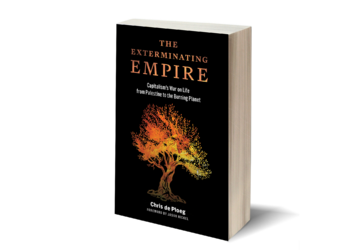
September 13, 2026
REVIEWS: Counterpunch, “Capitalism is Waging War on Palestine While Creating a Burning Planet” by Daniel Falcone: Daniel Falcone: What is the central argument of The Exterminating Empire and how is... READ MORE
September 8, 2026
Featured review: "Severed Universal Metabolism and Predatory Logic: Groundwork for an Ecosocialist Critique of Capitalism" by Varun Wigmal (INSEE Journal); "The bulk of the book is an attempt to explain the core concepts of ecological Marxism and political ecology by detailing the metabolic processes vital to Earth’s systems. In Chapter 10, Angus discusses the carbon cycle’s breakdown—which is driving climate change—and in Chapter 11, he describes how industrial agriculture is pumping nitrogen into Earth’s systems faster than any natural process through fertilizers, disrupting the nitrogen cycle. Angus proposes a radical reduction in the use of nitrogen and chemical fertilizers as a solution to environmental damage, and envisions a time when it will be possible to feed people without them. These chapters are the strength of Angus’ book. They demonstrate how Marxists should use science to understand the complexity of the damage inflicted by capitalism on the Earth’s systems and develop viable solutions based on the idea of hope without optimism, i.e., confronting adversity rather than denying it
August 13, 2026
The latest, from Paul Buhle: "Abolitionists and social reformers of all kinds, with a wide Yankee following augmented by many recent German immigrants, sought to take things beyond the uneasy accommodation of white populations to each other across existing political lines. In Wisconsin and in Chicago most notably, these would include “Abe’s Boys” enrolling in the army of the Union. Not so in the Southern Illinois, two hours’ drive from my hometown. The whites who immigrated northward from the near South, largely uneducated and lacking skills, came to be considered almost a species in themselves...."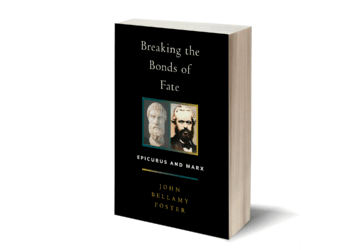
August 12, 2026
The latest: The title of John Bellamy Foster’s latest book "derives from Lucretius’s famed De Rerum Natura, usually translated as On the Nature of Things. Lucretius wrote: “Again, if all movement is always interconnected, the new arising from the old in a determinate order – if the atoms never swerve so as to originate some new movement that will break the bonds of fate, the everlasting sequence of cause and effect – what is the source of the free [will] … .” ([On the Nature of Things,] Book II, 251ff) This exact quotation, moreover, was one made by Karl Marx in his Epicurean Notebooks, compiled in preparation for his doctoral thesis: “The Difference Between the Democritean and Epicurean Philosophy of Nature” of 1841. From this point of departure, Foster initiates the reappraisal of two thousand years of philosophical controversy...."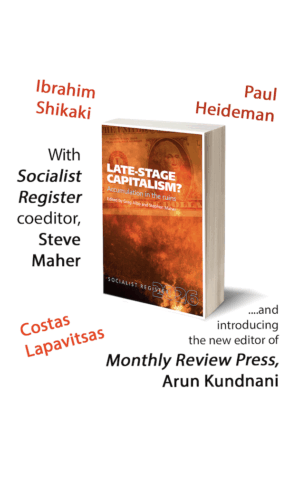
August 3, 2026
This was the first live launch of the Socialist Register in New York City, with our brand new editor, Arun Kundnani, alongside the (relatively new) coeditor of the Socialist Register, Steve Maher, joined by three contributors to this year’s volume: Ibrahim Shikaki, Costas Lapavitsas, and Paul Heideman. Together they considered these and other questions:
July 8, 2026
The latest: "Guyana Institute of Historical Research Nineteenth Conference 2026: There is a public park in the North London borough of Brent named after Sir William Gladstone, the former Liberal Prime Minister, who had spent many years using Dollis Hill House as his weekend retreat...."
July 2, 2026
The latest: "....Is 'subaltern' a code for the working classes? Is 'hegemony' an economic force or a cultural power? Are 'organic intellectuals' inherently more progressive? The answers to such questions depend upon your choice of scholar—whether, say, you’re reading a Foucauldian literary critic or a Marxist sociologist, a subaltern historian or a posthuman anthropologist. Over the years, Gramsci’s writing has been polished by critics of such diverse persuasions that it has now become a mirror: One opens his books only to confirm one’s own beliefs....when the English writer Andy Merrifield arrived in Rome, feeling 'washed out intellectually,' Gramsci came to the rescue...."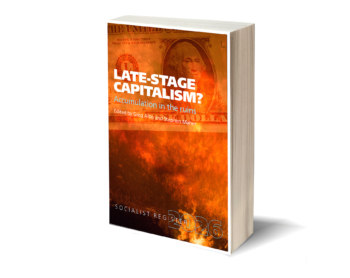
June 24, 2026
June 27th, join the Marxist Education Project for an online launch of Socialist Register 2026, featuring Catarina Principe together with Michael Roberts, Alfredo Saad-Filho, and Stephen Maher.