Vulnerable Israel Review
New This Week

Vulnerable Israel

In this review of Ilan Pappé's Israel on the Brink, Tom Mayer considers the famed historian's assessment of the increasingly precarious Zionist state. In the book, Mayer writes, readers will find a thoughtful consideration of the past, present, and potential events that could shape a new vision for Palestine.
+ read more
read our latest issue

June 2026 (Volume 78, Number 2)

June 2026 (Volume 78, Number 2)
Notes from the Editors buy this issue Subscribe Articles
June 2026 (Volume 78, Number 2) Notes from the Editors

June 2026 (Volume 78, Number 2)

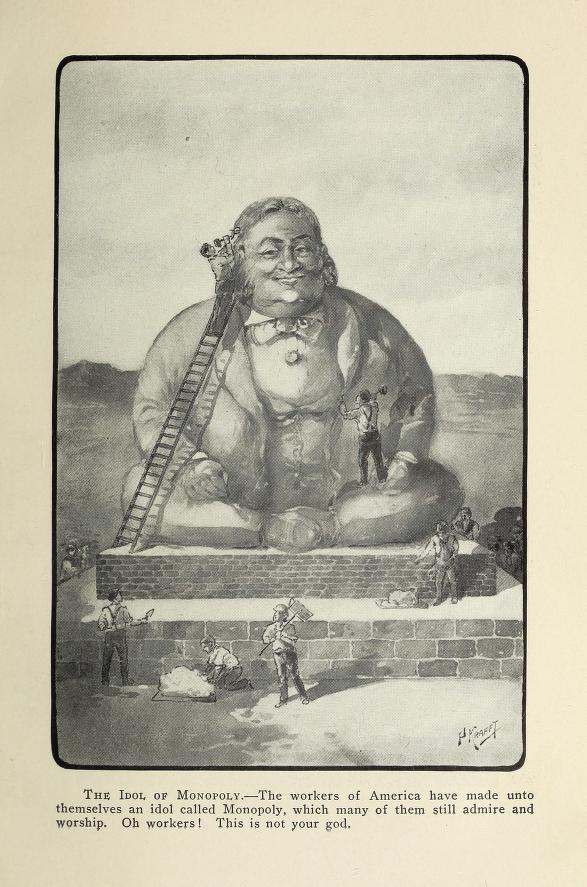
June's "Notes from the Editors" revisits the fundamental concept of monopoly capitalism as expounded by Paul A. Baran and Paul M. Sweezy in their pathbreaking Monopoly Capital. The recent resurgence of the debate around Baran and Sweezy's work, the editors write, misses not only the enduring relevance of their analysis in an era of megacorporations and hyperscalers, but the revolutionary understanding of the economic system that arises from such an analysis.
+ read more
The Destruction of Reason and the Rise of Ecofascism in the United States Review of the Month

The Destruction of Reason and the Rise of Ecofascism in the United States

MR associate editor Brett Clark and editor John Bellamy Foster explore "the death drive of late imperialism" and its manifestations in an ecological crisis that is not parallel to, but inseparable from, increasingly open ecofascism in the United States. Drawing from Luckács's Destruction of Reason and István Mészáros's work on imperialism, Clark and Foster present a materialist analysis that illuminates the cult of unreason so pervasive under capitalism and imperialism while pointing to a path forward that is grounded in the historical-materialist Marxist tradition.
+ read more
The Thermodynamics of Capital: Artificial Intelligence, Energy Crisis, and Ecological Crisis Article

The Thermodynamics of Capital: Artificial Intelligence, Energy Crisis, and Ecological Crisis

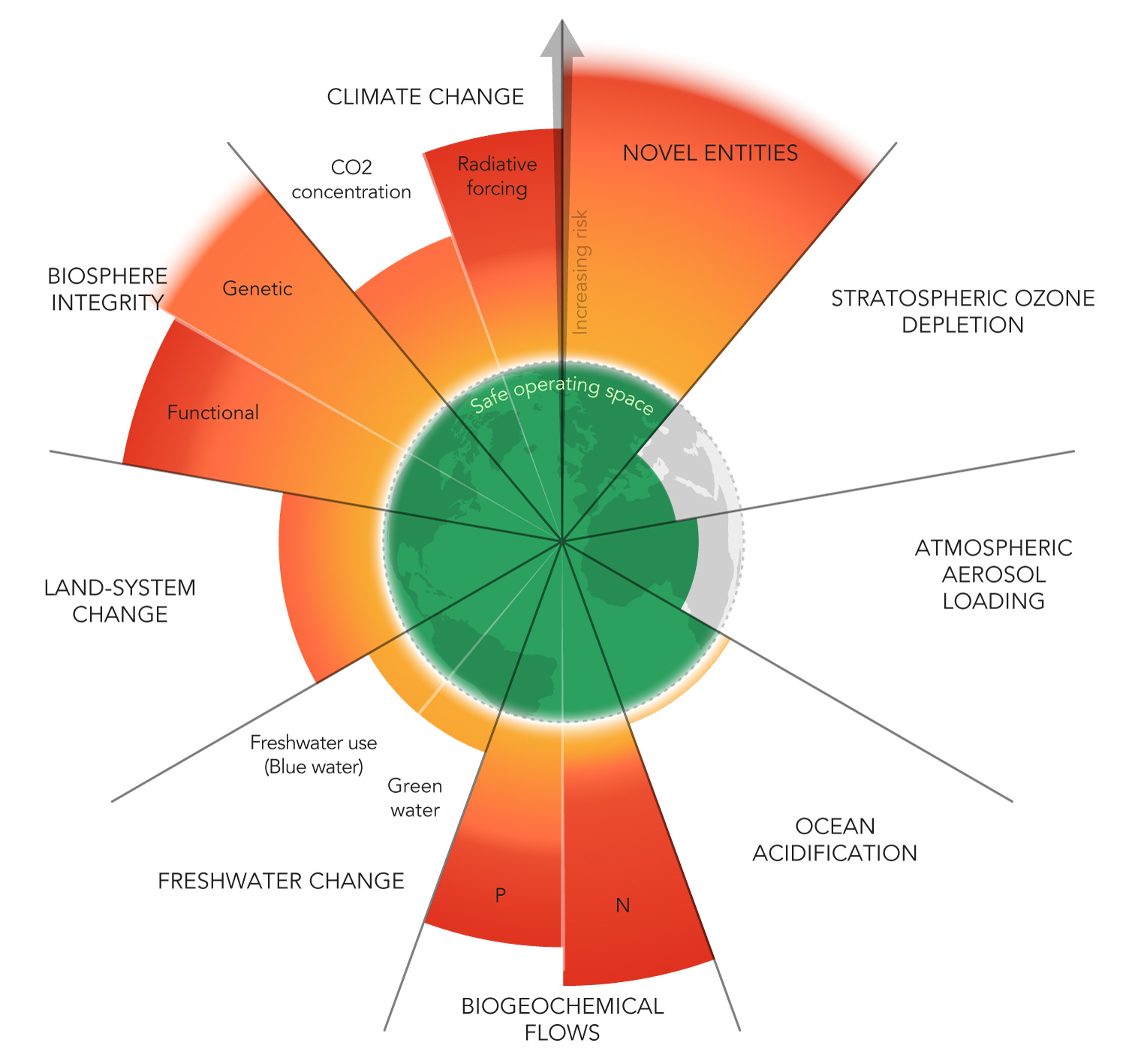
Te Li unravels the myth of digital dematerialization so heavily promulgated by Silicon Valley and other AI boosters, which presents the technology as a phenomenon that has escaped the material realm and thus, entropy itself. In fact, Li shows that the material and energetic requirements of AI places it squarely in the physical realm, then situates the technology within the context of the metabolic rift under capitalism.
+ read more
Workers Suffer as Wealth Accumulates: Finance as Grift and Other Revelations Article

Workers Suffer as Wealth Accumulates: Finance as Grift and Other Revelations

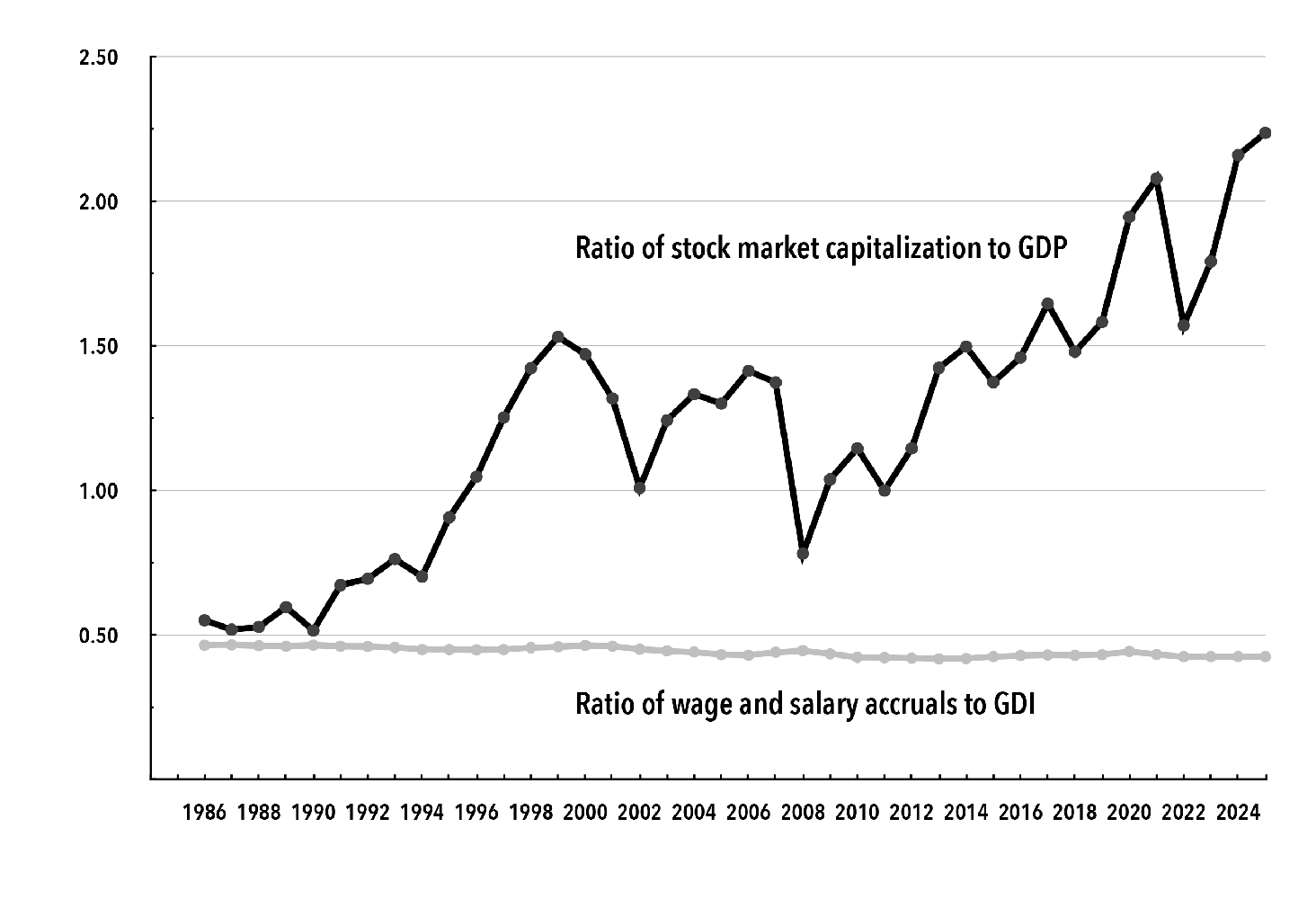
Fred Magdoff presents an incisive, data-driven analysis of the current state of the worker laboring under the domineering system of financialization and, in particular, private equity. In his conclusion, Magdoff asks: "Is there a way out of twenty-first-century 'normal' for labor?" "The key way out," he answers, "is an extraordinary growth of workers' power in order to combat the extraordinary power of capital"—one rooted in fully democratic socialist production and fundamental equality.
+ read more
The Fetishism of AI Review of the Month

The Fetishism of AI

John Bellamy Foster takes on sweeping questions of artificial intelligence and its role in today's capitalist society. "The Great Houses of AI are divided against themselves and cannot stand," he writes, "If humanity is to flourish, the forces and relations of production must be revolutionized together…creating a world of sustainable human development."
+ read more
Engels’s Dialectics of Nature and Marxist Ecology Article

Engels’s Dialectics of Nature and Marxist Ecology

Yiwen Chen dives deep into Frederick Engels's Dialectics of Nature in order to give context to present-day debates surrounding the juxtaposition of the dialectics of nature and Marxist ecology. "It is hardly surprising that Engels's and Marx's ecological ideas are not entirely identical," Chen writes. "Nevertheless, their ideas do possess an inherent consistency."
+ read more
Marx on the Circular Economy Article

Marx on the Circular Economy

Today, many use the term "circular economy" to describe a shift in the use of industrial waste products in a way that does not challenge the present mode of production. Returning to Marx, Benjamin Selwyn is able to show that this usage of the term is designed to facilitate the acquisitive demands of a capitalist economy, rather than a fundamental shift in resource use.
+ read more
Slipping into Gogol’s “Overcoat”: A Winter’s Tale Article

Slipping into Gogol’s “Overcoat”: A Winter’s Tale

Andy Merrifield reflects on Nikolai Gogol's short story "The Overcoat," tying it to "a distinctively Marxist problematic." In the protagonist of the tale, a Russian counsellor whose life is forever changed by the acquisition of a new overcoat, Merrifield finds a character who, like Marx, knows firsthand what a single coat can tell us about the structures of society.
+ read more
They are killing us off Poetry

They are killing us off

A new poem by Marge Piercy.
+ read more
The Idea of the ‘Uyghur Genocide’ and the Realities of Xinjiang Review of the Month

The Idea of the ‘Uyghur Genocide’ and the Realities of Xinjiang

What is really happening in Xinjiang? Vijay Prashad and Tings Chak write: "There is no evidence of a policy of physical annihilation of the Uyghur peoples by the Chinese government, unlike say, direct evidence of extermination by the Israeli government against the occupied Palestinian people. There are no mass graves and no accusations of systematic killing—the hallmarks of a genocide."
+ read more
The Material Basis of a Spectre: Why China’s Youth Are Rediscovering Mao Article

The Material Basis of a Spectre: Why China’s Youth Are Rediscovering Mao

This article examines the resurgence of interest in Mao Zedong among China's youth, particularly at elite universities. This "Mao fever" reflects a complex mindset: indignation toward social inequality, uncertainty within a brutal job market, and a firm anti-imperialist and patriotic stance amidst the "New Cold War." In Mao’s legacy, a new generation is finding the guidance to navigate the sharpening contradictions of the present day.
+ read more
Yellow Shades upon a Global Color Line: Historicizing Filipino America and the “Deadliest Phase of U.S. Imperialism” Article

Yellow Shades upon a Global Color Line: Historicizing Filipino America and the “Deadliest Phase of U.S. Imperialism”

Michael Viola explores the building of the Filipino identity in the context of U.S. imperialism. The broad-reaching effects of this "deadliest phase of imperialism," combined with pervasive anti-Asian racism in the United States, fuels the idea of a collective political project that "comes with the praxis, the power, and the price of a unique lineage" extending across an ocean and intimately connected to the dark history of U.S. militarism abroad.
+ read more
From Classic Labor to the Labor of the ‘General Intellect’: The Impact of the Digital Intelligence Era on Socialist Labor Theory Article

From Classic Labor to the Labor of the ‘General Intellect’: The Impact of the Digital Intelligence Era on Socialist Labor Theory

Applying Marxist labor theory to the rise of artificial intelligence and its effects on workers, Te Li presents an understanding of labor in the age of increasing reliance on algorithms and digital technologies. As Li argues: "In the civilization of general intellect labor, where the knowledge economy dominates, knowledge-intensive labor such as scientific research, technological innovation, artistic creation, and education and training will become primary forms of labor."
+ read more
More Articles from Monthly Review