March 1, 2026
In this dual review, Paul Buhle lends contemporary context to the histories of McCarthyism found in the recently published
A Blacklist Education, by Jane S. Smith, and
Operation Mind, by Natalie Zemon Davis and Elizabeth Donovan. In these two books, Buhle writes, readers can find parallels with the was that is today being waged against university professors and students for political activities—a stark reminder that political witch-hunts did not end with Joe McCarthy.
February 1, 2026
Paul Buhle reviews
Insectopolis: A Natural History, a new graphic novel by Peter Kuper. In the book, Kuper, a prolific producer and publisher of left-wing comics, spins a tale of two siblings who find themselves in a world of insects. Through encounters with butterflies, beetles, ants, and more, Kuper reveals the deep entanglements between human society—at its best and worst—and the creatures of its living environment.
November 1, 2025
Paul Buhle reviews
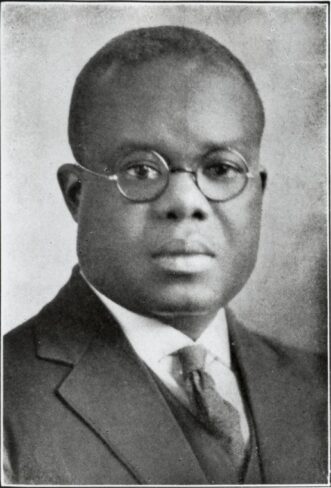
Hubert Harrison: Forbidden Genius of Black Radicalism, a new biography of the seminal—yet previously lesser known—activist and journalist, Hubert Harrison. Through this new intellectual and cultural study of Harrison's remarkable life and work, Buhle writes, author Brian Kwoba tells a story of a man ahead of his time in challenging white supremacy and capitalism through Black radical thought.
October 1, 2025
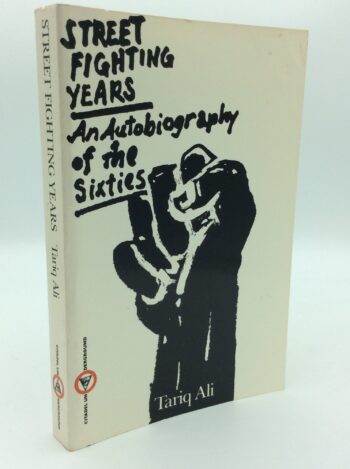
Paul Buhle reviews two books by renowned leftist Tariq Ali. In these two texts, Buhle writes, one can read and discern a history of the UK left. Through Ali's autobiography, Buhle writes, readers can experience the ups and downs of various factions, from the Labour Party to Trotskyist journals; through his memoirs, we get a sense of Ali's deep insights, drawn from his extensive travels and a life deeply embedded in history.
January 1, 2025
This month, we at MR had the great pleasure of publishing this note on Roxanne Dunbar Ortiz's Indigenous Peoples' History of the United States: A Graphic Interpretation, written by Dylan Davis and Paul Buhle, with illustrations from the book by illustrator Paul Peart-Smith.
December 1, 2024
In this review of Andrew Drummond's The Dreadful History and Judgement of God on Thomas Müntzer (Verso Books, 2024), Paul Buhle explores how the influence of this Christian priest reverberated throughout the centuries, inspiring generations of future revolutionaries—including Karl Marx himself.
January 1, 2024
In this review of Linda Dittmar's Tracing Homelands, Paul Buhle writes, "History may yet hold hope when hope is otherwise lacking when we reject the stalemate that only leads to despair."
December 1, 2020
Both Toni Gilpin's The Long Deep Grudge and Michael Goldfield's The Southern Key offer ample evidence that the grand era of U.S. labor history scholarship is not yet past. The Long Deep Grudge is in equal parts labor history and family reminiscence as Gilpin seeks the fuller story of her father, who played a leadership role in the United Auto Workers union. The Southern Key is in many ways a study of a different variety, but very much of a similarly militant kind. Goldfield, a labor activist veteran himself, draws the big picture of what he sees as the central failure of the U.S. left: the failure to organize the South.
June 1, 2018
Instead of theory, early U.S. radicals excelled in reportage, like John Reed's Ten Days That Shook the World, or fiction, like Upton Sinclair's packing-house shocker The Jungle. To Europeans American thought seemed impermeable to the difficult ideas of Marxism. That changed with the founding of Monthly Review in 1949, which marked a newly realized if not entirely new trend in American Marxist thought.
February 1, 2015
Chris Bambery's splendid People's History builds upon the scholarly work of others across several generations…. In Bambery's careful telling, the decisive moment in anything like modern Scottish history comes several hundred years ago. The Scots' real capitalism spread through the savage process of depopulation that Marx described so brilliantly in Capital: enclosure. Over extended decades, thousands of historic villages were literally emptied, so much so that remnants of crude huts can still be found in areas that have fewer inhabitants than sheep. The distinct language, created over thousands of years and retained with great effort in Wales, and with less effort in the rural districts of Ireland, did not need to be crudely suppressed here: the victims, pushed into the cities when not driven to early deaths, seem to have lost everything in this later period but their colorful, characteristic Scottish accents.