Sunday May 19th, 2013, 2:26 pm (EDT)

Marxist Ecology

Marxist Ecology

Cuban Urban Agriculture as a Strategy for Food Sovereignty

Review of Sinan Koont, Sustainable Urban Agriculture in Cuba (Gainesville, FL: University Press of Florida, 2011), 208 pages, $74.95, hardback.

What Does Ecological Marxism Mean For China?

Questions and Challenges for John Bellamy Foster

Zhihe Wang’s article “Ecological Marxism in China,” which appeared in the February 2012 Monthly Review, demonstrated that Chinese interest in ecological Marxism has grown rapidly over the past two decades…. The practical, political, and theoretical reasons for its success include: pressing environmental issues facing China; the government’s call for ecological civilization; the many characteristics that ecological Marxism shares with traditional Chinese Marxism; and the support it has provided for China’s environmental movement. Numerous works by Western scholars, including Ben Agger, John Bellamy Foster, William Leiss, and James O’Connor, have recently been translated into Chinese. …In comparison [to the others], John Bellamy Foster’s ecological Marxism was introduced relatively late. But recently it has drawn the greatest attention from Chinese Marxist scholars…. Our purpose here is to elicit a response from Foster on some of these developments in Chinese thought.… | more |

Toward a Global Dialogue on Ecology and Marxism

A Brief Response to Chinese Scholars

I would like to thank Zhihe Wang, Meijun Fan, Hui Dong, Dezhong Sun, and Lichun Li for doing so much to promote a global dialogue on ecological Marxism by summarizing some of the insights and concerns of Chinese scholars in this area, focusing in this case on my work in particular. The various questions, challenges, and critiques raised in relation to my work and that of related scholars are all, I believe, of great importance to the development of theory and practice in this area. I am therefore providing a brief set of responses to the problems raised, which I hope will be helpful in the further promotion of this global dialogue on ecology and Marxism.… | more |

Global Resource Depletion

Is Population the Problem?

Within the current system, there are steps that can and should be taken to lessen the environmental problems associated with the limits of growth: the depletion of resource taps and the overflowing of waste sinks, both of which threaten the future of humanity.… [H]owever, …attempts to trace these problems, and particularly the problem of depletion natural resources, to population growth are generally misdirected. The economic causes of depletion are the issues that must be vigorously addressed (though population growth remains a secondary factor). The starting point for any meaningful attempt actually to solve these problems must begin with the mode of production and its unending quest for ever-higher amounts of capital accumulation regardless of social and environmental costs—with the negative results that a portion of society becomes fabulously rich while others remain poor and the environment is degraded at a planetary level.… | more |

The Planetary Emergency

Capitalism today is caught in a seemingly endless crisis, with economic stagnation and upheaval circling the globe. But while the world has been fixated on the economic problem, global environmental conditions have been rapidly worsening, confronting humanity with its ultimate crisis: one of long-term survival. The common source of both of these crises resides in the process of capital accumulation. Likewise the common solution is to be sought in a “revolutionary reconstitution of society at large,” going beyond the regime of capital.… It is still possible for humanity to avert what economist Robert Heilbroner once called “ecological Armageddon.” The means for the creation of a just and sustainable world currently exist, and are to be found lying hidden in the growing gap between what could be achieved with the resources already available to us, and what the prevailing social order allows us to accomplish. It is this latent potential for a quite different human metabolism with nature that offers the master-key to a workable ecological exit strategy.… | more |

Harmony and Ecological Civilization

Beyond the Capitalist Alienation of Nature

When I consider the concept of harmony in the context of humans, their societies, and the environment I have a particular understanding of the concept. It refers to all people living together peacefully without exploitation of one person by another, each able to reach his or her full human potential, in a society in which everyone has their basic material and nonmaterial needs satisfied, feels secure, safe, happy, and fulfilled as human beings. In addition, the concept also implies harmony between people, the environment, and the other species we share the planet with.… [But] there is an overriding issue when considering harmony as I have briefly described it. Harmony in the world—among its people and between humans and the rest of the ecosystems—is not possible in the context of capitalism. Capitalism…has shown that it fosters interpersonal relations and metabolic interactions with the earth that are detrimental to achieving a harmonious existence.… | more |

Marx’s Ecology and the Understanding of Land Cover Change

The spread of humans worldwide, especially in the last two hundred years, has been associated with the growing human domination of the earth…. Such domination of the environment is expressed by… (1) the change in the flux of elements and substances on Earth…; (2) the growing threat of species extinction; and (3) the huge land cover change (LCC)—the substitution of natural habitats such as forests, swamps, and grasslands by cropland, pasture, roads, and urban areas. Modern natural sciences have made enormous inroads in understanding both ecological problems and the social drivers of LCC. However, they have been unable to generate a systematic understanding of how the regime of capital has governed LCC. Karl Marx developed more than 150 years ago, in the context of a social-science critique, an unparalleled theoretical approach to environmental crisis based on two concepts: differential land rent and the metabolic rift. Here, these concepts will be applied to the understanding of LCC.… | more |

Ecological Marxism in China

Chinese interest in ecological Marxism has grown increasingly in the past twenty years. Amazingly, it has even become, to some extent, an important part of contemporary Marxism in China. But why has it been so well received? This paper will offer some reasons for this and also point out the challenges now facing ecological Marxism in China.… | more |

Marx and Engels and “Small Is Beautiful”

I am a regular reader of Monthly Review. I read with interest the recent articles on ecology and Marxism…. It is true that Marx and Engels conceived that capitalism engenders a “metabolic rift” in nature and society. But both of them emphasized that the industrial growth that socialism would produce is beyond imagination under capitalism…. In the middle of the nineteenth century, it was impossible for Marx and Engels to envisage the ecological catastrophe that a constantly expanding industrial society can ensue.… | more |

Capitalism and the Accumulation of Catastrophe

Over the next few decades we are facing the possibility, indeed the probability, of global catastrophe on a level unprecedented in human history. The message of science is clear. As James Hansen, the foremost climate scientist in the United States, has warned, this may be “our last chance to save humanity.” In order to understand the full nature of this threat and how it needs to be addressed, it is essential to get a historical perspective on how we got where we are, and how this is related to the current socioeconomic system, namely capitalism.… | more |

The Ecology of Marxian Political Economy

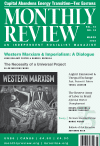
It is no secret today that we are facing a planetary environmental emergency, endangering most species on the planet, including our own, and that this impending catastrophe has its roots in the capitalist economic system. Nevertheless, the extreme dangers that capitalism inherently poses to the environment are often inadequately understood, giving rise to the belief that it is possible to create a new “natural capitalism” or “climate capitalism” in which the system is turned from being the enemy of the environment into its savior. The chief problem with all such views is that they underestimate the cumulative threat to humanity and the earth arising from the existing relations of production. Indeed, the full enormity of the planetary ecological crisis, I shall contend, can only be understood from a standpoint informed by the Marxian critique of capitalism.… | more |

What Every Environmentalist Needs To Know about Capitalism

What Every Environmentalist Needs To Know about Capitalism

There is a growing consensus that the planet is heading toward environmental catastrophe: climate change, ocean acidification, ozone depletion, global freshwater use, loss of biodiversity, and chemical pollution all threaten our future unless we act. What is less clear is how humanity should respond. The contemporary environmental movement is the site of many competing plans and prescriptions, and composed of a diverse set of actors, from militant activists to corporate chief executives.… | more |

Stephen Jay Gould’s Critique of Progress

A question of central importance in the interpretation of patterns of evolution is whether history had to turn out the way it did. From before Charles Darwin’s time up to the present it has been commonly assumed that history, both human history and the history of life in general, unfolded in a somewhat deterministic manner, that the present was inevitable, either ordained in Heaven or, in the scientific view, mechanically produced by deterministic natural laws. This view contrasts with that of the historian: that the quirks, chance events, and particularities of each moment make history, and that the world could have been other than it is.… The renowned paleontologist and evolutionary theorist Stephen Jay Gould.…developed a sophisticated and nuanced position that recognized both the importance of general laws and the role of contingency.… If contingency played little part in how history turned out, if the present was inevitable, then it makes little sense to challenge the status quo. However, if contingency dominates history, the future is open, and the world can be another way, as radicals of all varieties have long believed.… | more |

Ecological Civilization

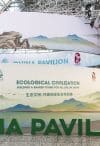
Given the overwhelming harm being done to the world’s environment and to its people, it is essential today to consider how we might organize a truly ecological civilization—one that exists in harmony with natural systems—instead of trying to overwhelm and dominate nature. This is not just an ethical issue; it is essential for our survival as a species and the survival of many other species that we reverse the degradation of the earth’s life support systems that once provided dependable climate, clean air, clean water (fresh and ocean), bountiful oceans, and healthy and productive soils.… There are numerous ways to approach and think about the enormous harm that has been done to the environment. I will discuss the following: (1) the critical characteristics that underlie strong ecosystems; (2) why societies are not adequately implementing ecological approaches; and (3) how we might use characteristics of strong natural ecosystems as a framework to consider a future ecological civilization… | more |

Capitalism and Degrowth: An Impossibility Theorem

[A]lmost four decades after the Club of Rome raised the issue of “the limits to growth,” the economic growth idol of modern society is once again facing a formidable challenge. What is known as “degrowth economics,” associated with the work of Serge Latouche in particular, emerged as a major European intellectual movement in 2008 with the historic conference in Paris on “Economic De-Growth for Ecological Sustainability and Social Equity,” and has since inspired a revival of radical Green thought, as epitomized by the 2010 “Degrowth Declaration” in Barcelona.… Ironically, the meteoric rise of degrowth (décroissance in French) as a concept has coincided over the last three years with the reappearance of economic crisis and stagnation on a scale not seen since the 1930s. The degrowth concept therefore forces us to confront the questions: Is degrowth feasible in a capitalist grow-or-die society—and if not, what does this say about the transition to a new society?… | more |

Capitalism and the Curse of Energy Efficiency

The Return of the Jevons Paradox

The curse of energy efficiency, better known as the Jevons Paradox—the idea that increased energy (and material-resource) efficiency leads not to conservation but increased use—was first raised by William Stanley Jevons in the nineteenth century. Although forgotten for most of the twentieth century, the Jevons Paradox has been rediscovered in recent decades and stands squarely at the center of today’s environmental dispute… | more |

Time to Pay the Piper

Ariel Salleh, ed., Eco-Sufficiency and Global Justice: Women Write Political Ecology (New York: Pluto Press, 2009), 324 pages, $34.00, paperback.

In 2001, Wilma Dunaway wrote that the “tentacles of the world-system are entwined around the bodies of women.” Yet her literary analysis revealed a profound silence about the role of women in reproductive labor, subsistence households, and commodity chain analysis. Dunaway characterized this omission as, “the greatest intellectual and political blunder” in her field.…Nearly ten years later, Ariel Salleh has answered this unspoken call with the resounding voices of seventeen feminist scholars who address transdisciplinary issues of global political ecology.… | more |

What Every Environmentalist Needs to Know About Capitalism

For those concerned with the fate of the earth, the time has come to face facts: not simply the dire reality of climate change but also the pressing need for social-system change. The failure to arrive at a world climate agreement in Copenhagen in December 2009 was not simply an abdication of world leadership, as is often suggested, but had deeper roots in the inability of the capitalist system to address the accelerating threat to life on the planet. Knowledge of the nature and limits of capitalism, and the means of transcending it, has therefore become a matter of survival. In the words of Fidel Castro in December 2009: “Until very recently, the discussion [on the future of world society] revolved around the kind of society we would have. Today, the discussion centers on whether human society will survive.”… | more |

Why Ecological Revolution?

It is now universally recognized within science that humanity is confronting the prospect—if we do not soon change course—of a planetary ecological collapse. Not only is the global ecological crisis becoming more and more severe, with the time in which to address it fast running out, but the dominant environmental strategies are also forms of denial, demonstrably doomed to fail, judging by their own limited objectives. This tragic failure, I will argue, can be attributed to the refusal of the powers that be to address the roots of the ecological problem in capitalist production and the resulting necessity of ecological and social revolution.… | more |

Capitalism in Wonderland

In a recent essay, “Economics Needs a Scientific Revolution,” in one of the leading scientific journals, Nature, physicist Jean-Philippe Bouchaud, a researcher for an investment management company, asked rhetorically, “What is the flagship achievement of economics?” Bouchaud’s answer: “Only its recurrent inability to predict and avert crises.”1 Although his discussion is focused on the current worldwide financial crisis, his comment applies equally well to mainstream economic approaches to the environment — where, for example, ancient forests are seen as non-performing assets to be liquidated, and clean air and water are luxury goods for the affluent to purchase at their discretion. The field of economics in the United States has long been dominated by thinkers who unquestioningly accept the capitalist status quo and, accordingly, value the natural world only in terms of how much short-term profit can be generated by its exploitation. As a result, the inability of received economics to cope with or even perceive the global ecological crisis is alarming in its scope and implications.… | more |