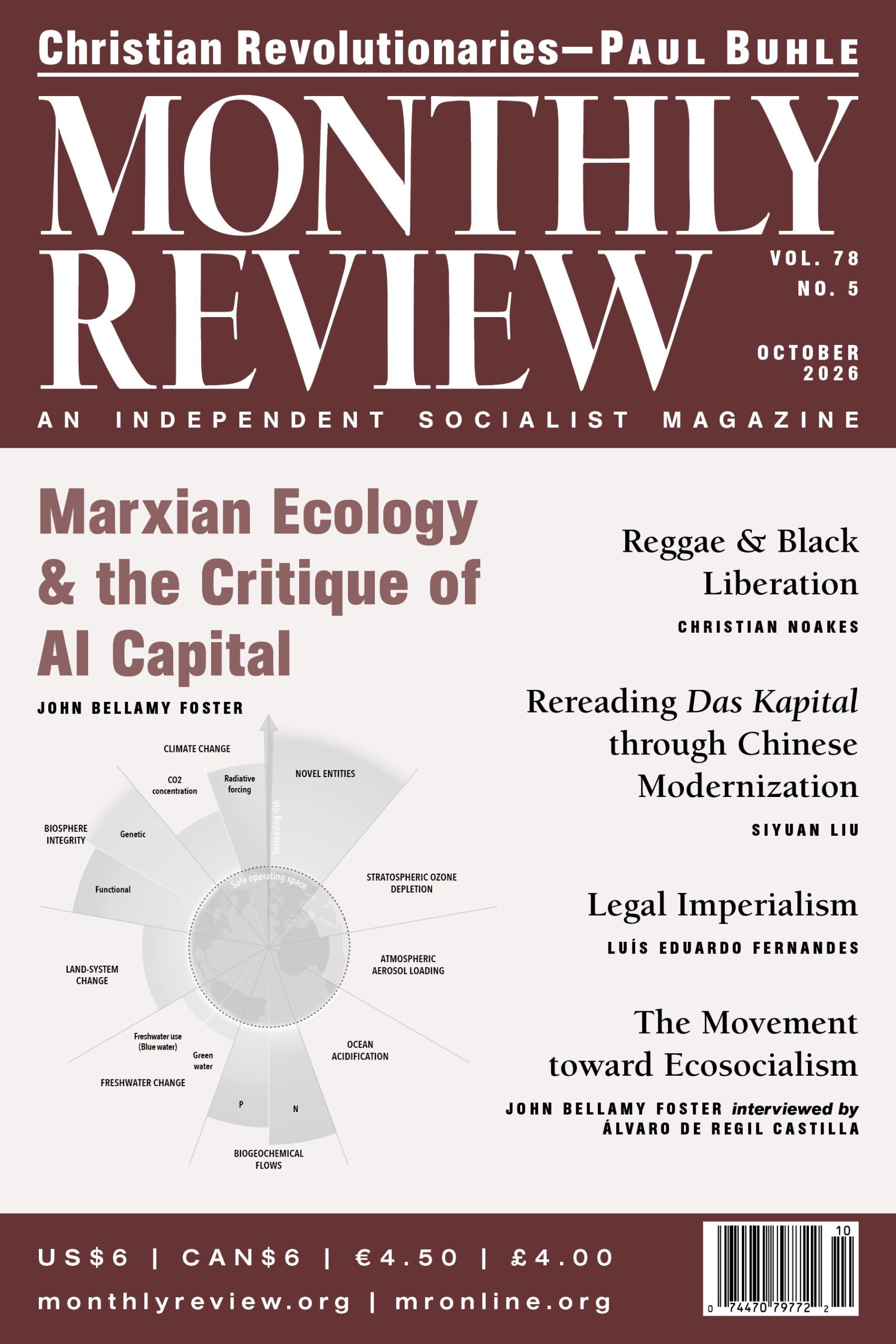
read our latest issue
Notes from the Editors
September 2026 (Volume 78, Number 4)
Taking as a starting point two classic works of the mid-nineteenth century—Benjamin Disraeli's Sybil; or the Two Nations and Frederick Engels's The Condition of the Working Class in England—this month's "Notes from the Editors" explores the way both authors articulated the plight of workers in their own era, drawing key parallels to our own time. The similarities are particularly conspicuous when examining the so-called affordability crisis, exposing the regime of social murder that accompanies the increasing polarization of economic life.
+ read more
Review of the Month
India’s Ruling Classes and the Global Crisis

In September's Review of the Month, the Research Unit for Political Economy delves into how the crisis pervading the world system, on stark display in the tech sector, global finance, and the sphere of production, lays bare the longstanding vulnerabilities of the Indian economy. As the contradictions in the neoliberal phase become unmistakable, the authors write, it is necessary to take a class-based approach to resolving the questions of how to bring about key questions regarding the productive life and development of India.
+ read more
Article
José Carlos Mariátegui and Local Traditions of Struggle
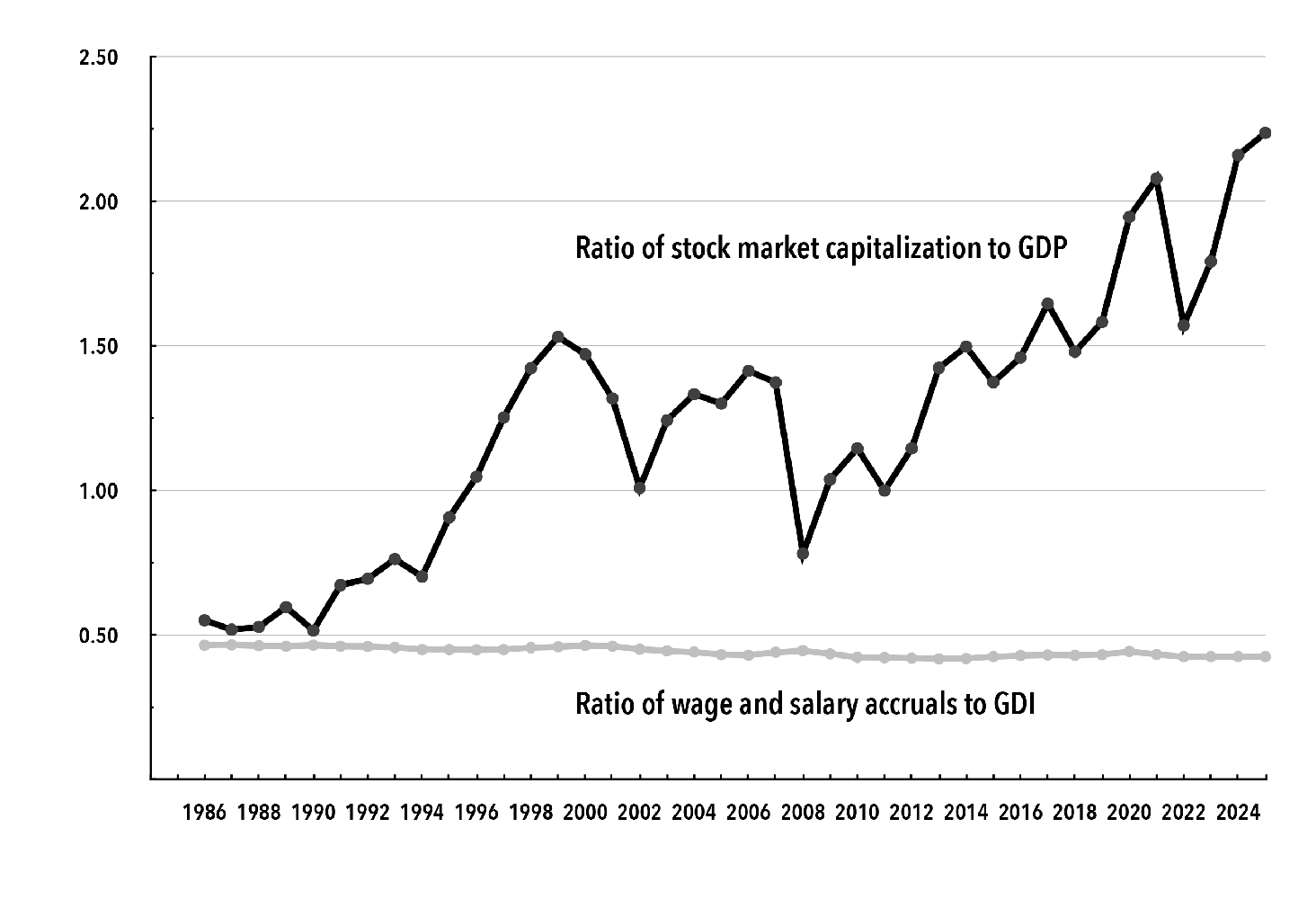
The relationship between Marxism and other revolutionary traditions is a key question for our time. If we approach the issue incorrectly, we risk Eurocentrism and underrecognizing Marxism's role in the Global South contexts where it is most vital and active. This article examines and extends José Carlos Mariátegui's dialectical approach to the issue, which demonstrates how Marxism is not diluted but strengthened through engagement with the thought and practice of existing struggles, while those struggles can, in turn, gain greater depth and groundedness through the same relationship.
+ read more
Article
Beyond Scarcity: Thomas Sowell and the Limits of Neoclassical Economics

Through the work of neoclassical economist Thomas Sowell, Elliot Goodell Ugalde dissects the orthodox view that takes for granted that scarcity is at the center of economic life. In a world of various kinds of surpluses, Goodell argues, the idea that scarcity is the only organizing principle of our economic is inadequate to describe the complex interactions of institutions, history, and social power that make up economic organization under capitalism.
+ read more
Review
Radical Jewish Tradition
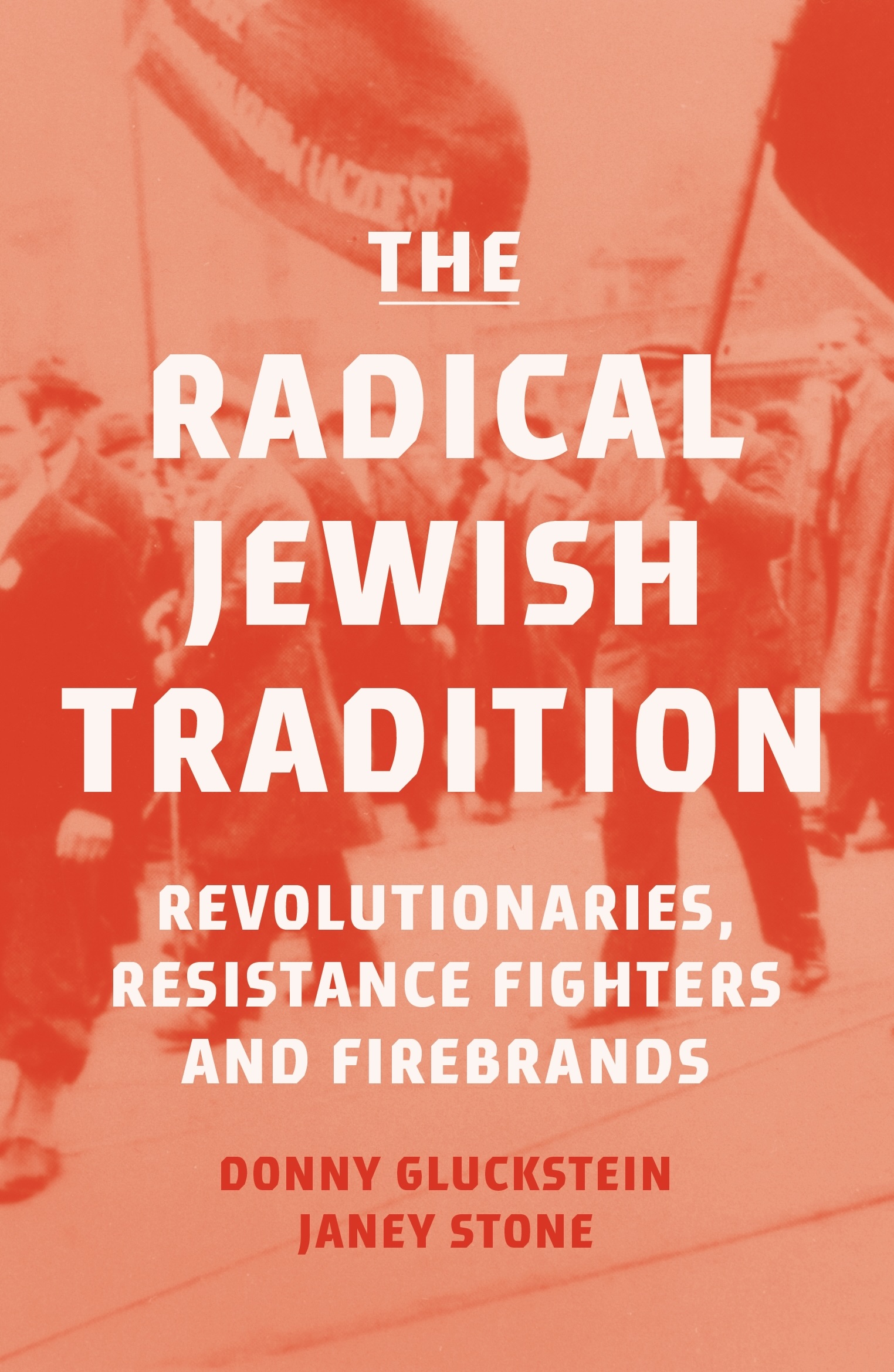
Paul Buhle reviews The Radical Jewish Tradition by Donny Glickstein and Janey Stone. The book, Buhle writes, is a window onto "the antinomies of nineteenth-century Jewish life"—including the growing movement against Zionism and for socialism among Eastern European Jews. This authors, Buhle notes, also tells the story of Jewish communists in Britain, the United States, and beyond, taking into account the wide sweep of Jewish left activity globally, situating the present struggles against genocide in Palestine squarely within the legacy of radical Jews everywhere.
+ read more
Introduction
The Global Structural Crisis of Capital
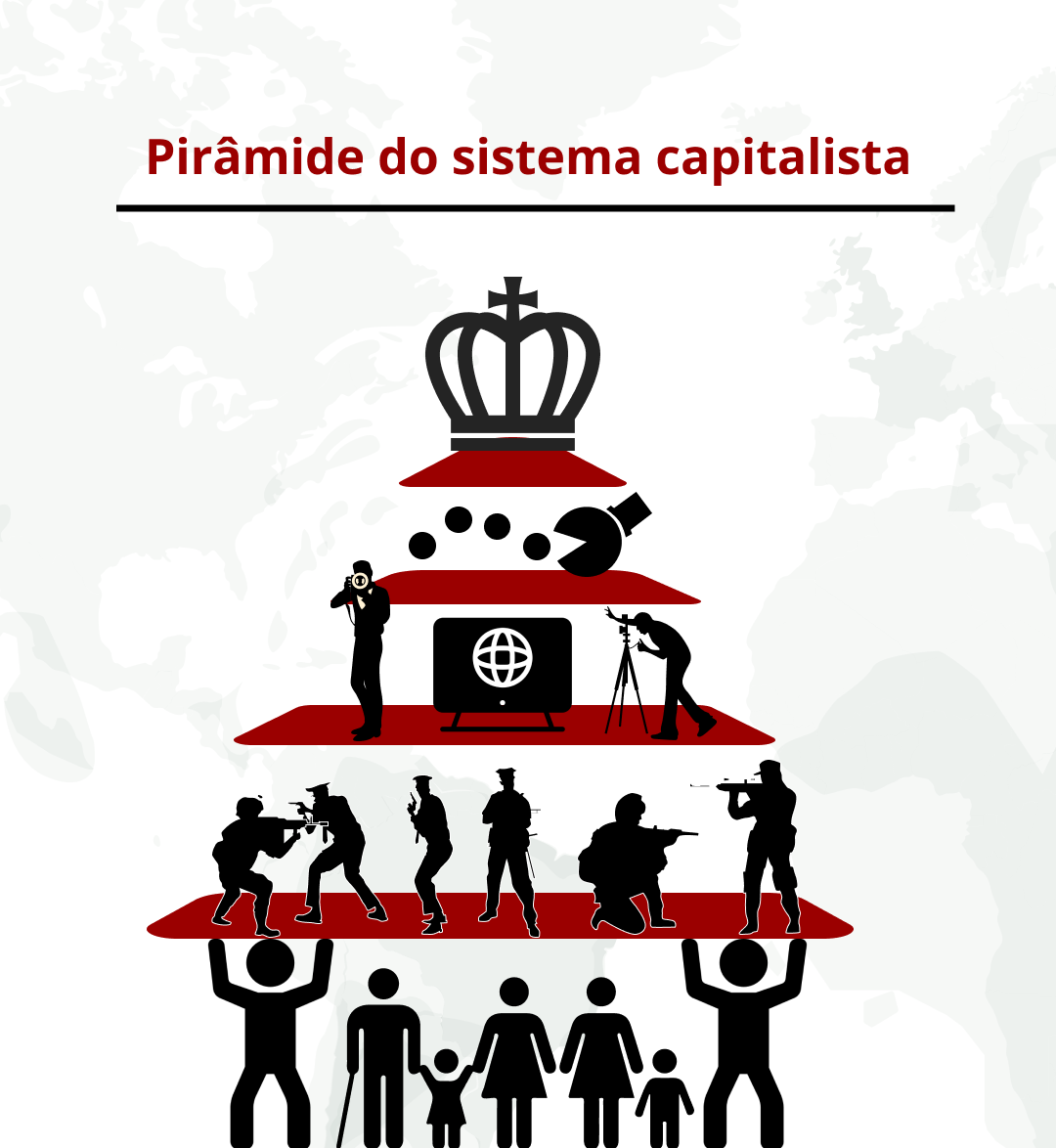
John Bellamy Foster introduces our special summer issue on the "Structural Crisis of Capital," illuminating its four main characteristics as first outlined by István Mészáros in Marx's Theory of Alienation. Capital, Foster says, has found itself in a position akin to Lucian's sorcerer's apprentice: futilely attempting to control a runaway system that he had himself created, accumulating not only contradictions but outright catastrophe—with globe-spanning consequences.
+ read more
Article
On the Economic Crisis of Capitalism
Considering the "Structural Crisis of Capital" from the perspective of economics, Prabhat Patnaik sheds light on two major aspects that have risen to prominence in our current conjuncture. The first, rampant stagnation and unemployment, is clear and undeniable. The second, particular to the capitalism of the late twentieth century and the shedding of colonies on which imperial nations depended for wealth is particularly salient to Trump's economic strategy of economic recolonization not only through soft power, but direct military action.
+ read more
Article
Between the Times: Privatized Keynesianism, Permanent Catastrophe, and the Task of an Economy of Social Production
"Old-style neoliberalism," write Riccardo Bellofiore and Giovanna Vertova "is dead, or at least gravely ill. The new paradigm that may replace it has not yet been born or is not yet recognizable. In the middle, between the times, lies what we have proposed to call the permanent catastrophe: a regime in which capitalist responses in catastrophic form have become the norm, in which crises are no longer overcome but accumulate."
+ read more
Article
U.S. Imperialism Resurgent
It is quite evident, Costas Lapavitsas begins, that the world is currently ensnared in geopolitical turmoil, perhaps for over a decade. In this article, Lapavitsas provides insight into the inseparable and interlocking mechanisms of dollar dominance and imperialism backed by the escalatory militarism of the second Trump administration. As Lapavitsas notes: "The dollar and the F-35—monetary coercion and military power—are two moments of a single structure of domination."
+ read more
Article
Monetary Policy and Capitalism
Jan Toporowski explains our contemporary age of "monetary policy dominance": the era in which the setting of short-term interest rates by the central banks is seen as the key instrument for regulating economic activity. This, however, does not reflect an ironclad law of the business cycle but, rather, a set of assumptions that underscores the dependence of capitalism on the accumulation of capital itself. This in turn obscures deeper truths about the effectiveness of monetary policy on the daily lives of the working class.
+ read more
Article
Why Can China Resist Financialization?
Over the last half-century, the "financial explosion"—manifest in the unrestrained expansion of financialization and its tools and institutions—has fundamentally reshaped the global economy, impacting countries throughout the Global North and South. China, however, has proven to be a distinctive case. Xiaolu Kuang, Zhi Li, and Fusheng Xie probe the question of how and why China has managed to maintain its emphasis on production above finance, and the development all above the accumulation of capital.
+ read more
Article
Imperialism in a Full World: Neomercantilism and the Return of the Zero-Sum Game
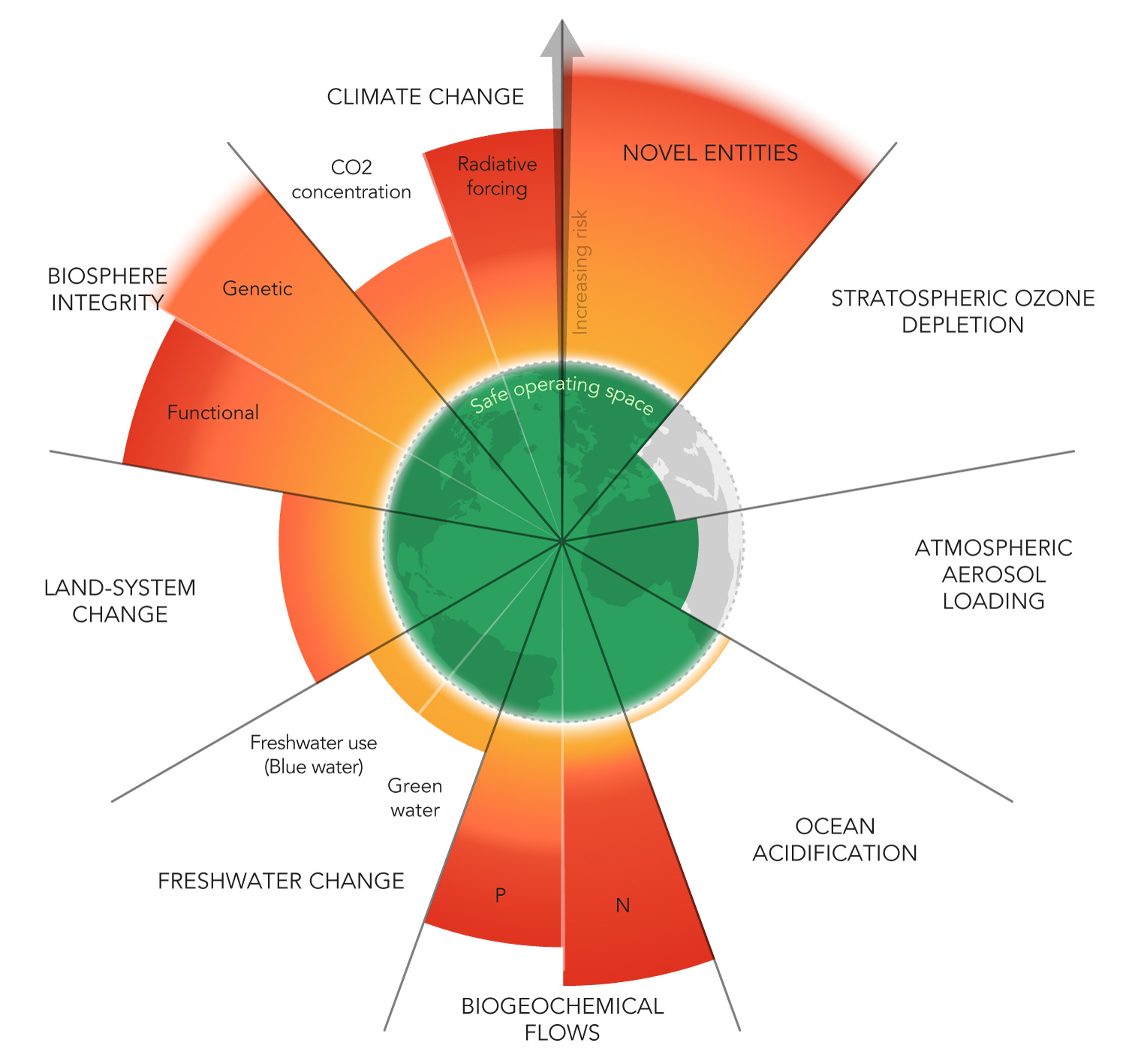
Since the wane of mercantilism in Europe, conceptions of wealth, trade, and productivity have also changed: from one of a zero-sum game reliant only on the productivity of land, to one of the potential for positive-sum wealth created by industry, and, now, to the zero-sum neomercantilism necessitated in a world of resource depletion, where the earth is pushed to its biophysical limits. But the response to this crisis does not have to be further fortification—it could also be a world that organizes itself within the metabolic limitations of nature.
+ read more
Article
Value Chains in the Digital Age: Labor Exploitation and Systemic Ecocide
In order to comprehend the environmental crisis that goes hand-in-hand with the "Structural Crisis of Capital," we must also understand the nature of global value chains and how they contribute to environmental degradation and worker exploitation on a global level. Benjamin Selwyn elucidates how global value chains and digitalization sit within a "conjoined dynamic of labor-exploitative accumulation and ecological expropriation."
+ read more
CLASSICS
New: “‘Black Marxism’: A Marxist Critique”, by August Nimtz
The latest: "Nimtz’ insightful review has languished for forty years in even more obscurity than Robinson’s book, until it has now been reprinted..."
+ read more
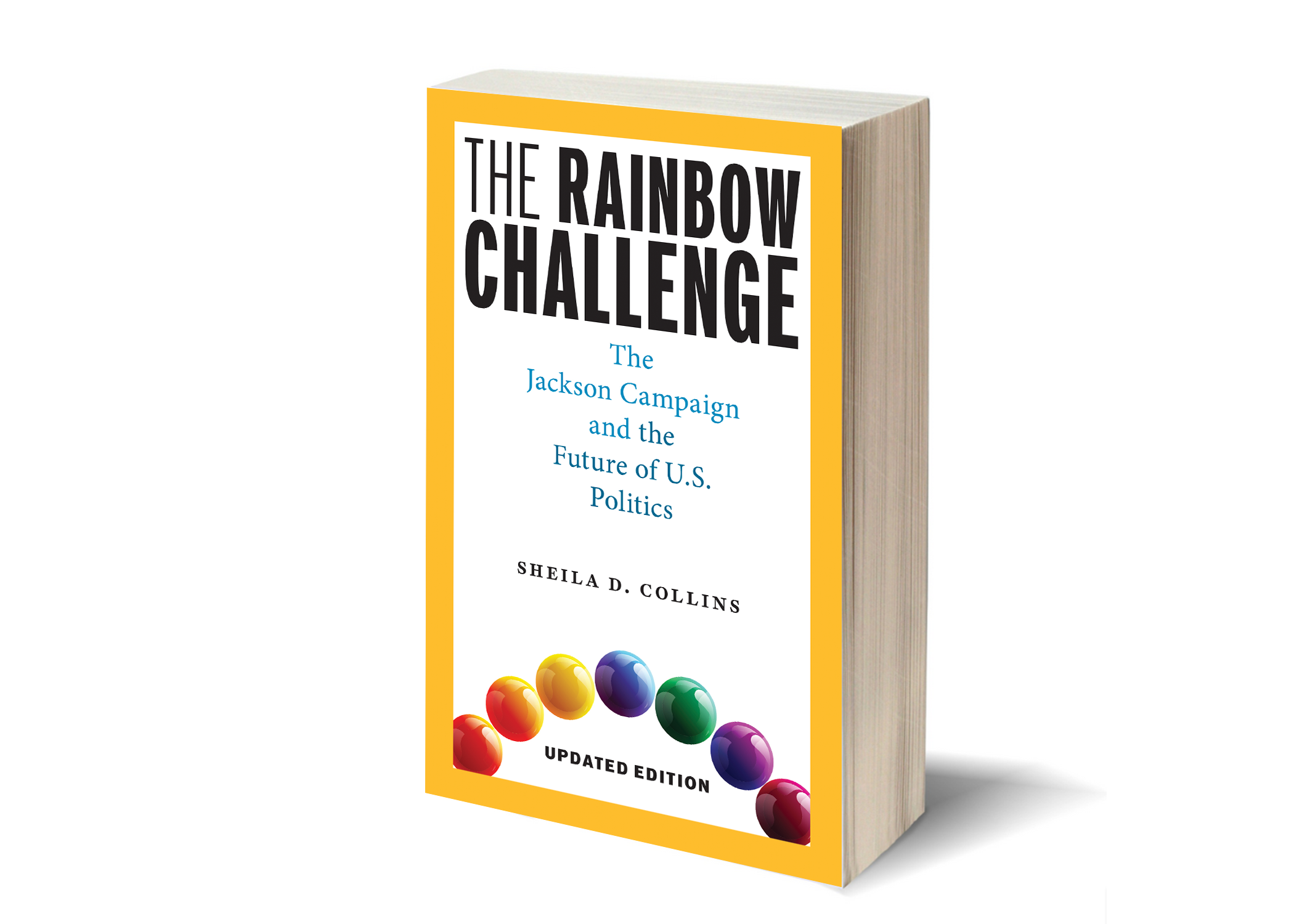
Recently reissued! The Rainbow Challenge (Excerpt)
From the Preface to the new edition of The Rainbow Challenge: Jesse Jackson’s first presidential primary race in 1984 should have been a wakeup call for the Democratic Party. Without... READ MORE
+ read more
In the Public Eye: “Albert Einstein’s ‘Why Socialism?'”
The latest: The London Review of Books' Letters section features a quote from John Bellamy Foster's introduction....
+ read more
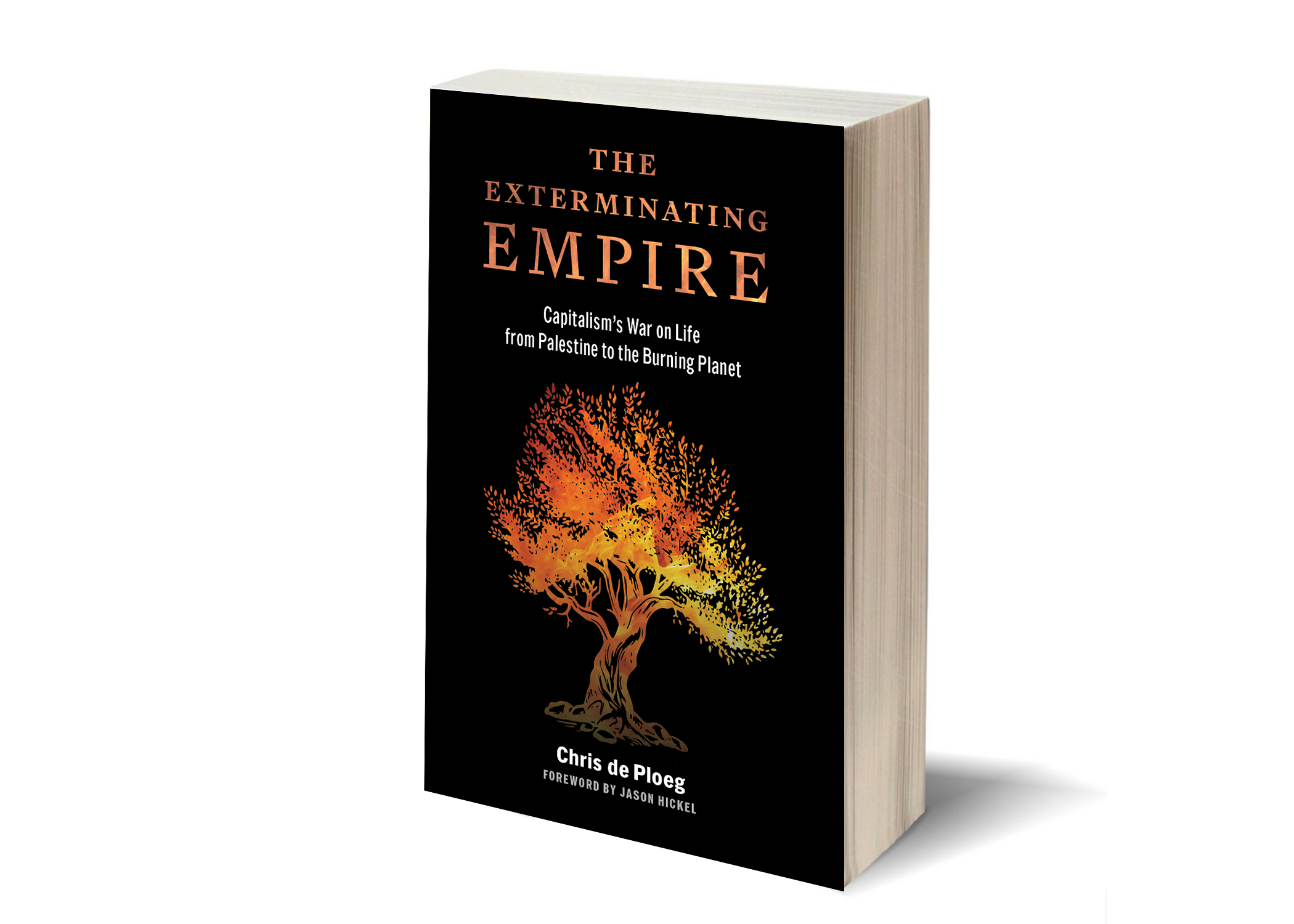
New! Chris dePloeg’s “The Exterminating Empire”
REVIEWS: Counterpunch, “Capitalism is Waging War on Palestine While Creating a Burning Planet” by Daniel Falcone: Daniel Falcone: What is the central argument of The Exterminating Empire and how is... READ MORE
+ read more