The Internationalization of Monopoly Capital
In a 1997 article entitled “More (or Less) on Globalization,” Paul Sweezy referred to “the three most important underlying trends in the recent history of capitalism, the period beginning with the recession of 1974-75: (1) the slowing down of the overall rate of growth; (2) the worldwide proliferation of monopolistic (or oligopolistic) multinational corporations; and (3) what may be called the financialization of the capital accumulation process.”… The first and third of these three trends—economic stagnation in the rich economies and the financialization of accumulation—have been the subjects of widespread discussion since the onset of severe financial crisis in 2007-09. Yet the second underlying trend, which might be called the “internationalization of monopoly capital,” has received much less attention.… the dominant, neoliberal discourse—one that has also penetrated the left—assumes that the tendency toward monopoly has been vanquished… [In contrast,] we suggest that renewed international competition evident since the 1970s was much more limited in range than often supposed… In short, we are confronted by a system of international oligopoly.… | more |
Marilyn Buck (1947-2010) spent over twenty-five years in prison for politically motivated actions against U.S. government policies and in support of the Black Panthers and the Black Liberation Army. She wrote these poems behind bars, as a way to comprehend the reality of prison and continue her fight as a white woman against injustice, particularly U.S.-generated white supremacy. Paroled in July 2010, she died of cancer twenty days after her release.… | more |
Cluster Munitions and State Terrorism
For decades, major global and regional powers have waged war against those they accuse of fighting immorally—that is, those who use terrorism to harm civilians at home and abroad. Paradoxically, these righteous “wars on terror” are being fought in an era in which the distinction between war waged only against soldiers, and war against soldiers as well as civilians has virtually collapsed. The technological development, stemming from the Industrial Revolution, of aerial bombardment and weapons of mass destruction has made it more difficult to separate citizen from soldier.… [but] it is imperative that this distinction hold. In waging wars on terror, [upholding the soldier/citizen distinction] permits globally powerful nations to rally public opinion under the assertion that what separates us (self) from them (other) is that civilian life is paramount for us and not for “the terrorists.”… | more |
States of Exception—Haiti’s IDP Camps
According to the Italian philosopher Giorgio Agamben, camps—for example, concentration camps, refugee camps, and internally displaced persons (IDP) camps—risk replacing nation-states as the most representative political spaces of our time. Agamben’s definition of “the camp” includes extra-judicial detention centers such as Guantánamo Bay; airport hotels that hold would-be immigrants awaiting deportation; the marginalized, segregated outskirts of Europe’s large cities; and even gated communities in the United States, with their private security firms and individualized “laws” that govern entry and exit. What all these spaces share is the suspension of national, territorial law and its replacement by police power. Those who reside in these legal dead zones are no longer “citizens”; they live in a state of exception to the law of the land—“exceptions” that are becoming more and more the rule.… Haiti’s IDP camps are indeed “states of exception” that risk becoming permanent fixtures in the post-earthquake urban landscape in and around Port-au-Prince.… | more |
ALBA and the Promise of Cooperative Development
Existing international economic institutions and relations operate in ways detrimental to third world development. That is why eight Latin American and Caribbean countries—led by Venezuela, Cuba, and Bolivia—are working to build the Bolivarian Alliance for the Americas (ALBA), a regional initiative designed to promote new, nonmarket-shaped structures and patterns of economic cooperation.… In response to worsening international economic conditions, ALBA has recently stepped up efforts to promote a full-blown regional development process.… Although the precise terms of the agreement are still to be negotiated, official statements point to the creation of an integrated trade and monetary zone, with a new regionally created currency, the sucre.… | more |
Genocide Denial with a Vengeance: Old and New Imperial Norms
Perhaps the most shattering lesson from [the] powerful inquiry [of Edward S. Herman and David Peterson in The Politics of Genocide] is that the end of the Cold War opened the way to an era of virtual Holocaust denial. As the authors put it, more temperately, “During the past several decades, the word ‘genocide’ has increased in frequency of use and recklessness of application, so much so that the crime of the 20th Century for which the term originally was coined often appears debased.” Current usage, they show, is an insult to the memory of victims of the Nazis… | more |
El Salvador: Mining the Resistance
“Ultimately,” said Miguel Rivera, a soft-spoken man in his late twenties, “we are a family that has dedicated ourselves to helping the people with their needs and defending their rights. But in the process of denouncing the consequences of mining especially, I think there are people that will be your enemies.”…The Canadian-owned Pacific Rim Mining Company has attempted to exploit a gold mine at El Dorado for the better part of a decade, and has been repeatedly thwarted in its efforts….Now, apparently, the company’s local allies have taken a more violent approach to removing that opposition.… | more |
In late 1970, prompted by the debate over the exposure of U.S. atrocities in the village of Mỹ Lai, an anonymous GI wrote a letter to Army Chief of Staff William Westmoreland, claiming to have witnessed hundreds of acts of terrorism by U.S. soldiers during Operation Speedy Express. The campaign, intended to reclaim portions of the Mekong Delta, purportedly killed over ten thousand enemy but seized only seven hundred weapons.… | more |
Sanctions on Iran: What’s Missing from Obama’s New Dialogue
On June 4, 2009, U.S. President Barack Obama gave a key foreign policy speech in Cairo, Egypt. He advocated new, positive relations between the United States and Muslim countries, focusing on relations with the Middle East. He also mentioned establishing new relations with Iran: “There will be many issues to discuss between our two countries, and we are willing to move forward without preconditions on the basis of mutual respect.”…But this new promise “to move forward without preconditions” should be viewed in the wider context of continuous economic and military pressures on Iran and on the entire region of the Middle East.… | more |
A Theory of Globalized Capitalism
Latin America and Global Capitalism delivers a scathing indictment of neoliberal globalization from an explicitly anti-capitalist perspective. Its scope is theoretically and empirically ambitious, beginning with a wide-ranging treatment of structural shifts in global capitalism since the early 1970s, before turning to rigorous examination of a range of themes in Latin American political economy in light of these global changes. Robinson then brings these threads together with an argument that neoliberalism entered its twilight phase in the region beginning with the recession of the late 1990s and early 2000s, as extra-parliamentary mass movements concomitantly exploded onto the scene and a variety of self-described left governments took office. The focus then tightens, with conjunctural analyses of the current upsurge in indigenous revolts, the immigrant rights movement in the United States, and the complicated and contradictory processes of the Bolivarian Revolution in Venezuela.… | more |
Against Literary Imperialism: Storming the Barricades of the Canon
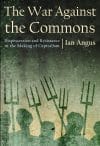
My copy of The Mythology of Imperialism, the 1973 paperback that sold for $2.75, has lots of notes in the margins. They’re excited notes, not always comprehensible now, from the first course I ever taught, a small unofficial seminar on literature and imperialism. I’ve lost the syllabus, but I remember that we read Raskin’s books: Kipling, Conrad, Forster, and Orwell. I’m not sure I would have had the idea, or the courage, to follow that syllabus in my second or third year of graduate school teaching if The Mythology of Imperialism hadn’t made its miraculous, incandescent appearance. I certainly wouldn’t have known which writers to teach, or for that matter how to start talking about them. This was before Edward W. Said’s Orientalism appeared in 1978, before the academic field of postcolonial studies had been invented. There must have been more advanced people out there — it sometimes seemed to me that everybody at Harvard was more advanced than I was — but if they had figured out why and how imperialism mattered to us, they weren’t raising their hands and making speeches about it in any of the classes I took.… | more |
One of the main accomplishments of the Israeli government’s bombing and invasion of the Gaza Strip last winter was to inspire new vitality within leftist and peace groups in solidarity with the Palestinian struggle for justice and liberation. This wave of activity has continued after the supposed ceasefire, with demonstrations and direct actions from New York to Los Angeles, Paris, Jaffa, and Tel Aviv. Most noteworthy has been a coming out of sorts of an increasingly large and vocal segment of the Jewish world that is not only opposed to the Israeli government’s wars and military occupations, but critical of Zionism itself.… | more |
Prophets of the ‘Permanent War Economy’
The Review of the Month entitled “The U.S. Imperial Triangle and Military Spending” by John Bellamy Foster, Hannah Holleman, and Robert W. McChesney (Monthly Review 60, no. 5 [October 2008]) carries on a valuable MR tradition. Monthly Review is one of the few voices on the left that has emphasized the necessity, from the point of view of capitalism, of this kind of military Keynesianism. Chalmers Johnson and Seymour Melman, who have written extensively on this issue, have tended to argue that other forms of government spending, a renewed New Deal, is possible.… | more |
The Rise and Fall of the Third World
Vijay Prashad’s The Darker Nations opens with the assertion that the third world was not so much a place as a project. His goal is to provide an account of the anticolonial and nonaligned movement rather than a full history of the under-developed world in the last half of the twentieth century. However, in this remarkable book, he does both. Born in the wake of the upheavals of the Second World War, the third world movement that took form at the Bandung Conference in 1955 was championed by the likes of Nehru, Nasser, Tito, Sukarno, and Nkrumah. Its leaders collectively called for national independence, economic development, and Cold War nonalignment while basing themselves on the support of millions of followers in the under-developed nations.… | more |
The U.S. Imperial Triangle and Military Spending
he United States is unique today among major states in the degree of its reliance on military spending, and its determination to stand astride the world, militarily as well as economically. No other country in the post–Second World War world has been so globally destructive or inflicted so many war fatalities. Since 2001, acknowledged U.S. national defense spending has increased by almost 60 percent in real dollar terms to a level in 2007 of $553 billion. This is higher than at any point since the Second World War (though lower than previous decades as a percentage of GDP). Based on such official figures, the United States is reported by the Stockholm International Peace Research Institute (SIPRI) as accounting for 45 percent of world military expenditures. Yet, so gargantuan and labyrinthine are U.S. military expenditures that the above grossly understates their true magnitude, which, as we shall see below, reached $1 trillion in 2007… | more |
Humanitarian Imperialism: The New Doctrine of Imperial Right
Jean Bricmont’s concept “humanitarian imperialism” succinctly captures a dilemma that has faced Western leaders and the Western intellectual community since the collapse of the Soviet Union. From the origins of the Cold War, there was a reflexive justification for every resort to force and terror, subversion and economic strangulation: the acts were undertaken in defense against what John F. Kennedy called “the monolithic and ruthless conspiracy” based in the Kremlin (or sometimes in Beijing), a force of unmitigated evil dedicated to extending its brutal sway over the entire world. The formula covered just about every imaginable case of intervention, no matter what the facts might be. But with the Soviet Union gone, either the policies would have to change, or new justifications would have to be devised. It became clear very quickly which course would be followed, casting new light on what had come before, and on the institutional basis of policy… | more |
Peak Oil and Energy Imperialism
The rise in overt militarism and imperialism at the outset of the twenty-first century can plausibly be attributed largely to attempts by the dominant interests of the world economy to gain control over diminishing world oil supplies1. Beginning in 1998 a series of strategic energy initiatives were launched in national security circles in the United States in response to: (1) the crossing of the 50 percent threshold in U.S. importation of foreign oil; (2) the disappearance of spare world oil production capacity; (3) concentration of an increasing percentage of all remaining conventional oil resources in the Persian Gulf; and (4) looming fears of peak oil… | more |
Disaster Capitalism: An Offer You Can’t Refuse—Or Can You?
At the crossroads of Buenos Aires’s shopping district sits a posh mall called the Galerías Pacífico, a showcase for global brand names and a playground for Argentina’s rich. One day, a film crew descended to the basement. There they found an abandoned torture chamber, its walls still etched with names, dates, and messages from political prisoners disappeared under the military junta. In The Shock Doctrine, Naomi Klein goes digging deep into the basements of global capitalism, from the torture labs of Latin America to the oil fields of Iraq, unearthing the bodies and catching the culprits red-handed. In the process, she demolishes one of the great myths of our time: that free markets go hand in hand with free societies, and that globalized free enterprise brings peace and democracy. Instead, as Klein documents in this definitive history, the new world order is the product of three decades of free-market terror, torture, and shock.… | more |
Finance, Imperialism, and the Hegemony of the Dollar
The July–August 2007 crisis in subprime mortgage markets precipitated the collapse of the market for asset-backed securities, forcing huge write-downs of more than $45 billion on the balance sheets of major banks. In the aftershock, interbank lending dried up. Bond insurers and money market funds were beset by a loss of confidence as the credit squeeze spread. The plunge in stock markets in January 2008 suggests that the repercussions of the collapse of the subprime mortgage market are still working their way through financial markets. With over 170,000 jobs lost and the expected spate of foreclosures, many observers believe that the credit crunch has pushed the economy towards a recession.… | more |


Comments on Tariq Amin-Khan’s text
I am not surprised by our Pakistani friend Tariq Amin-Khan’s critique. I was expecting it. Therefore, I would like to offer some comments on his criticisms of me, which mainly result from ignorance of what I have written on the questions he raises … | more |