When confronted with any big decision in life, I hear my mom’s voice telling me to listen to my gut. This has worked for personal adventures ranging from backpacking to parenting, even though at times it can be hard to quiet the social noise that prevents us from “hearing” what our instincts have to say. In Greed to Green, Charles Derber explores a new twist on the familiar “listen to your gut” adage by framing climate change inaction as the collective problem of not having a gut feeling about this planetary threat. Rather, he explains that we as a society have cordoned off knowledge of climate change as an intellectual concept, and have not allowed it to migrate to the realm of the gut truth.… | more |
Perhaps no war in recent memory has so thoroughly flummoxed the Euro-Atlantic left as the recent NATO war on Libya. Presaging what would occur as U.S. proxies carried out an assault on Syria, both a pro-war left and an anti-anti-war left [gave] endless explanations and tortuous justifications for why a small invasion, perhaps just a “no-fly-zone,” would be okay—so long as it didn’t grow into a larger intervention. They cracked open the door to imperialism, with the understanding that it would be watched very carefully so as to make sure that no more of it would be allowed in than was necessary to carry out its mission. The absurdity of this posture became clear when NATO immediately expanded its mandate and bombed much of Libya to smithereens, with the help of on-the-ground militia, embraced as revolutionaries by those who should have known better—and according to Maximilian Forte, could have known better, had they only looked.… | more |
Memories of the Afro-Caribbean Left
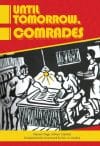
The name “Walter Rodney” has receded from public memory in the last few decades. Only yesterday, it seems to this reviewer, Rodney was the most promising young political scholar of Afro-Caribbean origin, influential from parts of Africa to Britain and North America, not to mention his home Guyana, as well as Jamaica, Trinidad, and other anglophone islands. He was revered: great things were expected of him, as great things were expected of the new phase of regional history in which independence had been achieved and masses mobilized for real change.… | more |
The Man Who Was Over the Rainbow
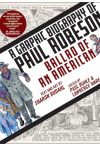
When I was a lad, I wrote amorous ditties, To Judy, Aleine, Edelina, and Sue. But now that I’m gray, I’ve abandoned those pretties, I’m singing my songs to the MONTHLY REVIEW.… So sang E.Y. “Yip” Harburg, to the tune of “The Streets of Laredo,” at Monthly Review’s fifteenth anniversary party. Accompanying him on piano was my late wife, the Judy to whom Yip wrote ditties. You will not find her or Aleine Mufson mentioned in the pages of this biography. Nor will you find cited any who, because they rubbed elbows or other body parts with Harburg, could lead the reader to the fullest possible understanding of who he was.… | more |
Cuban Urban Agriculture as a Strategy for Food Sovereignty
Examining the Bases of Power, Inequality, and Human Variation
Shutting Down the Streets is not an ivory-tower book, situated a safe distance from its subject; the first appendix lists the seventeen anti-globalization summit protests which were directly observed by the book’s authors. And just as the authors were participants and not just spectators, they also refrain from merely presenting a comparative analysis of policing and repression at these summits. Examining the existing academic literature on social control, dissent, and social movements, they argue that existing works on repression mainly concentrate on protest policing. Instead they aim to develop a broader framework that examines social control by extending the object of analysis from the policing of protest events to the effects of social control on dissent, while also arguing that the unit of analysis needs to be changed from individual protests to the wider one of social movements. Repression then is not just police violence and coercion at protests but also includes a host of other methods of “soft” repression, such as psyops (psychological operations), infiltration, and surveillance.… | more |
Whiteness as a Managerial System
Race and the Control of U.S. Labor
In this highly original book historians David Roediger and Elizabeth Esch probe deeply into the relationship of institutionalized racism to the management of labor in the United States. As they emphasize, “race management” has been a much neglected topic in the social sciences. Focusing on the century from 1830 to 1930, they accent the interesting and accurate idea of “whiteness as management”—that is, of labor management theory among white employers and experts as honed within the arena of persisting white-racist framing and action. Among other key points, we see here how capitalistic employers long used the racial and ethnic differences among workers to divide and conquer them. The “scientific” management of workers and the white-racist framing of society evolved together over this long century they examine, as well as over subsequent decades.… | more |
Making Oppression Appear Normal
Psychologists engage in a number of practices that, mostly unwittingly, help to sustain the cultural distortions of the ruling class and hence their exploitative rule. One of these practices is to treat human behavior as primarily driven by biology. This leads, for example, to the medicalization of mental illness.… It also supports one of capitalists’ favorite ideological ploys: individualism. We are the masters of our own fate, not society and its culture. If we fail, it is our own fault. We simply did not try hard enough or follow the right path. Individualism favors self-blame and a refusal even to look for social causes. Ratner instead argues that humans are qualitatively different from all other species precisely in terms of how culture, not constant biological traits, shape their behavior. He points out that even our closest relatives, the great apes, have not developed culture, institutions, science, religion, etc. We are truly unique.… | more |
Springsteen’s Wrecking Ball and the Plague of the 99%
On his most recent album, Wrecking Ball, Bruce Springsteen crafted a powerful statement of support for the working class, the existence of which barely penetrates contemporary art or politics. This is not an accident: the growing power of capital over public discourse has provided it a forceful means through which to shape individual consciousness, and establish an apolitical and at most technocratic understanding of power.… Even in the cultural realm, the art and voices of the working class are sidelined and squelched. Working people thus become invisible.… | more |
In 1929 Bronislaw Malinowski, the primogenitor of twentieth century anthropology, published an article extolling the merits of his science in the process of colonial administration.… It was essentially a fundraising pitch for the Institute, which was seeking a subsidy from the Rockefeller Foundation by demonstrating the workaday virtues of what was until then an obscure discipline with little apparent importance to the vast powers stretching outward from the heart of capitalism to envelope the world. Eight decades later anthropology’s quest for investment perseveres…. Yet the tables have strangely turned: it is now imperial powers, cash in hand, which turn to a reluctant anthropology, seeking scientific means of domination through a form of cultural warfare. In Weaponizing Anthropology, David Price documents the latest form of blood alimony proffered by the custodians of empire to the discipline which was once styled the “child of western imperialism.”… | more |
Queer Liberation Means Prison Abolition
In 1513, en route to Panama, Spanish conquistador Vasco Nunez de Balboa ordered forty Quaraca men to be ripped apart by his hunting dogs. Their offense? Being “dressed as women” and having sexual relations with each other. The homophobia and transphobia behind Balboa’s actions are far from arcane relics of the past, and violence against LGBTQ people continues to this day, both legally sanctioned and in the streets.… Queer (In)Justice examines the violence that LGBTQ people face regularly, from attacks on the street to institutionalized violence from police and prisons.… [The authors] center race, class, and gender/gender nonconformity in analyzing the myriad ways in which LGBTQ people have been policed, prosecuted, and punished from colonial times to the present day.… | more |
Neoliberalism, Imperialism, and the Militarization of Urban Spaces
In the epilogue of Planet of Slums, Mike Davis gives us a glimpse into the militarization of urban spaces and what the military elite are doing about the world’s cities. Davis cites an article published in the US Army War College journal: “The future of warfare lies in the streets, sewers, high-rise buildings, industrial parks, and the sprawl of houses, shacks, and shelters that form the broken cities of our world…. Our recent military history is punctuated with city names—Tuzla, Mogadishu, Los Angeles, Beirut, Panama City, Hue, Saigon, Santo Domingo—but these encounters have been but a prologue, with the real drama still to come.”… [T]he militarization of cities around the world, in both the core and the periphery, is the main focus of Stephen Graham’s fascinating and accessible book, Cities Under Siege. For Graham…this book represents the culmination and synthesis of much previous research… The end result is a theoretically and empirically rich study of how violence, control, and surveillance have come to “colonize the city landscape and the spaces of everyday life in both the ‘homelands’ and domestic cities of the West as well as the world’s neo-colonial frontiers”.… | more |
When the Arab peoples took to the street, they were not only shouting “The people want the downfall of the regime!” but also—and most of all—“Liberty, Dignity, and Social Justice.” The absence of dignity and social justice points to the larger question of the neoliberal economic world order and the post-colonial states, which are integrated into the world-system, not as peers to the developed countries of the capitalist center, but as dependent peripheral subordinates. The desperate act of self-immolation by the young Tunisian produce vendor Mohamed Bouazizi poignantly illustrates the inequity of this global system. Zurayk’s book is a severe indictment of how the cruel economic order affects agriculture and food sovereignty in the Arab world.… | more |
Redwood Warriors Turn Tables on FBI
A Documentary Drama About a Bay Area Legend
Who would dream that two environmentalists-turned-redwood warriors could sue the FBI for framing them with the same COINTELPRO campaign that locked away Leonard Peltier and Geronimo Ji Jaga (Pratt) yet actually win? Mary Liz Thomson’s award-winning documentary Who Bombed Judi Bari? reveals the remarkable story of how this came to be.… | more |
This big book is great U.S. history. A solid, comprehensive, richly detailed, brilliantly composed study of a major post-1960 movement in U.S. labor, it is also a dramatic narrative vivid with critical analysis of the movement’s developing strengths and faults, and thick with lessons for the struggles of today’s left.… | more |
Mass Struggle, Then What?
It is curious as well as enormously exciting to be surrounded by a mass movement, full of enthusiasm, energy, and eagerness to adopt labor slogans and labor songs, almost as if the 1930s and ‘40s had come back. And it is all the more curious because the emergence of the movement seemed so spontaneous and unexpected, taking every Marxist (and any other) would-be savant by surprise, your reviewer most definitely included. Eighteen months and a major electoral defeat later, the “Wisconsin Uprising” goes on, with dampened spirits but a continuation of innovative extras. One small example is the “Overpass Light Brigade,” a group of urban guerillas who hold LED-lit slogans in various spots of the state, ridiculing Governor Scott Walker and his lackeys, until the cops arrive. But where is it going?… | more |
For the past three decades Howard Waitzkin has been (along with Vicente Navarro) the leading social medicine theorist in the United States. Medicine and Public Health at the End of Empire provides a superb sampling of Waitzkin’s wide-ranging work, and a readily accessible introduction to the searching insights offered by a Marxist view of medicine.… | more |
The late Robert Bone had a socialist background which impelled him to study African-American history and literature long before those subjects became fashionable. From the 1950s on his pioneering work in this field included The Negro Novel in America (1959) and Down Home: Origins of the Afro-American Short Story (1975). He had planned, and partially researched and written, a study of the Chicago African-American Renaissance of the 1930s and later. When his health began to fail, he gave his notes to Richard A. Courage, author of many articles on African-American narrative and visual arts. Courage completed Bone’s research, and the result is a compelling book which will be a standard in its field for many years to come.… | more |