Category: Monthly Review Press /

Massive devastation/No remorse: VVA Veteran Books in Review II looks at The American War in Vietnam

Massive devastation/No remorse: VVA Veteran Books in Review II looks at The American War in Vietnam

During a soliloquy in Julius Caesar, Brutus says, ‘The abuse of greatness is when it disjoins remorse from power.’ His words clearly apply to John Marciano’s book, The American War in Vietnam…. Whereas Brutus speaks of Caesar’s use of power, Marciano addresses the misuse of the Noble Cause principle espoused by the United States in the Vietnam War. ¶ Marciano, a Professor Emeritus at the State University of New York at Cortland, relates this principle to America’s employing military power in general—and in particular to what he calls the ‘staggering human and ecological losses’ resulting from ignoring remorse relative to the Vietnam War...

Ursula Huws on the Future of Work, via the LSE Business Review

Ursula Huws on the Future of Work, via the LSE Business Review

“[T]he universe is full of new opportunities for commodification. The question is, can the planet sustain them?”
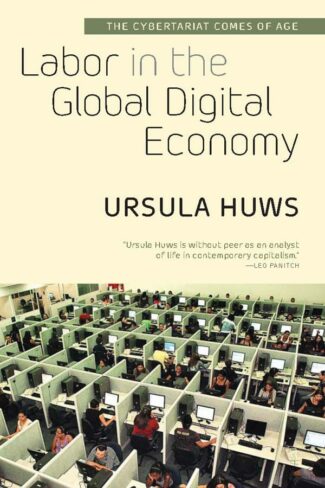
Ursula Huws is the author of Labor in the Global Digital Economy: The Cybertariat Comes of Age. Recently, Huws wrote a follow-up article for the London School of Economics and Political Science Business Review.

Marxism 2.0? Labor in the Global Digital Economy reviewed by International Socialism

Marxism 2.0? Labor in the Global Digital Economy reviewed by International Socialism

If Karl Marx were writing Capital today and had paid attention when Friedrich Engels and his publisher implored him to make the first chapters of volume one less abstract and more accessible, rather than dismissing their suggestions with declarations about a royal road, he might well have chosen a specific commodity from which he could unravel capital. And, if he wanted to choose a commodity in which the relations of the contemporary political economy had been crystallised, he might well have chosen an iPhone. In following the social relations that sit behind the iPhone, Marx would have observed children mining for cassiterite in the Congo; followed the global production chains from the neo-futurist Apple Campus in Cupertino …

International Conference: Marx’s Capital after 150 Years

Marx's Capital after 150 Years: Critique and Alternative to Capitalism
May 24-26 at York University, Toronto, Canada
ADMISSION TO THIS CONFERENCE IS FREE
For many scholars, today Marx's analyses are arguably resonating even more strongly than they did in Marx's own time. This international conference brings together several world-renowned sociologists, political theorists, economists, and philosophers, from diverse fields and 13 countries.

Mass Industrial Slaughter = Legacy of Global Manufacturing: Imperialism in the 21st Century

Mass Industrial Slaughter = Legacy of Global Manufacturing: Imperialism in the 21st Century

The collapse of Rana Plaza, an eight-story building housing several textile factories, a bank, and some shops in an industrial district north of Dhaka, Bangladesh’s capital, on 24th April 2013 killing 1,133 garment workers and wounding 2,500, was one of the worst workplace disasters in recorded history…. ¶ The screams of thousands trapped and crushed as concrete and machinery cascaded down upon them unleashed a full-spectrum shockwave, amplified by the anguished howl of millions around the world. The calamity made instant headline news. Consumers of clothes made in Bangladesh’s garment factories were confronted by their palpable connection to the people whose hands made their clothes, and about their miserable existence on this earth.

Fred Magdoff at the BSUP2 Annual Conference

Fred Magdoff at the BSUP2 Annual Conference

Second Annual Boston Socialist Unity Project Conference, April 21 and 22
Massachusetts Institute of Technology
Edgerton Lecture Hall, Room 34-101
50 Vassar Street, Cambridge, MA
Come hear socialist scholars and activists including Vijay Prashad, Barbara Madeloni, Sherri Mitchell, the Green-Rainbow Party, and Fred Magdoff, co-author (with Chris Williams) of Creating an Ecological Society: Toward a Revolutionary Transformation

“Globalization” = another word for financial colonialism: John Smith via Truthout

“Globalization” = another word for financial colonialism: John Smith via Truthout

Recently, John Smith, author of Imperialism in the Twenty-First Century: Globalization, Super-Exploitation, and Capitalism’s Final Crisis, was asked by Mark Karlin of Truthout / Buzzflash to describe the new, improved state-of-the-art version of imperialism. Same old neocolonialism, updated?
“Mark Karlin: Why did you begin your book with the collapse of Rana Plaza in 2013, which killed more than one thousand exploited garment workers in Bangladesh?
John Smith: Three reasons...

New! Harbors Rich in Ships: The Selected Revolutionary Writings of Miroslav Krleža

New! Harbors Rich in Ships: The Selected Revolutionary Writings of Miroslav Krleža

Miroslav Krleža was a giant of Yugoslav literature, yet remarkably little of his writing has appeared in English. Harbors Rich in Ships gives English-speaking readers an unprecedented opportunity to appreciate the astonishing breadth of Krleža’s literary creations. Beautifully translated by Željko Cipriš, this collection of seven representative early texts introduces a new audience to three stories from Krleža’s renowned antimilitarist book, Croatian God Mars; an autobiographical sketch; a one-act play; a story from his collection of short stories, Thousand and One Deaths; and his signature drama, The Glembays, a satirical account of the crime-ridden origins of one of Zagreb’s most aristocratic families. This collection will help readers of all interests and ages see just why Krleža is considered among the best of the literary moderns.

Recording History Before It Disappears: Union Power reviewed by Portside

Recording History Before It Disappears: Union Power reviewed by Portside

So much of a sense of union history is in danger of disappearance with the downward slide of organized labor, we need a refresher—not just a big sweep but the saga in a microcosm. Union Power supplies a lucid case study in the key developments from the 1930s breakthrough of industrial unionism through the grim counterattack by capitalism to the struggle for survival. Whoever is old enough to remember the many campus peace events of the later 1960s with only one speaker from organized labor on hand—that is, from the United Electrical Workers—will have an insight already. ¶ Author James Young, longtime activist, academic historian and now retiree still on the (radical) job, is well suited for the task, and so is the location, Erie, PA.