Monthly Review Press

Michael Tigar recounts the story of Terry Nichols (Listen: For the Defense)

Michael Tigar recounts the story of Terry Nichols (Listen: For the Defense)

Federal criminal defense attorney David Oscar Markus periodically interviews famed trial lawyers about their most fascinating cases for his podcast, "For the Defense." This week, he featured Michael Tigar, published several times by Monthly Review. Markus introduces the episode: "Michael Tigar is exactly what action is all about... I mean, in 1999 there was a vote for lawyer of the century: Clarence Darrow was #1, Thurgood Marshall was #2, and you know who was #3?"

Gerald Horne with Charisse Burden-Stelly on the longue durée of apocalypse

Interviewer Charisse Burden-Stelly begins, "....apocalypse represented, for African and indigenous folks, the end of life as they knew it—that is, a life free from enslavement, genocide, and ongoing violence wrought by the insatiable drive of the group that came to be known as “whites” for endless profit. This ending was simultaneously the beginning of a capitalist world economy rooted in racial hierarchy, imperial domination, and militarized social relations, of which neoliberalism is merely the most recent enunciation."

Read: A deep review of Horne’s “Jazz and Justice” (Counterfire)

Read: A deep review of Horne’s “Jazz and Justice” (Counterfire)

"...from the world of Jelly Roll Morton and Kid Ory through to that of the Marsalis family, with the common thread being New Orleans, often cited as the birthplace of the music...an anatomy of resistance; at every stage, despite Jim Crow, gangsters and extreme violence, jazz developed and bloomed...."

“Voices of Latin America,” post–pink tide (Science & Society)

“Voices of Latin America,” post–pink tide (Science & Society)

"....almost half the book comes in the form of substantive interviews that are not simply rich and compelling in the sense of capturing the struggles and experiences of a diverse range of Latin Americans. They are also incredibly smart. The researchers interviewed some really sharp, experienced activists who have clearly thought deeply about political struggle for some time."

“The Lie of Global Prosperity” as a work of popular education (Science & Society)

“The Lie of Global Prosperity” as a work of popular education (Science & Society)

"Donnelly gives a short account of the origins of neoliberal imperialism, which emerged in the 1970s as a result of three challenges to the post–World War II global economic order: 1) the decline in the value of the U. S. dollar; 2) economic stagnation and a falling rate of pro t in the rich countries; and 3) the Third World “debt crisis”. Donnelly’s retelling of this story is remarkably concise and coherent; captured in a mere 30 pages, it is perhaps one of the best short overviews of the emergence of neoliberal global capitalism that I have read...."

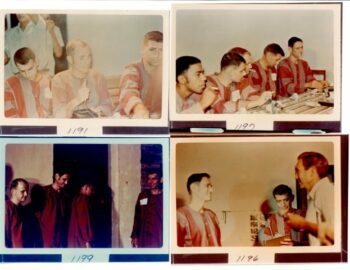
Why the sudden interest in Vietnam era movies? Coauthor of “Dissenting POWs” weighs in

Why the sudden interest in Vietnam era movies? Coauthor of “Dissenting POWs” weighs in

"'Why do we go back?' she asked sardonically, 'because they go back,' the pro-war hawks and military establishment. The 'patriarchy,' as she put it, ruminates the defeat in Vietnam like a bad sandwich growling in its stomach through a night that will not end. The defeat in Vietnam struck at a pillar of American manhood. Vietnam veterans would sometimes be chided by older veterans: they had won their war; Vietnam veterans had lost—what kind of men were they?"