Monthly Review Press

COVID-19 Does Discriminate: Gerald Horne discusses how the virus “rips the mask off US society”

COVID-19 Does Discriminate: Gerald Horne discusses how the virus “rips the mask off US society”

Allen Ruff, host of A Public Affair, from community radio station WORT in Madison, Wisconsin, talks to Dr. Gerald Horne, historian and prolific author—whose book, The Dawning of the Apocalypse, is forthcoming this July. In their conversation, Horne explores the assertion that the arrival of COVID-19 has exposed inequities in our social system and continues to act as a catalyst for deep and simmering social and economic crises—all worsened by the current political system....

Delusions of the American Revolution: Science & Society looks at “The Apocalypse of Settler Colonialism”

Delusions of the American Revolution: Science & Society looks at “The Apocalypse of Settler Colonialism”

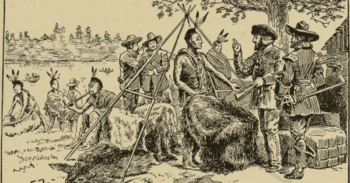
In this comprehensive study of the connections among capitalism, slavery and white supremacy, Gerald Horne, the Moores Professor of History and African American Studies at the University of Houston and the author of more than 30 scholarly books, takes a deep dive into the 17th century, revealing fallacies in what later ages have said about the earlier ones, showing the slow and steady consolidation of axes of differentiation in the service of capital, and ultimately connecting the choice in 2016 of “a vulgar billionaire” with the cross-class coalition that originated in the colonial settlements of the New World....

Action Guide for Green New Deal Advocates: Science for the People reviews “Creating an Ecological Society”

Action Guide for Green New Deal Advocates: Science for the People reviews “Creating an Ecological Society”

Creating an Ecological Society is an important and timely book for two reasons. First, the authors merge two rich areas of discourse—environmental conservation and anti-capitalism—in a seamless narrative that underscores both the urgency of our times and the opportunity of the moment. Second, authors Fred Magdoff and Chris Williams describe how creating an ecological society based on a set of shared values can directly improve the lived experience of individuals across the globe...

How capitalism interlocks with imperialism: Counterfire reviews Intan Suwandi’s “Value Chains”

How capitalism interlocks with imperialism: Counterfire reviews Intan Suwandi’s “Value Chains”

Capitalism has always been international in nature. Even reaching back to its earliest embryonic form, in the concentrations of industry and merchant capital in Renaissance Italy, capital depended upon a European-wide trading market. The system’s true emergence came in the context of the European conquest of the Americas, its trading outposts in Asia, and the establishment of the Atlantic slave trade. An international hierarchy enabled by atrocity, war and plunder has always been central to the functioning of capitalism...

When Solidarity Mattered: CounterPunch considers “Radical Seattle: The General Strike of 1919”

When Solidarity Mattered: CounterPunch considers “Radical Seattle: The General Strike of 1919”

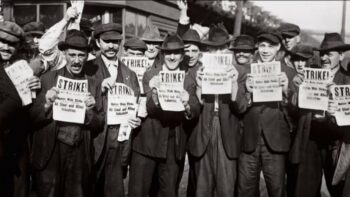
This is a special book, bearing an almost sacred topic for all those interested in the history of the American labor and the Left. The vibrant, pre-1920 Socialist Party, waxing strong and confident until struck down for its resistance to the US entry into the First World War, stood for a larger and more diverse radicalism. including Wobblies, quasi-wobblies. labor and cultural radicals of no certain description and of several generations. They had in common the sense that dramatic change in society was possible, perhaps inevitable....

“From Commune to Capitalism” reviewed by Science & Society

“From Commune to Capitalism” reviewed by Science & Society

This book is expressive of a new wave of scholarly reassessments of China’s transition from its socialist past to capitalist present. From a Chinese perspective, it has not much in common with the canonical CCP narratives widely circulated in printed media and Party phone apps, as Zhun Xu employs a “betrayal of the revolution” rhetoric that pinpoints ruptures between a socialist China under Mao Zedong’s leadership and a capitalist China headed by Deng Xiaoping and afterwards ...

Why the presidential debates aren’t about imperialism: The Progressive Populist looks at Intan Suwandi’s “Value Chains”

Why the presidential debates aren’t about imperialism: The Progressive Populist looks at Intan Suwandi’s “Value Chains”

Imperialism does not play out much in the 2020 presidential race. That says more about US corporate power over the two political parties and other institutions such as the new media, e.g., Comcast owning MSNBC. ¶ Meanwhile, as the US has deindustrialized, 79 percent of the globe’s industrial workers toiled in the Global South in 2010, over double the figure in 1950. The fruits of their exploited labor sell in the Global North

Intellectual rigor + intensely engaged activism = Helena Sheehan’s “Navigating the Zeitgeist”

Intellectual rigor + intensely engaged activism = Helena Sheehan’s “Navigating the Zeitgeist”

The backward and repressive nature of the 1950s in regard to rights and opportunities for women has been widely exposed, not least through cultural representations like ‘Mad Men’, Doris Day films, and every single domestic appliance or kitchen advert from that decade and beyond. Women are housewives and mothers, slim and glamorous with high heels and frilly aprons. It’s easy to laugh now at these caricatures which hid an uncomfortable and often very unhappy reality. But it would never have occurred to me that in contrast to the life of a 1950s housewife, a bright and highly intelligent young girl would choose, in preference to that fate, to become a nun. But so was the case with Helena Sheehan, born into 1940s USA.