In the history of Marxism since Karl Marx’s death, Frederick Engels has cut a controversial figure across the centuries. Through an examination of their correspondence and collaborations, McFarlane presents Engels as not only a stalwart friend and colleague to Marx, but a fascinating organizer, editor, and strategist in his own right. | more…
The Prosecution of Professor Chandler Davis tells the true tale of a mathematician who found himself taking an involuntary break from chalking equations to sit opposite a row of self-righteous anti-Communist congressmen at the height of the McCarthy era. Courageously asserting the First Amendment to confront a system rapidly descending into fascism, Davis testified before the House Un-American Activities Committee (HUAC). He became one of a small number of left wingers who served time for contempt of Congress. | more…
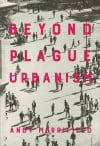
A soulful and poetic examination of the future of city life
Our cities have been plagued by economic injustices and inequalities long before COVID-19 upended urban life everywhere. Beyond Plague Urbanism delves into this zone of urban pathology and wonders what successive lockdowns and exoduses, remote work and small-business collapse, redundant office space and unaffordable living space portend for our society in cities and our cities in society.
The city has historically been a Great Book inspiring a liberal education, the kind that teaches you how to become a citizen of the world. The city was always an existential rite of passage, especially for young people, broadening
Kent Klitgaard surveys degrowth thought, starting with the essential contradiction of capitalism presented by Marx, which gives rise to our current planetary crisis. Through an understanding this contradiction and degrowth literature spanning twentieth century, the author presents a plan for a sustainable and planned future socialist society. | more…
Historical materialism, in the dominant twentieth-century narrative in the West, is understood as confined to social sciences and humanities. However, John Bellamy Foster writes, Marx and Engels did not have such a limited conception, instead engaging with the natural sciences, providing insight into the dialectics of nature. | more…
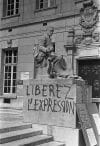
In popular thought, the youth and student movements of France May 1968 have been linked with the thinkers of what is known as French theory. Gabriel Rockhill considers the actual, less-than-revolutionary actions of these popular philosophers in the student revolts, then turns our attention to a deeper question: Who benefits from drawing these tenuous connections? | more…
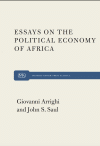
These essays, by two of the foremost scholars who worked in the Marxist tradition on African economic and social issues, offers an overview of socialism and economic development, and of nationalism and revolution in sub-Saharan Africa; of labor, peasantries, and populism. It includes case studies of Tanzania, Rhodesia, and Mozambique.
Giovanni Arrighi (1937-2009) taught in Europe, Africa, and the United States. He was a member of the Zimbabwe African Peoples Union in 1966, and was deported from Rhodesia for his political activities. In 1979, Arrighi joined Immanuel Wallerstein and Terence Hopkins as a professor of sociology at the Fernand Braudel Center at Binghamton University.
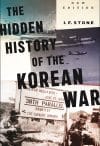
First published in 1952, I. F. Stone’s Hidden History of the Korean War was a stunning indictment of the U.S. war machine and the mass media’s unquestioning acceptance of the government’s deception. In their new introduction, Tim Beal and Gregory Elich explore Hidden History‘s continuing relevance to current events, including the rapidly escalating New Cold War. | more…
Monthly Review editors remember the life of MR editorial board member John J. Simon (1934–2022), a dedicated socialist, towering figure in radical publishing and broadcasting. | more…
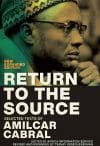
A classic collection of essays calling for decolonization through self-liberation
“For us,” said Amilcar Cabral, “freedom is an act of culture.” Guided by the concrete realities of his people, he called for a Return to the Source, a process of decolonization through “re-Africanization.” With a system of thought rooted in an African reading of Marx, Cabral was a deep-thinking revolutionary who applied the principles of decolonization as a dialectic task, and in so doing became one of the world’s most profoundly influential and effective theoreticians of anti–imperialist struggle. He translated abstract theories into agile praxis and in under just ten years steered the liberation of three–quarters
March’s “Notes from the Editors” revisits the Non-Aligned Movement and its growing role in the New Cold War. The rise of Russia, China, BRICS, and other nonaligned countries hearlds the emergence of a new, multipolar world, counteracting the global hegemony of the United States. | more…
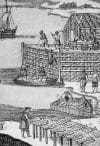
The Fishing Revolution is a rarely explored, yet critical, event in the evolution of capitalism. Ian Angus elaborates on this revolution in the global marketplace and its role as a cornerstone of imperialism, colonialism, and capitalism in the sixteenth and seventeenth centuries. | more…