Labor

There is a growing sense in China, Alex Witherspoon, Amir Khan, and Yu Zhou write, that the timeworn methods of social advancement are yielding diminishing returns. Using an original survey of 301 individuals in Jingzhou City, the authors lay bare the roots of this widespread feeling of involution. | more…
Matteo Crossa reveals the true nature of unequal value transfer from Mexico to the United States. Going beyond a simple tally of wages lost versus remittances, Crossa’s research demonstrates the true magnitude of the value stolen from Mexico, negating the claim that its manufacturing sector is a boon to the Mexican working class. | more…

Chris Gilbert examines the ecological aspects of Venezuela’s project of communal socialism, as well as its relation to the country’s inherited extractive economy. These democratically run communities present an alternative to the extractivist and productivist social relations driving the planet to ruin. | more…

As the impending planetary crisis looms ever-closer, Martin Hart-Landsberg proposes a new focus on the Second World War industrial conversion experience, in which production and consumption were guided by central planning agencies. These successes and pitfalls of this period provide many useful lessons for activists and organizers working toward planned degrowth. | more…

The working class is being robbed, both through outright expropriation and the more hidden exploitation of countless workers who are struggling to make ends meet while capitalists pocket the surplus value they produce. Fred Magdoff and John Bellamy Foster dissect the neoliberal assault on the working class that is spurring a new generation of labor organizing. | more…

What did Marx mean in his discussion of “so-called primitive accumulation” in Capital? Here, Ian Angus argues that the term is widely misunderstood—but its illumination reveals great insight to the conditions of exploitation and expropriation. | more…

Capital, Ben Selwyn writes, has been advancing its interests under the guise of protecting “global supply chain resilience.” While those promoting the resilience agenda assert that these supply chains represent a net benefit, evidence suggests that they increase the transfer of surplus value from the Global North and, especially, in the. South. | more…

Martin Hart-Landsberg revisits the history of the industrial re-organization of the U.S. economy during the Second World War. What can we learn from our past about the systemic changes necessary to face our future? | more…

Over the last 11,700 years, during which human civilization developed, the earth has existed within what geologists refer to as the Holocene Epoch. Now science is telling us that the Holocene Epoch in the geological time scale ended, replaced by a new more dangerous Anthropocene Epoch, which began around 1950. The onset of the Anthropocene Epoch is characterized by an “anthropogenic rift” in the biological cycles of the Earth System, marking a changed reality in which human activities are now the main geological force impacting the earth as a whole, generating at the same time an existential crisis for the world’s population. | more…
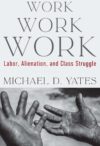
For most economists, labor is simply a commodity, bought and sold in markets like any other – and what happens after that is not their concern. Individual prospective workers offer their services to individual employers, each acting solely out of self-interest and facing each other as equals. The forces of demand and supply operate so that there is neither a shortage nor a surplus of labor, and, in theory, workers and bosses achieve their respective ends. Michael D. Yates, in Work Work Work: Labor, Alienation, and Class Struggle, offers a vastly different take on the nature of the labor market. | more…
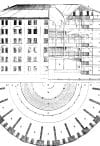
Capitalism’s two main underpinnings are control and exploitation/expropriation. While there are many sites of control they are all generally supportive of the interests of capital, namely, the endless drive to accumulate wealth. They all help to ensure that we behave so that the system continues to reproduce itself. Since workplaces are the sites where profits are extracted from our labor, it is here that control is most critical. | more…

The struggle over schools today requires battles over both the privatization of education and the current attempts to limit its social content and meaning. Those fighting against this changing totality must align themselves with the embattled radical teachers in the trenches. In the famous words of Grace Lee Boggs, more than a half-century ago, it is necessary to create “a new system of education that will have as its means and its end the development of the great masses of people to govern over themselves and administer over things.” | more…