Category: Monthly Review Press /

Anti-Capitalist Hotbed: Counterpunch on Cal Winslow’s “Radical Seattle”

Anti-Capitalist Hotbed: Counterpunch on Cal Winslow’s “Radical Seattle”

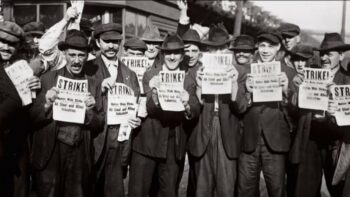
Popular uprisings are rarely as spontaneous as the mainstream press often makes them out to be. Instead, from the Paris Commune to the Arab Spring and beyond, they are more often the result of extended grassroots organizing, previous actions and strikes, and even legislative campaigns. The rates of participation are almost always linked to the amount of organizing that took place weeks, months and even years before the event takes place. ¶ It is this understanding that makes Cal Winslow’s recently published book Radical Seattle such an excellent history....

How capitalism interlocks with imperialism: Counterfire reviews Intan Suwandi’s “Value Chains”

How capitalism interlocks with imperialism: Counterfire reviews Intan Suwandi’s “Value Chains”

Capitalism has always been international in nature. Even reaching back to its earliest embryonic form, in the concentrations of industry and merchant capital in Renaissance Italy, capital depended upon a European-wide trading market. The system’s true emergence came in the context of the European conquest of the Americas, its trading outposts in Asia, and the establishment of the Atlantic slave trade. An international hierarchy enabled by atrocity, war and plunder has always been central to the functioning of capitalism...

When Solidarity Mattered: CounterPunch considers “Radical Seattle: The General Strike of 1919”

When Solidarity Mattered: CounterPunch considers “Radical Seattle: The General Strike of 1919”

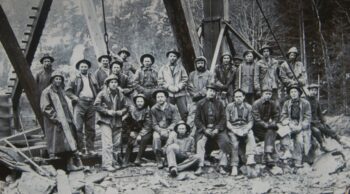
This is a special book, bearing an almost sacred topic for all those interested in the history of the American labor and the Left. The vibrant, pre-1920 Socialist Party, waxing strong and confident until struck down for its resistance to the US entry into the First World War, stood for a larger and more diverse radicalism. including Wobblies, quasi-wobblies. labor and cultural radicals of no certain description and of several generations. They had in common the sense that dramatic change in society was possible, perhaps inevitable....

The 15-year rising: Truthout reviews Fred Wilcox’s “Shamrocks and Oil Slicks”

The 15-year rising: Truthout reviews Fred Wilcox’s “Shamrocks and Oil Slicks”

Fighting fossil fuel companies can be dangerous business. The people of County Mayo, Ireland, found that out when they rose up against Shell Oil in the early 2000s. The uprising lasted 15 years. Protesters were beaten and jailed. But they delayed the refinery’s opening by 10 years, cost Shell billions of dollars and caused the company a public relations nightmare, as a new book by Fred Wilcox, Shamrocks and Oil Slicks, recounts....

Understanding the chains of global imperialism: Intan Suwandi visits THIS IS HELL!

Understanding the chains of global imperialism: Intan Suwandi visits THIS IS HELL!

Intan Suwandi, author of the recently published Value Chains: The New Economic Imperialism, talked to Chuck Mertz, host of the weekly radio show, THIS IS HELL!, about how individual workers in the Global South — despite the purported demise of imperialism — continue to be intricately controlled by multinationals.

Intellectual rigor + intensely engaged activism = Helena Sheehan’s “Navigating the Zeitgeist”

Intellectual rigor + intensely engaged activism = Helena Sheehan’s “Navigating the Zeitgeist”

The backward and repressive nature of the 1950s in regard to rights and opportunities for women has been widely exposed, not least through cultural representations like ‘Mad Men’, Doris Day films, and every single domestic appliance or kitchen advert from that decade and beyond. Women are housewives and mothers, slim and glamorous with high heels and frilly aprons. It’s easy to laugh now at these caricatures which hid an uncomfortable and often very unhappy reality. But it would never have occurred to me that in contrast to the life of a 1950s housewife, a bright and highly intelligent young girl would choose, in preference to that fate, to become a nun. But so was the case with Helena Sheehan, born into 1940s USA.

Socialism & Democracy reviews Helena Sheehan’s “Navigating the Zeitgeist”

Socialism & Democracy reviews Helena Sheehan’s “Navigating the Zeitgeist”

Each episode is given a critical and self-critical exposition, including evaluations of well-known political figures as well as some who were lesser known but equally important. Traversing Cold War America, Catholicism, the Sixties New Left, Sinn Fein and the IRA, the Communist Party of Ireland and the International Communist movement, Navigating the Zeitgeist is as much a sweeping overview as it is a personal narrative. In both senses, it’s an insightful and informative read.