Category: Monthly Review Press /

“Refreshing and timely”: Marx & Philosophy reviews Samir Amin’s Russia and the Long Transition from Capitalism to Socialism

“Refreshing and timely”: Marx & Philosophy reviews Samir Amin’s Russia and the Long Transition from Capitalism to Socialism

Samir Amin’s Russia and the Long Transition from Capitalism to Socialism is a collection of essays written between 1990 and 2015 on Soviet and Russian history…. ¶ At first glance, the title might appear to be backwards, as the socialist Soviet Union no longer exists and the capitalist Russian Federation has been deemed to be its successor on the world stage. However, it is from this juncture that Amin asks the reader to look towards the future as a way to analyse the present in comparison with the past, rather than looking back at the past to better understand the present and the possible future. In short, the author’s aim is to juxtapose the future of communism (as a higher mode of production) against the present in comparison with Russia’s past

And the winners are …

And the winners are …

Large congratulations for their fine work go to:
Stefano Longo, Rebecca Clausen, and Brett Clark, who won the 2017 Paul M. Sweezy Marxist Sociology Book Award from the American Sociological Association for their book, The Tragedy of the Commodity: Oceans, Fisheries, and Aquaculture, which was based on their 2014 article in MR magazine, “Capitalism and the Commodification of Salmon”...

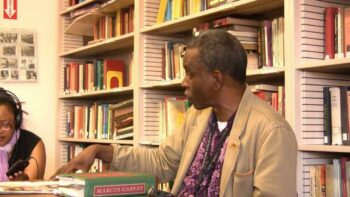
A Brief History of the KKK w/Gerald Horne, via The Real News Network

A Brief History of the KKK w/Gerald Horne, via The Real News Network

Gerald Horne, historian and author of several books, including the upcoming The Apocalypse of Settler Colonialism: The Roots of Slavery, White Supremacy, and Capitalism in Seventeenth-Century North America and the Caribbean, talks to Jaisal Noor of The Real News Network about July 8 KKK rally in Charlottesville, VA—and the origins of one of America’s oldest hate groups.

Can the European Left Save Itself? The Laura Flanders Show asks Helena Sheehan and Natalie Jeffers…

Can the European Left Save Itself? The Laura Flanders Show asks Helena Sheehan and Natalie Jeffers…

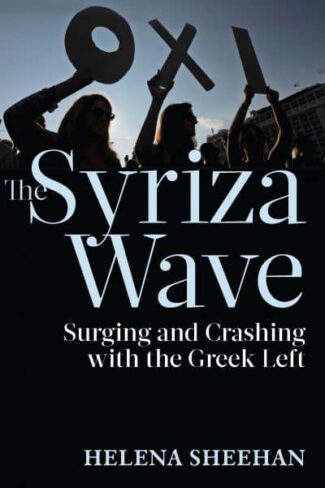
Irish author Helena Sheehan recently traveled to the United States for a tour of her new book, The Syriza Wave: Surging and Crashing with the Greek Left. There, she appeared, with Natalie Jeffers, Black Lives Matter UK activist, on The Laura Flanders Show to discuss whether social movements can actually stick to their promises after they’re elected to power—and what might be learned from Greece’s current government of Syriza, which ran against austerity and ended up imposing it.

New! A Redder Shade of Green by Ian Angus

New! A Redder Shade of Green by Ian Angus

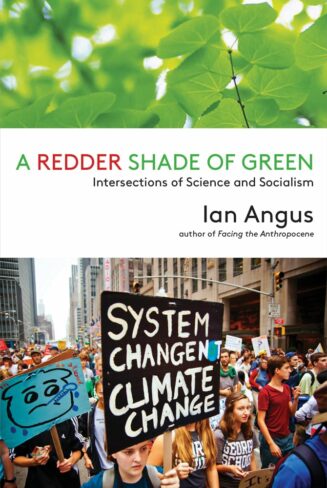
As the Anthropocene advances, people across the red-green political spectrum seek to understand and halt our deepening ecological crisis. Environmentalists, scientists, and ecosocialists share concerns about the misuse of natural resources, but often differ on explanations and solutions. Some blame environmental disasters on overpopulation. Some ask if all this worry about climate change and the ecosystem might lead to a “catastrophism” that weakens efforts to heal the planet. Ian Angus responds to these concerns in A Redder Shade of Green, with a fresh, insightful clarity, bringing socialist values to science, and scientific rigor to socialism.

G20 is now G19 + 1: Gerald Horne on US isolation at Hamburg

G20 is now G19 + 1: Gerald Horne on US isolation at Hamburg

On July 7, 2017, a group of the world’s biggest economic powers, known as the G20, met in Hamburg, Germany. What happened at the event? What kinds of realignments happened among governments? How did the U.S. emerge the meetings? Margaret Prescod of SojournerTruthradio/KPFK discussed this on July 11 with Gerald Horne, Professor of African American Studies at the University of Houston and author of more than thirty books, including the forthcoming The Apocalypse of Settler Colonialism

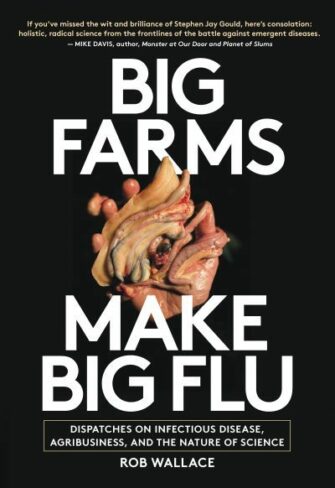
Corporate farming and the new flu: Green Left Weekly reviews Rob Wallace’s book

Corporate farming and the new flu: Green Left Weekly reviews Rob Wallace’s book

A new influenza pandemic is quite possible, according to a study by researchers at the University of NSW’s School of Public Health. The study notes that 19 different influenza strains have affected humans in the last 100 years, but the speed with which new strains have emerged has increased over the past 15 years. There have been seven new strains in the past five years alone. ¶ In Big Farms Make Big Flu, published last year by Monthly Review Press, Rob Wallace agreed a pandemic is not just more than likely, it is probable, and echoes the necessity to prepare. But his focus is to identify why the rate of new virus strains has increased, which he sees as basic to how to effectively plan containment.