Category: Monthly Review Press /

Helena Sheehan Arrives in the U.S. to discuss The Syriza Wave + New Greek Austerity Measures

Helena Sheehan Arrives in the U.S. to discuss The Syriza Wave + New Greek Austerity Measures

As the Greek Parliament approves fresh austerity measures and protests rock Athens and Thessaloniki, author Helena Sheehan arrives on the East Coast, just in time to discuss this explosive situation and her new book, The Syriza Wave: Surging and Crashing with the Greek Left. Over the next two weeks, Sheehan will appear in New York City, Philadelphia, Washington, DC, then back to NYC for the Left Forum. Here is a short summary of her tour...

Gerald Horne on Trump in Saudi Arabia

Gerald Horne on Trump in Saudi Arabia

Gerald Horne, historian and author of several books, including Confronting Black Jacobins, Race to Revolution, and the forthcoming The Apocalypse of Settler Colonialism, talks to RT Moscow about Trump’s hypocrisy vis-à-vis Islam, money, and military arms, and how the president is reaching new lows in mixing business with politics…

New! The Politics of Immigration: Questions and Answers

New! The Politics of Immigration: Questions and Answers

U.S. immigration has been the subject of furious debates for decades. On one side, politicians and the media talk about aliens and criminals, with calls to “deport them all.” On the other side, some advocates idealize immigrants and gloss over problems associated with immigration. Dialogue becomes possible when we dig deeper and ask tough questions: Why are people in other countries leaving their homes and coming here? What does it mean to be “illegal”? How do immigration raids, prisons, and border walls impact communities? Who suffers and who profits from our current system—and what would happen if we transformed it?

Aeon: “Who Names Diseases?” – in which Rob Wallace figures prominently

Aeon: “Who Names Diseases?” – in which Rob Wallace figures prominently

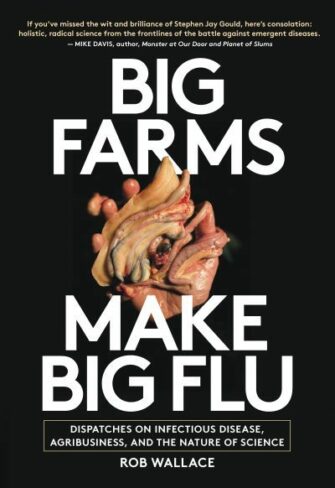
In his book Big Farms Make Big Flu, the evolutionary ecologist Rob Wallace draws a direct link between the growing threat of zoonotic diseases, and the agricultural practices that neoliberalism has encouraged—notably, the expansion and consolidation of agribusinesses, and the vertical integration of different stages of food production. The food we eat is produced by an ever-shrinking number of ever-growing mass-production units, in which vast herds or flocks of hybrid animals are packed into megabarns, forced to mature in a matter of months, and then slaughtered, processed and transported around the world.

Oakland, May 30: Against the Corporate Juggernaut – Howard Ryan on Educational Justice

Oakland, May 30: Against the Corporate Juggernaut – Howard Ryan on Educational Justice

Tuesday, May 30
5:00-7:00pm
2027 42nd Ave.
Oakland, CA 94601
With Donald Trump and Education Secretary Betsy DeVos at the helm, teachers, parents, and students have every reason to organize! But what exactly are we up against? Let’s talk about that with Howard Ryan, author of Educational Justice: Teaching and Organizing Against the Corporate Juggernaut, who will offer an analysis and organizing stories that can help our work.

Rethink, Re-examine, but Don’t Abandon Revolution

Rethink, Re-examine, but Don’t Abandon Revolution

August Nimtz’s essay in this book on Marx and Engels, and organization, alone would make it worthwhile. Nimtz shows that though they didn’t write a huge amount about political organization, Marx and Engels showed through their practice and fragmentary comments that they believed, like Lenin after them, that socialists need to get organized in advance of great social struggles if they wanted to transform society.

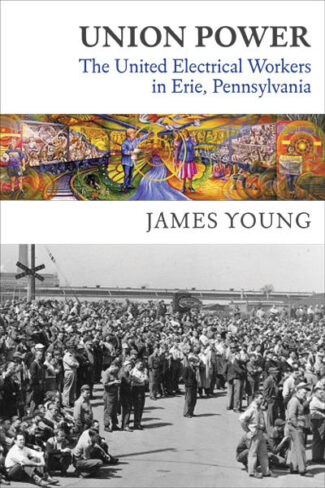
Jim Young’s Union Power reviewed by Labor Notes

Jim Young’s Union Power reviewed by Labor Notes

For unions in corporate America, it’s always been hard times. Even in labor’s heyday—the 1940s, ’50s, and ’60s—unions had to struggle for everything. Plus, back then organizers risked being tarred as stooges for Moscow. ¶ Historian James Young makes those points clear in his readable new book Union Power: The United Electrical Workers in Erie, Pennsylvania. But the book offers more than history—it’s instructive, showing how a progressive union can survive in the incredibly hostile and toxic environment of corporate America.

“Guernica remains, alas, timeless”: Cal Winslow, via Jacobin

Guernica remains, alas, timeless”: Cal Winslow, via Jacobin

Pablo Picasso painted Guernica in just five weeks in the spring of 1937. ¶ Then living in Paris, Picasso, fifty-five, was already well-known. Born in Spain in 1881, he went to Paris in 1900; he had visited Spain in 1934 but would never return. ¶ Still, the insurgent Popular Front government appointed him director of the Prado Museum in Madrid, in absentia, and Picasso undertook several projects sympathetic to the Republic and to raise funds on its behalf. The government in turn asked him to produce a mural for the 1937 Paris World’s Fair, and he agreed, though progress at first was slow. It was the April 26 attack at Guernica that moved him. He threw himself into the painting and in less than five weeks, astonishingly, had completed Guernica...

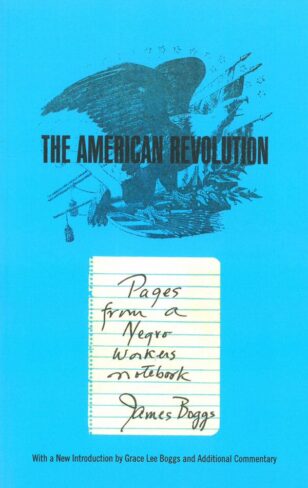
“Ragpicking Through History,” we discover, via Salvage, Jimmy Boggs

“Ragpicking Through History,” we discover, via Salvage, Jimmy Boggs

Salvage, a startling new quarterly of revolutionary arts and letters, brings us “Ragpicking Through History: Class Memory, Class Struggle and its Archivists,” an article by Tithi Bhattacharya, in which James Boggs’s The American Revolution: Pages from a Negro Worker’s Notebook receives notice...