Category: Monthly Review Press /

Melrose on Lebowitz: The Socialist Imperative

Melrose on Lebowitz: The Socialist Imperative

‘The socialist imperative,’ according to Michael A. Lebowitz, is to ‘end capitalism and build a society of associated producers oriented to the full development of human potential.’ To move beyond capitalism, to understand how capitalism is failing and why it ought to be superseded today, as a matter of urgency, is the primary purpose of Lebowitz’s The Socialist Imperative: From Gotha to Now, a collection of essays based mostly on previous papers, books, and contributions. ‘The necessity to end the capitalist system and to replace it with that inverse situation oriented to the worker’s own need for development is undeniable’ insists Lebowitz. ‘Very simply,’ he concludes his first chapter, ‘if we are to have any dreams, we must end capitalism now, by all means possible….’

Michael Lebowitz on Marx’s Capital: “If you don’t understand the Second Product, you understand nothing”

Michael A. Lebowitz, author of several MRP books, among them, The Socialist Imperative: From Gotha to Now, explains that “If you don’t understand the Second Product in Capital, you understand nothing.” This talk took place at the international conference, “150 years Karl Marx’s Capital, Reflections for the 21st century,” January 14-15, in Athens, Greece. The conference was sponsored by the Rosa Luxembourg Stiftung.

Marta Harnecker: How to read Capital today, lessons from Latin America

Marta Harnecker, author of A World to Build: New Paths toward Twenty-First Century Socialism, explains “How do read Capital today, lessons from Latin America.” This talk took place at the international conference, “150 years Karl Marx’s Capital, Reflections for the 21st century,” January 14-15, in Athens, Greece. The conference was sponsored by the Rosa Luxemburg Stiftung


“Wisdom in the room”: Alan Wieder talks about Studs Terkel on WOMR-FM

In light of how the mass media got the U.S. populace all wrong covering the recent presidential election, Alan Wieder, author of Studs Terkel: Politics, Culture, but Mostly Conversation, talked to Ira Wood on radio station WOMR, 92.1 fm about Studs Terkel, and the art of being in touch with America.

The Socialist Imperative reviewed by Green Social Thought

The Socialist Imperative reviewed by Green Social Thought

“In recent years Michael A. Lebowitz, a writer associated with the Monthly Review current of socialist thought, has produced a number of books regarding practical matters involved with the building of socialism. In his most recent book The Socialist Imperative: from Gotha to Now Mr. Lebowitz has presented a collection of essays expanding upon the themes of his earlier works, including some rather interesting insights into the weakness of the Yugoslavian model as well as making links between his views on a socialist alternative and environmental concerns.

“Crucial Critique of Free-Market Fundamentalism”: America’s Addiction to Terrorism review by Counterfire

“Crucial Critique of Free-Market Fundamentalism”: America’s Addiction to Terrorism review by Counterfire

As well as explaining in detail some of the biggest issues faced by society today, Giroux very eloquently connects the dots between them and highlights their roots within the neoliberal project. Giroux discusses torture, militarisation, surveillance, racism, education and austerity among other things and draws the links to the military-industrial-academic complex. In this review, I will go through some of Giroux’s arguments and his suggestions for working-class resistance against them.

“What does it mean to smash the state?”: Leo Panitch interviewed by LeftEast

“What does it mean to smash the state?”: Leo Panitch interviewed by LeftEast

Leo Panitch, Canada Research Chair in Comparative Political Economy and Distinguished Research Professor of Political Science at York University, has also been an editor of The Socialist Register for 25 years. With Greg Albo, Panitch edited the 2017 edition of SR, Rethinking Revolution. During a recent trip to Belgrade, Panitch was interviewed by the Serbian left-wing portal, MAŠINA. The Eastern European platform, LeftEast, translated the conversation from Serbian into English.

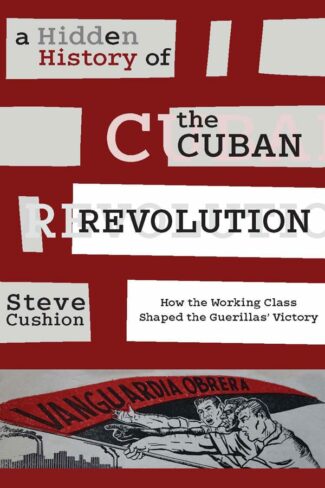
“Thinking Past Fidel”: A Hidden History of the Cuban Revolution reviewed in Jacobin

“Thinking Past Fidel”: A Hidden History of the Cuban Revolution reviewed in Jacobin

In the aftermath of Fidel Castro’s death, and with the blustery threats of the incoming Trump administration, it’s tempting to speculate about the future of Cuba. Yet this may also be an important time to rethink the origins of the revolution, so often seen as the handiwork of one man. ¶ While Fidel Castro’s extraordinary influence and power can never be ignored, we still know far too little about how or why many thousands of ordinary Cubans participated in making the revolution. This is particularly true of the Cuban labor movement.

“Why Inequality Matters”: Steve Early, in Counterpunch, reviews Michael Yates’s new book

“Why Inequality Matters”: Steve Early, in Counterpunch, reviews Michael Yates’s new book

Radical economist and Monthly Review associate editor Michael Yates grew up in a western Pennsylvania manufacturing town. He spent more than three decades working as a college professor. Yet, despite his own academic career, Yates never lost touch with the life experience of high school classmates, friends, neighbors, and relatives who toiled in blue collar jobs...

New! Educational Justice: Teaching and Organizing against the Corporate Juggernaut

New! Educational Justice: Teaching and Organizing against the Corporate Juggernaut

Educational Justice offers hope that there’s still time to take on corporatized schools and build democratic alternatives. Forcefully written by educator and journalist Howard Ryan, with contributing authors, the book deconstructs the corporate assault on schools, assesses the prevailing teachers union responses, and documents best teaching and organizing practices. Reports from various educational fronts include innovative union strategies against charter school expansion, as well as teaching visions drawn from the social justice and whole language traditions. Bold, informative, clearly reasoned, this book is an education in itself—a democratic one at that.