Category: Monthly Review Press /

Want to “make America great again?” Read John Marciano’s The American War in Vietnam: reviewed in The Veteran

Want to “make America great again?” Read John Marciano’s The American War in Vietnam: reviewed in The Veteran

In the current environment of ‘embedded’ journalists, the truth about our wars is difficult to discern, but the history of the Vietnam War is well-documented and certainly provides evidence of the deadly, viciously destructive mind set of America’s political and military leadership since World War II. It is difficult for a high school student to accept that his or her country would tell boldface lies to lure them into enlisting and deploying to areas devastated by almost fifteen years of desperate war. As Vietnam veterans, we have tried to suggest the truth for decades. Now we have a compact, well-documented, and most informative little book we can suggest they read before enlisting. I can’t help but imagine a lot of heavy, fact-based conversations will result.

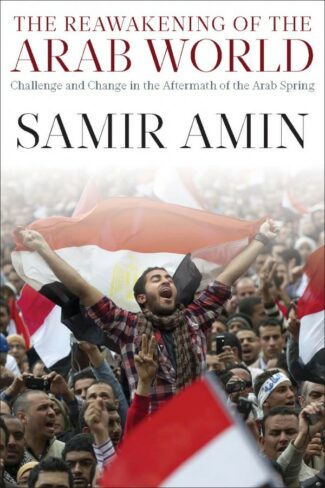
Samir Amin’s The Reawakening of the Arab World reviewed by Marx & Philosophy

Samir Amin’s The Reawakening of the Arab World reviewed by Marx & Philosophy

Samir Amin’s latest book on the revolutionary foments in the Arab world, The Reawakening of the Arab World, provides a timely voice in contrast to the obfuscated discourse of the Western media regarding the Arab Spring and its ensuing political developments. Such discourse is marked by a pronounced contradiction that at once emphasizes the urgency of confronting ISIS (Daesh) as a global terrorist threat while simultaneously decrying the humanitarian catastrophe in Syria…. Amin’s analysis cuts against ideological reactions of this kind with a detailed historical and social examination of the concrete situation in this region, and shows, primarily with regard to Egypt and Syria, how Western imperialism has throughout the 20th century aimed at stifling the modernization of the Arab world.

Facing the Anthropocene reviewed in Socialism & Democracy

This book underscores the depth of the environmental crisis and, with its thorough grounding in the scientific literature, situates the onset of the crisis in geological as well as historical time. These two time-scales now converge, signifying the end of the ecological conditions that allowed the human species to flourish.

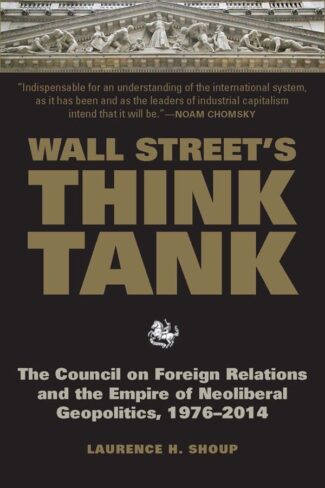
“Masterful work of critical scholarship”: Wall Street’s Think Tank reviewed in Socialism & Democracy

“Masterful work of critical scholarship”: Wall Street’s Think Tank reviewed in Socialism & Democracy

Wall Street’s Think Tank is a masterful work of critical scholarship. Using a well-trained historian’s lens, Laurence Shoup is able to document the workings of one of America’s most important elite policy planning groups. He establishes that the Council on Foreign Relations (CFR) has been at the forefront of a complex network of institutions, both public and private, which set the limits of debate on foreign policy issues. By carefully investigating the CFR’s machinations, Shoup brings out the role that it plays in anticipating the power elite’s short-term and long-term needs by defining research agendas, recommending policy positions, recruiting new intellectuals, and developing strategies which will ensure capitalist hegemony. He thus enables us to see how the US ruling class actually rules.

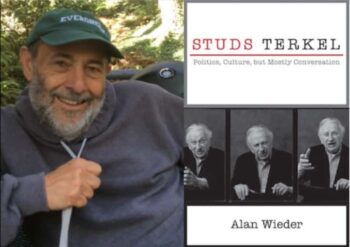
Turning the Table: Mike Royko & Herman Kogan Interview Studs on Division Street America

Turning the Table: Mike Royko & Herman Kogan Interview Studs on Division Street America

Studs Terkel interviewed people on his WFMT radio show for forty-five years. Occasionally, though, the tables were turned and guests interviewed Studs. This happened on January, 16, 1967 when Studs’ friends, journalists Mike Royko and Herman Kogan, quizzed Studs about his new book, Division Street America. The book was the first of eighteen books that Studs wrote with the guidance of Andre Schiffrin. All were published between Studs’ fifty-fifth birthday and his death at ninety-six. Known as the world’s best listener, Studs was revered for both his radio and book interviews. He nurtured people so that they talked with great depth about their lives—personally, politically, and culturally. Royko and Kogan cultivated the same from Studs.

How Studs Terkel Documented the Fight Against White Supremacy and Segregation, via Truthout

How Studs Terkel Documented the Fight Against White Supremacy and Segregation, via Truthout

Living in 2016 amidst police in the United States killing young black people, one often wonders how anyone, in spite of the elections of Barack Obama, can ever refer to the present time as post-racial. Like the struggles during the civil rights era that included Malcolm and Martin and many other people, some whose names we know but many more whom we've never heard of, Black Lives Matter, and various other groups, have taken up the mantle of the struggle that continues. Like the past, there are leaders as well as people on-the-ground, who stand up everyday both confronting and documenting horrible acts of white supremacy - police killings, poverty, incarceration of black people, and endless other acts of oppression that exist in a world that still defines economic, social, and political realities racially.

Imperialism in the 21st Century reviewed by Andreas Bieler, Nottingham University

Imperialism in the 21st Century reviewed by Andreas Bieler, Nottingham University

Despite the ongoing ramifications of the global economic crisis of 2007/2008, capitalism continues to reap super profits. In his fascinating book Imperialism in the Twenty-First Century, John Smith unravels the underlying dynamics of global capitalism. By tracing the production of the T-shirt, the cup of coffee, and the iPhone, he demonstrates how these generate the transfer of enormous surplus value from countries in the Global South to transnational corporations in the North. In this blog post, I will outline several of the key contributions of this book and offer a number of critical reflections.

Got to get on it, NOW: Facing the Anthropocene reviewed by Green Social Thought

Ian Angus’ book tries to do three things: (1) establish the reality that we’re in a completely new geologic time period (the Anthropocene), and argues that this means that activities of human beings threaten the continued existence of life on this planet; (2) demonstrate that these changes have been brought about by capitalism, and therefore, cannot be solved by capitalism; and (3) suggest strategies for social change to address these first two issues. Let’s discuss these in order. ¶ Based on scientifically-established evidence, Angus argues ‘Earth has entered a new epoch, is likely to continue changing in unpredictable and dangerous ways.’ What is he talking about?