Category: Monthly Review Press /

How Studs Terkel Documented the Fight Against White Supremacy and Segregation, via Truthout

How Studs Terkel Documented the Fight Against White Supremacy and Segregation, via Truthout

Living in 2016 amidst police in the United States killing young black people, one often wonders how anyone, in spite of the elections of Barack Obama, can ever refer to the present time as post-racial. Like the struggles during the civil rights era that included Malcolm and Martin and many other people, some whose names we know but many more whom we've never heard of, Black Lives Matter, and various other groups, have taken up the mantle of the struggle that continues. Like the past, there are leaders as well as people on-the-ground, who stand up everyday both confronting and documenting horrible acts of white supremacy - police killings, poverty, incarceration of black people, and endless other acts of oppression that exist in a world that still defines economic, social, and political realities racially.

Imperialism in the 21st Century reviewed by Andreas Bieler, Nottingham University

Imperialism in the 21st Century reviewed by Andreas Bieler, Nottingham University

Despite the ongoing ramifications of the global economic crisis of 2007/2008, capitalism continues to reap super profits. In his fascinating book Imperialism in the Twenty-First Century, John Smith unravels the underlying dynamics of global capitalism. By tracing the production of the T-shirt, the cup of coffee, and the iPhone, he demonstrates how these generate the transfer of enormous surplus value from countries in the Global South to transnational corporations in the North. In this blog post, I will outline several of the key contributions of this book and offer a number of critical reflections.

Got to get on it, NOW: Facing the Anthropocene reviewed by Green Social Thought

Ian Angus’ book tries to do three things: (1) establish the reality that we’re in a completely new geologic time period (the Anthropocene), and argues that this means that activities of human beings threaten the continued existence of life on this planet; (2) demonstrate that these changes have been brought about by capitalism, and therefore, cannot be solved by capitalism; and (3) suggest strategies for social change to address these first two issues. Let’s discuss these in order. ¶ Based on scientifically-established evidence, Angus argues ‘Earth has entered a new epoch, is likely to continue changing in unpredictable and dangerous ways.’ What is he talking about?

Listening with Respect: What Made Studs Terkel a Great Interviewer, via Truthout

Listening with Respect: What Made Studs Terkel a Great Interviewer, via Truthout

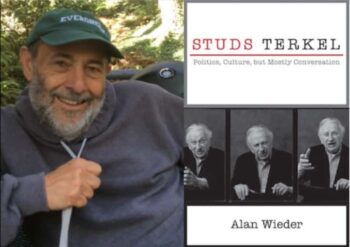
Recently, Alan Wieder, author of Studs Terkel: Politics, Culture, but Mostly Conversation, was interviewed by Mark Karlin, the editor of BuzzFlash at Truthout.org:
“Studs Terkel liked to be amazed. He loved stories that took twists and turns and he loved to be surprised. But he also always surprised us. He had been an actor, both in theater and in radio soap operas. In the latter he always played a gangster who was either dead or in jail by the third episode. He listened because he always believed there could be wisdom in the room and he defined room very broadly. Studs had conversations on the bus, at the corner market, on the street, everywhere. People I interviewed talked about when Studs was engaged it was total.

“Venezuela: Economic war or government errors?” by Marta Harnecker

“Venezuela: Economic war or government errors?” by Marta Harnecker

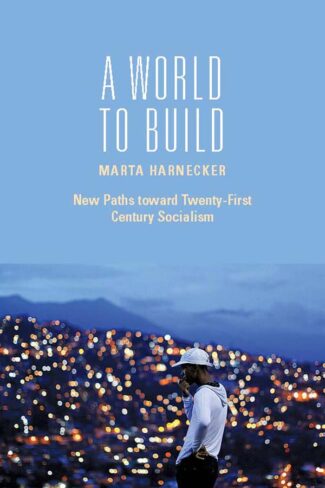
Marta Harnecker, author of A World to Build: New Paths toward Twenty-First Century Socialism, recently wrote a piece for Links International Journal of Socialist Renewal, which was translated by Rachael Boothroyd of VenezuelaAnalysis
"1. When Chávez triumphed in the presidential elections of 1998, the neoliberal capitalist model was already falling apart. The dilemma was none other than to either reform the neoliberal capitalist model, evidently with changes, and amongst those a greater for concern for social issues, but still orientated towards the same profit seeking motive, or to move forward with the construction of another model...."

“Offering great surprise”: A Hidden History of the Cuban Revolution reviewed by Toward Freedom

“Offering great surprise”: A Hidden History of the Cuban Revolution reviewed by Toward Freedom

Here is a volume offering great surprise, at least to this presumably well-educated reader, deeply sympathetic to the Cuban Revolution since its inception or at least since a rollout of toys for Christmas 1959 included some kind of Fidel costume (quickly dropped, thereafter, or did they send those props to the East Bloc?). The author of Hidden History, a retired British professor who worked in factories for considerable periods of his life, seems equally surprised. Perhaps, he opines, the cult of the personality around Che and Fidel is the reason for an absence of real social history on this vital subject? We suspect otherwise, but our suspicions hardly detract from our fascination. The material analyzed here is new and essential to any understanding of Cuban revolutionary history.

Lost Strike Revisited: John Tully’s Silvertown reviewed by Socialism & Democracy

Lost Strike Revisited: John Tully’s Silvertown reviewed by Socialism & Democracy

The importance of revisiting past strikes lies not only in recovering the often hidden memory of working-class mobilisations, but also in revealing the dynamics of those strikes—whether victorious or not—so as to draw conclusions for future collective action. This is clearly the purpose of John Tully’s study of the great strike of labourers at the Silvertown rubber and electrical factory in London in 1889. Not only is this strike a forgotten chapter in the history of the New Unionism that ultimately gave rise to the modern British labour movement; in addition, the tactics first developed by the employers at Silvertown also ‘became a blueprint for British union busters to follow.

Fidel Castro, Siempre Presente

Fidel Castro, Siempre Presente

World leaders have begun to pay tribute to the former Cuban leader and revolutionary Fidel Castro who has died aged 90. ¶ The incumbent Cuban President Raul Castro announced his brother had died at 10:29pm on state television late on Friday night. He ended the announcement by shouting the revolutionary slogan: ‘Toward victory, always!’ ...

“Back to the realm of remembering…” The American War in Vietnam reviewed in Counterpunch

“Back to the realm of remembering…” The American War in Vietnam reviewed in Counterpunch

In classical mythology, the Acheron is one of the rivers of the Underworld. It marks the boundary between the living and the dead. The ferryman Charon ferries the dead across the Acheron to a place where they lose memory. Nothing of what made them human remains—happiness, suffering, love, hatred, guilt, regret, redemption, betrayal, forgiveness. ¶ John Marciano’s recently published book, The American War in Vietnam, functions as such a Charon in reverse. It ferries readers back to the realm of remembering. This slim volume could not have come at a more opportune moment. American political culture is punch-drunk with the pursuit of war. The altered state is reaching the point of delirium tremens. Thwarted in the neocolonial scheme of annexing Syria by Russia’s legal intervention, the American elite are pushing for confrontation.