Category: Monthly Review Press /

Facing the Anthropocene reviewed in Britain’s Weekly Worker

“On August 29 of this year the Anthropocene Working Group (AWG) recommended to the International Geological Congress (IGC) that the ‘Anthropocene’ - the epoch when human activity has had a significant impact on the ecosystem - should have formal recognition. Ian Angus’s book is therefore highly relevant - the AWG hopes that recognition will be forthcoming at the next IGC, which will take place in Delhi in 2020....”

Facing the Anthropocene reviewed in Socialism and Democracy

This book underscores the depth of the environmental crisis and, with its thorough grounding in the scientific literature, situates the onset of the crisis in geological as well as historical time. These two time-scales now converge, signifying the end of the ecological conditions that allowed the human species to flourish. ¶ Herein lies the drama—and, with it, the challenge—that we are now living....

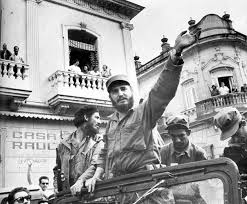
Cuba: Its Hidden History and the U.S. Empire: 2 MRP books reviewed in International Socialism

Cuba: Its Hidden History and the U.S. Empire: 2 MRP books reviewed in International Socialism

A Hidden History of the Cuban Revolution: How the Working Class Shaped the Guerrillas’ Victory
By Steve Cushion
Cuba and the U.S. Empire: A Chronological History
By Jane Franklin
The last year and a half have left no doubt that the history of the Cuban Revolution will need to be revisited and probably rewritten. From the moment that Raúl Castro and Barack Obama met, and the American president visited the island, everything changed.

Imperialism in the 21st Century: “novel forms, old problems”: International Socialism review

Imperialism in the 21st Century: “novel forms, old problems”: International Socialism review

The significance of John Smith’s book lies in his powerful critique of mainstream economics and official statistics as he attempts a renewal of dependency theory. Mobilising Marxist value theory to this end he argues that the Global South’s formal independence masks an abiding economic and political subordination to the imperialist powers and powerful Northern capitals. The book’s impact is reflected in the critical commentary that it has provoked, including on Michael Roberts’s blog.

“Live issue on the eco-left”: Facing the Anthropocene reviewed by Socialist Resistance

This book is the best I have seen, from a Marxist point of view, on the issue of the Anthropocene and its implications for life on this planet. It combines a clear warning of the scale of the crisis we face with a well informed exposition of what the Anthropocene is and why we need to take it seriously. ¶ It is an unequivocal declaration the Anthropocene is here, at that its implications, in terms life on this planet, including our own, are dangerous in the extreme, and that it now determines the framework in which the struggle to save the biosphere of the planet as a habitable space now takes place.

“Studs Terkel: listener and humanitarian” via Radio New Zealand

“Studs Terkel: listener and humanitarian” via Radio New Zealand

Alan Wieder, author of Studs Terkel: Politics, Culture, but Mostly Conversation, talks with Wallace Chapman on Radio New Zealand‘s weekly show, “Sunday Morning”
“Wieder says that wherever Terkel was, he believed people had something to say.
Terkel captured Chicago’s racism in the ’70s through an interview with a policeman for his book Working: People who talk about what they do all day and how they feel about what they do…”