Category: Monthly Review Press /

“Slaughter in Vietnam Haunts Bob Kerrey’s Appointment to Fulbright University”—John Marciano via Truthout.org

“Slaughter in Vietnam Haunts Bob Kerrey’s Appointment to Fulbright University”—John Marciano via Truthout.org

The struggle over memory and truth about the Vietnam War continues. It reemerged in May when President Obama announced the opening of Fulbright University in Vietnam, and that Bob Kerrey would chair the board of trustees. Fulbright is the first private university in Vietnam, with ties to the Kennedy Center at Harvard and the US State Department. What does this recent appointment and the controversy surrounding it teach us about the War in Vietnam?

Facing the Anthropocene: Transforming the Relationship between Leftist Ecological Thought & Earth System Science

Facing the Anthropocene hits nails on their heads over and over again. It should transform the relationship between leftist ecological thought and Earth System science. It’s easy to praise it here, because Angus’s analysis is in many ways very similar to my own in The Birth of the Anthropocene…. I think that the great thing about Facing the Anthropocene—and this might sound like faint praise, but it isn’t—is just how sensible it is. It’s learned and principled and exciting and all of that. But most of all it’s wonderfully well-considered.

“Enormous Potential for Fresh Revolts”: Imperialism in the 21st Century reviewed by Counterfire

“Enormous Potential for Fresh Revolts”: Imperialism in the 21st Century reviewed by Counterfire

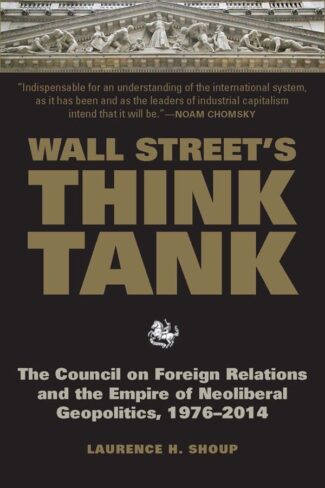
Over the last forty years, global capitalism has increasingly been shaped by the core tenets of neoliberalism. The neoliberal counter-revolution emerged as a response to the return of economic crisis in the 1970s, and to the power of working class and anti-colonial movements in the 1960s and 1970s. It was geared towards the interests of wealthy and corporate elites, at the expense of the vast majority of working class and oppressed people worldwide. The divisions between the 1% and the 99% have become ever more acute, with the most extraordinary and ostentatious wealth for a tiny elite alongside hardship, insecurity and poverty for many people.

A Hidden History of the Cuban Revolution reviewed in Counterfire

A Hidden History of the Cuban Revolution reviewed in Counterfire

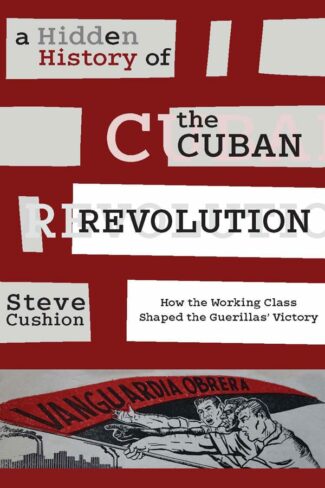
Cushion is able to make a substantial case that the working-class contribution to the revolution has been severely underestimated, and that in fact Castro’s guerrilla movement would not have been able to take power without working-class militancy. The story is detailed and intricate, but full of interest, beginning with the defeat of the 1933 general strike, which first brought Batista to political leadership in Cuba, but concentrating on the years of the latter’s dictatorship proper, from March 1952, to the consolidation of Castro’s government in 1959

New! Studs Terkel: Politics, Culture, but Mostly Conversation

New! Studs Terkel: Politics, Culture, but Mostly Conversation

Studs Terkel was an American icon who had no use for America’s cult of celebrity. He was a leftist who valued human beings over political dogma. In scores of books and thousands of radio and television broadcasts, Studs paid attention—and respect—to “ordinary” human beings of all classes and colors, as they talked about their lives as workers, dreamers, survivors. Alan Wieder’s Studs Terkel: Politics, Culture, but Mostly Conversation is the first comprehensive book about this man.

John Bellamy Foster speaks at the Marxism 2016 Conference

July 2, 2016, London: John Bellamy Foster, editor of Monthly Review, discusses the theoretical and programmatic challenges that the Anthropocene, a dangerous new epoch in planetary history, poses for socialists in the 21st century.

E.P. Thompson and the Making of the New Left reviewed in New Politics

E.P. Thompson and the Making of the New Left reviewed in New Politics

E.P. Thompson (1924–1993) wore several hats during his life. His magnum opus as a historian was The Making of the English Working Class, one of the greatest history books written in the twentieth century in any language. He fought tirelessly for nuclear disarmament in the 1980s, which almost surely took years off his life. He may well be least remembered for being a founder of the British New Left. For this reason, Cal Winslow’s selection of Thompson’s writings from the late 1950s to the early 1960s is especially welcome and timely—though not surprising, since Winslow was a student of Thompson’s at the University of Warwick and is a longtime activist and writer.