Monthly Review Press

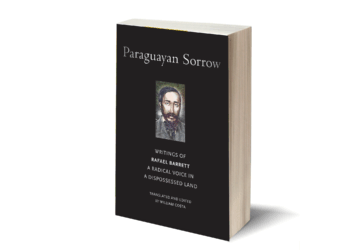
William Costa’s translation of “Paraguayan Sorrow”

William Costa’s translation of “Paraguayan Sorrow”

Barrett has always been close to the hearts of Paraguayan radicals, who, along with his progeny, have kept his memory alive. And he is known throughout the Southern Cone of South America, though his work has suffered long periods of relative neglect there. However, there has been a resurgence of interest in his life and work. We hope that with the publication of this first English translation of his major work, which includes his powerful set of essays The Truth of the Yerba Mate Forests, the life and works of Rafael Barrett will inspire readers in the English-speaking world. His words speak to today’s workers and peasants as they did to their Paraguayan counterparts more than 100 years ago....

In the public eye: Helena Sheehan

In the public eye: Helena Sheehan

Socialist History: Issue 67, by Dianne Kirby “The cover of part two of Helena Sheehan’s autobiography, Until We Fall: Long Distance Life on the Left, is inspired by Geliy Korzhev’s... READ MORE
WATCH: The Korean Policy Institute on Izzy Stone’s classic, MRP’s first-ever book

WATCH: The Korean Policy Institute on Izzy Stone’s classic, MRP’s first-ever book

At first no one would touch Stone’s findings – they were too hot. But Stone got in touch with Monthly Review -- and this was the first book we published. Courageously written at the height of the McCarthy era, officials never refuted nor denied the book’s claims, but Stone’s book still got a real audience due to the durable reputation of the journalist himself. Christine Hong, MR author Marty Hart-Landsberg, and Gregory Elich (each of the Korea Policy Institute) and Time Beal discuss...

Steve Batterson’s “The Prosecution of Professor Chandler Davis”

'The Prosecution of Professor Chandler Davis' provides the historical insight that I associate with the best accounts of this kind: motives are complex, power a critical variable, timing an unpredictable factor, and rational argument not necessarily a winning strategy...

Offering hope to the left (Until We Fall reviewed in ‘Morning Star’)

Already in the early 1980s if not before: “It was clear to most of us that socialism couldn’t survive without radical democratisation ... it had to be based on consent.” Nevertheless, for Sheehan as for many of us on the left, the demise of the socialist bloc represented a defeat and the restoration of capitalism. It was “the most dramatic upheaval, politically and psychologically,” Sheehan says.

“A lasting tribute to meticulous journalism” (The Hidden History of the Korean War: New Edition reviewed in ‘Asian Affairs’)

Stone, as always working from open-source materials, condemned the continuation of the bombing of the north even though there were no viable military targets left...These days, the Stone’s 'Hidden History,' while still viewed with hostility in certain quarters, is regarded as one of his best works. But given that it appeared long before the archives were open and while the conflict in Korea continued, is there merit in republishing it? The answer is yes. Stone may not have got everything right, and occasionally lapses into conspiracy theories, but his broad picture was accurate enough at the time and remains so. It is a lasting tribute to meticulous journalism.

To re-create Marxism, but not repeat Marx (The Dialectics of Dependency reviewed in Journal of European Economic History)

At the end of the postscript, Marini again emphasises the central concept of his work, namely that “dependent economy – and therefore the super-exploitation of labour – appears as a necessary condition of world capitalism” and that therefore “capitalist production, by developing labour’s productive powers, does not eliminate but rather accentuates the greater exploitation of the worker”...