Monthly Review Press

Pelf from workers’ hides–Truthout on Intan Suwandi’s “Value Chains”

Pelf from workers’ hides–Truthout on Intan Suwandi’s “Value Chains”

In recent decades, as U.S. corporations shipped millions of jobs overseas to save money on wages, GM, H&M, Apple and dozens of other companies established elaborate supply chains in Asia, Mexico and Latin America, where workers earn pennies per hour. These chains are geographically expansive networks organized by foreign companies to produce semi-finished goods in different places before final assembly for huge global corporations....

How General Strike Rhetoric Became A City-Wide Reality: New Politics reviews Cal Winslow’s “Radical Seattle”

How General Strike Rhetoric Became A City-Wide Reality: New Politics reviews Cal Winslow’s “Radical Seattle”

Calls for a general strike have long been a staple of ‘resolutionary activity’ on the U.S. left. During moments of crisis and militancy—from the mass firing of air traffic controllers in 1981 to Occupy Wall Street and last winter’s federal government shutdown—rousing speeches are invariably made and motions duly adopted, which urge all workers to walk out in protest....

Socialism and the Failures of Capitalism: Counterpunch on SR 2020’s “Beyond Market Dystopia”

Socialism and the Failures of Capitalism: Counterpunch on SR 2020’s “Beyond Market Dystopia”

To define a workable socialism, it’s best first to lay out what’s wrong with capitalism. Nancy Fraser’s excellent essay in Beyond Market Dystopia does just this, and these wrongs are three: injustice, irrationality and unfreedom. Injustice inheres in the exploitation of labor and theft of its surplus value. Irrationality exists in capitalism’s built-in economic crises. Unfreedom derives from social inequality and class power and also from tyranny in the work-place...

New! “Radical Seattle: The General Strike of 1919”

New! “Radical Seattle: The General Strike of 1919”

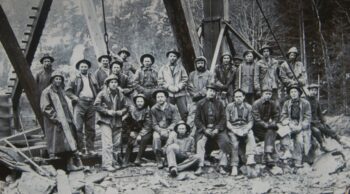
On a grey winter morning in Seattle, in February 1919, 110 local unions shut down the entire city. Shut it down and took it over, rendering the authorities helpless. For five days, workers from all trades and sectors—streetcar drivers, telephone operators, musicians, miners, loggers, shipyard workers—fed the people, ensured that babies had milk, that the sick were cared for. They did this without police – and they kept the peace themselves. This had never happened before in the United States and has not happened since. Those five days became known as the General Strike of Seattle. In Radical Seattle, Cal Winslow explains why....

Against the Current looks at “Voices of Latin America” and “Making the Revolution”

Against the Current looks at “Voices of Latin America” and “Making the Revolution”

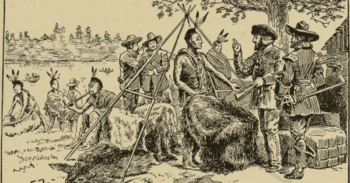
“The Inca emperor Manco Inca started a rebellion against the Spanish Conquistadors in 1536 in Cusco. Although ultimately driven into the remote jungles of Vilcabamba, he and his forces were able to establish a liberated zone and declare a neo-Inca State that lasted for several decades until the execution of his son Túpac Amaru in 1572....”

New! “The Robbery of Nature: Capitalism and the Ecological Rift”

New! “The Robbery of Nature: Capitalism and the Ecological Rift”

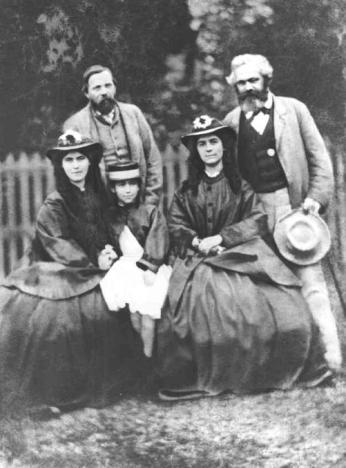
In The Robbery of Nature John Bellamy Foster and Brett Clark, departing from much previous scholarship, adopt a materialist and dialectical approach, bridging the gap between social and environmental critiques of capitalism. The ecological crisis, they explain, extends beyond questions of traditional class struggle to a corporeal rift in the physical organization of living beings themselves, raising critical issues of social reproduction, racial capitalism, alienated speciesism, and ecological imperialism. No one, they conclude, following Marx, owns the earth....

Erasing the crime of poverty: January Magazine reviews Seth Donnelly’s “The Lie of Global Prosperity”

Erasing the crime of poverty: January Magazine reviews Seth Donnelly’s “The Lie of Global Prosperity”

“Seth Donnelly’s The Lie of Global Prosperity, released in paperback late last year, is a methodical examination of how the World Bank spins its number crunching to cover up the extent of global poverty. Donnelly bolsters his analysis with on-the-ground reporting from numerous fact-finding trips to Haiti; the descriptions of what he found there effectively show how World Bank support for unjust governments plays out on the ground in underdeveloped nations...