Monthly Review Press

ResoluteReader resolutely reviews “Shamrocks and Oil Slicks”

ResoluteReader resolutely reviews “Shamrocks and Oil Slicks”

This charming account of a campaign of local people to stop Shell building a refinery and gas pipeline through the glorious coastal landscape of County Mayo in Ireland is both a rage of anger at a world were profit is put before people and planet; and a celebration of the ordinary people who stand up and protest against this....

Whiteness and the opening of slave markets: Transmotion reviews Gerald Horne’s “The Apocalypse of Settler Colonialism”

Whiteness and the opening of slave markets: Transmotion reviews Gerald Horne’s “The Apocalypse of Settler Colonialism”

“In The Apocalypse of Settler Colonialism, Gerald Horne once again earns his reputation as a nuanced transnational historian of race and class. In this, his thirtieth book, Horne demonstrates that modernity arrived in the seventeenth century on the three horsemen of the apocalypse: slavery, white supremacy, and capitalism. Through a focus on English colonial projects, Horne proves these phenomena to be inseparable and interlocking, rather than, for instance, separate pillars of a single structure....

Understanding the chains of global imperialism: Intan Suwandi visits THIS IS HELL!

Understanding the chains of global imperialism: Intan Suwandi visits THIS IS HELL!

Intan Suwandi, author of the recently published Value Chains: The New Economic Imperialism, talked to Chuck Mertz, host of the weekly radio show, THIS IS HELL!, about how individual workers in the Global South — despite the purported demise of imperialism — continue to be intricately controlled by multinationals.

Socialism & Democracy reviews Helena Sheehan’s “Navigating the Zeitgeist”

Socialism & Democracy reviews Helena Sheehan’s “Navigating the Zeitgeist”

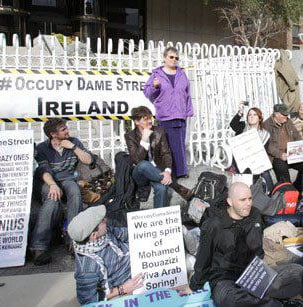
Each episode is given a critical and self-critical exposition, including evaluations of well-known political figures as well as some who were lesser known but equally important. Traversing Cold War America, Catholicism, the Sixties New Left, Sinn Fein and the IRA, the Communist Party of Ireland and the International Communist movement, Navigating the Zeitgeist is as much a sweeping overview as it is a personal narrative. In both senses, it’s an insightful and informative read.

New! “How the World Works: The Story of Human Labor from Prehistory to the Modern Day”

New! “How the World Works: The Story of Human Labor from Prehistory to the Modern Day”

Few authors are able to write cogently in both the scientific and the economic spheres. Even fewer possess the intellectual scope needed to address science and economics at a macro as well as a micro level. But Paul Cockshott, using the dual lenses of Marxist economics and technological advance, has managed to pull off a stunningly acute critical perspective of human history, from pre-agricultural societies to the present. In How the World Works, Cockshott connects scientific, economic, and societal strands to produce a sweeping and detailed work of historical analysis....

Health care beyond neoliberalism?–Social Theory & Health reviews “Health Care Under the Knife”

Health care beyond neoliberalism?–Social Theory & Health reviews “Health Care Under the Knife”

That capitalist medicine prioritises the generation of surplus value over the health of populations should be obvious to any critical student or scholar in the field, but where Waitzkin and colleagues depart from this basic assumption is in demonstrating the political economy of health in the current phase of neoliberalism where, for example, the processes of financialization have eclipsed material production….

“Carefully crafted and surprising book”: People & Nature reviews Saito’s “Karl Marx’s Ecosocialism”

“Carefully crafted and surprising book”: People & Nature reviews Saito’s “Karl Marx’s Ecosocialism”

Kohei Saito’s book shows us how Karl Marx evolved as an ecological thinker. It is a pioneering scrutiny of the evolution of ideas, the genealogy of terms, lines of debates and kinds of evidence, from the 1840s to about 1870. The book started as a German doctoral thesis, grounded in hitherto unpublished notebooks by Marx, but also drawing on Saito’s wide erudition. Putting paid to one set of debates, the book generates new ones...