Monthly Review Press

NYC Condolences Book for Fidel Castro at Mission of Cuba to United Nations

NYC Condolences Book for Fidel Castro at Mission of Cuba to United Nations

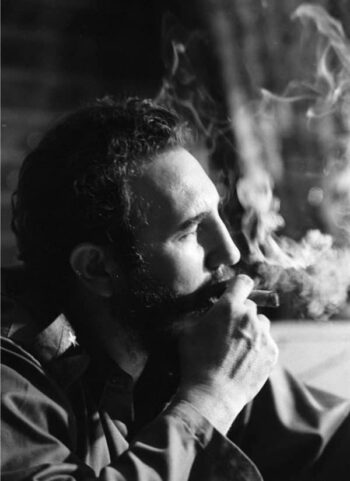
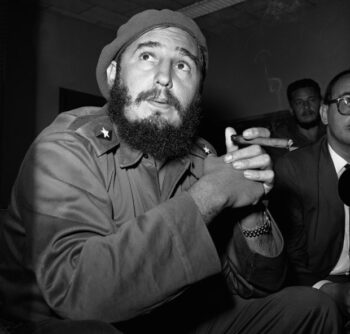
The Permanent Mission of the Republic of Cuba to the United Nations communicates that following the decease of the Commander in Chief of the Cuban Revolution, Fidel Castro Ruz, the Council of State of the Republic of Cuba declares nine days of National Mourning, from 06:00hrs on 26 November to 12:00 hrs on 4 December 2016. ¶ The Permanent Mission of the Republic of Cuba informs that a Condolence Book will be placed at the Mission, located at 315 Lexington Avenue, NY 10016, from Monday 28 November until Sunday 4 December, from 9:00 a.m. -1:00 p.m. and 3:00 – 6:00 p.m.

Official Statement from the Council of State of the Republic of Cuba

Official Statement from the Council of State of the Republic of Cuba

On the occasion of the demise of the Commander in Chief of the Cuban Revolution, Fidel Castro Ruz, the Council of State of the Republic of Cuba declares nine days of National Mourning, as from the 06:00 hrs. of November 26 th, until the 12:00 hrs. of December 4th, 2016. For as long as the National Mourning is in place, public activities and shows shall not be held, the national flag shall be flown at half-staff in public buildings and military facilities. The radio and television shall broadcast informative, patriotic and historic programs.

Fidel Castro, Siempre Presente

Fidel Castro, Siempre Presente

World leaders have begun to pay tribute to the former Cuban leader and revolutionary Fidel Castro who has died aged 90. ¶ The incumbent Cuban President Raul Castro announced his brother had died at 10:29pm on state television late on Friday night. He ended the announcement by shouting the revolutionary slogan: ‘Toward victory, always!’ ...

“Offering great surprise”: A Hidden History of the Cuban Revolution reviewed by Toward Freedom

“Offering great surprise”: A Hidden History of the Cuban Revolution reviewed by Toward Freedom

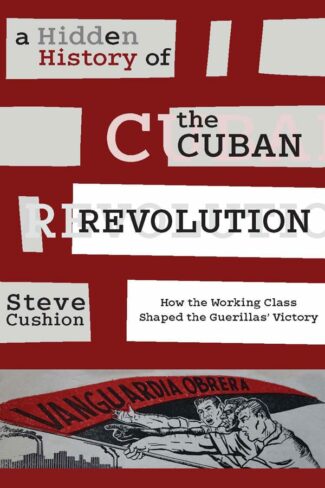
Here is a volume offering great surprise, at least to this presumably well-educated reader, deeply sympathetic to the Cuban Revolution since its inception or at least since a rollout of toys for Christmas 1959 included some kind of Fidel costume (quickly dropped, thereafter, or did they send those props to the East Bloc?). The author of Hidden History, a retired British professor who worked in factories for considerable periods of his life, seems equally surprised. Perhaps, he opines, the cult of the personality around Che and Fidel is the reason for an absence of real social history on this vital subject? We suspect otherwise, but our suspicions hardly detract from our fascination. The material analyzed here is new and essential to any understanding of Cuban revolutionary history.

“Venezuela: Economic war or government errors?” by Marta Harnecker

“Venezuela: Economic war or government errors?” by Marta Harnecker

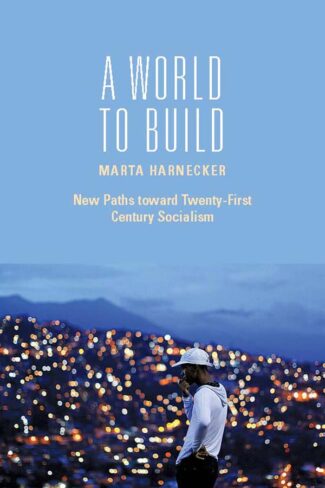
Marta Harnecker, author of A World to Build: New Paths toward Twenty-First Century Socialism, recently wrote a piece for Links International Journal of Socialist Renewal, which was translated by Rachael Boothroyd of VenezuelaAnalysis
"1. When Chávez triumphed in the presidential elections of 1998, the neoliberal capitalist model was already falling apart. The dilemma was none other than to either reform the neoliberal capitalist model, evidently with changes, and amongst those a greater for concern for social issues, but still orientated towards the same profit seeking motive, or to move forward with the construction of another model...."

Got to get on it, NOW: Facing the Anthropocene reviewed by Green Social Thought

Ian Angus’ book tries to do three things: (1) establish the reality that we’re in a completely new geologic time period (the Anthropocene), and argues that this means that activities of human beings threaten the continued existence of life on this planet; (2) demonstrate that these changes have been brought about by capitalism, and therefore, cannot be solved by capitalism; and (3) suggest strategies for social change to address these first two issues. Let’s discuss these in order. ¶ Based on scientifically-established evidence, Angus argues ‘Earth has entered a new epoch, is likely to continue changing in unpredictable and dangerous ways.’ What is he talking about?

Listening with Respect: What Made Studs Terkel a Great Interviewer, via Truthout

Listening with Respect: What Made Studs Terkel a Great Interviewer, via Truthout

Recently, Alan Wieder, author of Studs Terkel: Politics, Culture, but Mostly Conversation, was interviewed by Mark Karlin, the editor of BuzzFlash at Truthout.org:
“Studs Terkel liked to be amazed. He loved stories that took twists and turns and he loved to be surprised. But he also always surprised us. He had been an actor, both in theater and in radio soap operas. In the latter he always played a gangster who was either dead or in jail by the third episode. He listened because he always believed there could be wisdom in the room and he defined room very broadly. Studs had conversations on the bus, at the corner market, on the street, everywhere. People I interviewed talked about when Studs was engaged it was total.

“Live issue on the eco-left”: Facing the Anthropocene reviewed by Socialist Resistance

This book is the best I have seen, from a Marxist point of view, on the issue of the Anthropocene and its implications for life on this planet. It combines a clear warning of the scale of the crisis we face with a well informed exposition of what the Anthropocene is and why we need to take it seriously. ¶ It is an unequivocal declaration the Anthropocene is here, at that its implications, in terms life on this planet, including our own, are dangerous in the extreme, and that it now determines the framework in which the struggle to save the biosphere of the planet as a habitable space now takes place.

Imperialism in the 21st Century: “novel forms, old problems”: International Socialism review

Imperialism in the 21st Century: “novel forms, old problems”: International Socialism review

The significance of John Smith’s book lies in his powerful critique of mainstream economics and official statistics as he attempts a renewal of dependency theory. Mobilising Marxist value theory to this end he argues that the Global South’s formal independence masks an abiding economic and political subordination to the imperialist powers and powerful Northern capitals. The book’s impact is reflected in the critical commentary that it has provoked, including on Michael Roberts’s blog.