Category: Monthly Review Press /

The Question of Strategy: Socialist Register 2013 reviewed in The Spokesman

The Question of Strategy: Socialist Register 2013 reviewed in The Spokesman

The 2013 edition of Socialist Register is titled The Question of Strategy. However, because of the themes which this edition addresses, it could be titled 'What is to be Done?' The editors have designed this volume in conjunction with the Registers for 2011 and 2012. The aim of those two volumes was to analyze the global financial and economic crisis. The 2013 volume extends that analysis, but offers a more concentrated focus on the 'choices faced by the Left today, the models of strategy available to it, and the innovations that are being made by groups as they organize in diverse

settings.'

Michael D. Yates on Hugo Chávez and MR Press

Michael D. Yates on Hugo Chávez and MR Press

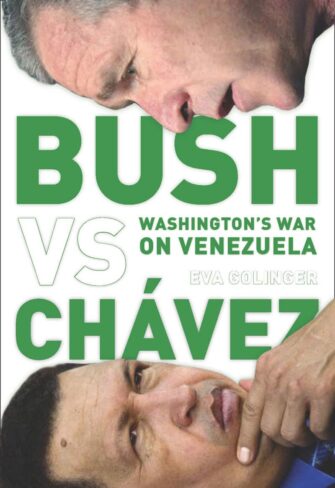
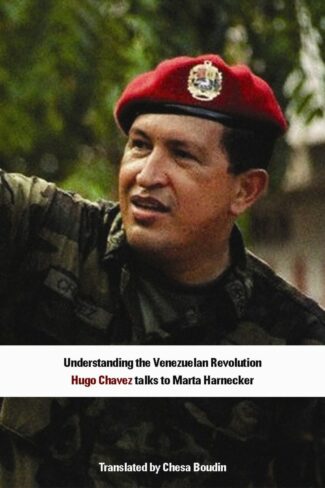
The death of Hugo Chávez saddens those struggling for a better world. He was a great champion of the impoverished workers and peasants of both Venezuela and the world, and a steadfast and bold critic of the rapacious and murderous imperialism of the United States. Monthly Review Press is proud of the books we have published on Venezuela, books which describe, analyze, and show solidarity with the Venezuelan road to democratic socialism.

Nancy Stout interviewed on Vancouver Cooperative Radio

Nancy Stout interviewed on Vancouver Cooperative Radio

Nancy Stout is interviewed about her new biography of the Cuban revolutionary Celia Sánchez, One Day in December, on Vancouver Cooperative Radio. Click here to listen to her conversation with Mordecai Briemberg of the Redeye Collective.

Walter A. Rodney reviewed by A World to Win

Walter A. Rodney reviewed by A World to Win

The book is a tribute to Walter Rodney's short but inspiring life which started and ended in Guyana, with periods in Jamaica, London and Tanzania as well as brief visits to the USA and Zimbabwe before his brutal assassination in 1980, aged only 38. Walter A Rodney: A Promise of Revolution is a collection of personal memories of friends and revolutionaries from around the world.

NEW! Global NATO and the Catastrophic Failure in Libya: Lessons for Africa in the Forging of African Unity by Horace Campbell

NEW! Global NATO and the Catastrophic Failure in Libya: Lessons for Africa in the Forging of African Unity by Horace Campbell

In this incisive account, scholar Horace Campbell investigates the political and economic crises of the early twenty-first century through the prism of NATO's intervention in Libya. He traces the origins of the conflict, situates it in the broader context of the Arab Spring uprisings, and explains the expanded role of a post-Cold War NATO. Campbell points out that while political elites in the West were quick to celebrate the intervention in Libya as a success, the NATO campaign caused many civilian deaths and destroyed the nation's infrastructure. Furthermore, the instability it unleashed in the forms of militias and terrorist groups have only begun to be reckoned with, as the United States learned when its embassy was attacked and personnel, including the ambassador, were killed. Campbell's lucid study is essential reading for anyone seeking to understand this complex and weighty course of events.

An Introduction to the Three Volumes of Karl Marx’s Capital reviewed by Workers' Liberty

An Introduction to the Three Volumes of Karl Marx’s Capital reviewed by Workers' Liberty

Michael Heinrich's book, An Introduction to the Three Volumes of Karl Marx's Capital, (Monthly Review Press 2012) is a lucid and refreshing theoretical interpretation of Marxist political economy. Apparently, it has gone through nine editions in Germany and is used widely in German universities. Heinrich takes inspiration from the "neue Marx Lektüre" (new Marx reading) of Capital. The result is one of best introductions to Capital for the new reader, but also many sophisticated clarifications for those who who've already read some Marx.

NEW! One Day in December: Celia Sánchez and the Cuban Revolution by Nancy Stout, foreword by Alice Walker

NEW! One Day in December: Celia Sánchez and the Cuban Revolution by Nancy Stout, foreword by Alice Walker

Celia Sánchez is the missing actor of the Cuban Revolution. Although not as well known in the English-speaking world as Fidel Castro and Che Guevara, Sánchez played a pivotal role in launching the revolution and administering the revolutionary state. She joined the clandestine 26th of July Movement and went on to choose the landing site of the Granma and fight with the rebels in the Sierra Maestra. She collected the documents that would form the official archives of the revolution, and, after its victory, launched numerous projects that enriched the lives of many Cubans, from parks to literacy programs to helping develop the Cohiba cigar brand. All the while, she maintained a close relationship with Fidel Castro that lasted until her death in 1980.

"The Arrival of the Granma," an excerpt from One Day in December in LINKS: International Journal of Socialist Renewal

"The Arrival of the Granma," an excerpt from One Day in December in LINKS: International Journal of Socialist Renewal

The Granma was approaching, slowly. The boat had lost nearly a day plowing through rough seas off the Yucatán peninsula, and only passed the western tip of Cuba, at the remote end of Pinar del Rio Province, at 5:00 p.m. on Thursday, November 29. It then made even slower headway as it traveled east the length of Cuba, following a safe route, far to the south of the island and well out of view of the Coast Guard. Friday, while they were still on this route, their radio had picked up news of the Santiago uprising, but there was no way to increase speed and make up for lost time. Finally, they had seen their beacon, the light at Cabo Cruz, on the night of the 1st, and set course for it.

NEW! Lettuce Wars by Bruce Neuburger

NEW! Lettuce Wars by Bruce Neuburger

In 1971, Bruce Neuburger—young, out of work, and radicalized by the 60s counterculture in Berkeley—took a job as a farmworker on a whim. He could have hardly anticipated that he would spend the next decade laboring up and down the agricultural valleys of California, alongside the anonymous and largely immigrant workforce that feeds the nation. This account of his journey begins at a remarkable moment, after the birth of the United Farm Workers union and the ensuing uptick in worker militancy. As a participant in organizing efforts, strikes, and boycotts, Neuburger saw first-hand the struggles of farmworkers for better wages and working conditions, and the lengths the growers would go to suppress worker unity.