Category: Monthly Review Press /

New! Cuban “Health Care: The Ongoing Revolution”

New! Cuban “Health Care: The Ongoing Revolution”

Quiet as it’s kept inside the United States, the Cuban revolution has achieved some phenomenal goals, reclaiming Cuba’s agriculture, advancing its literacy rate to nearly 100 percent—and remaking its medical system. Cuba has transformed its health care to the extent that this “third-world” country has been able to maintain a first-world medical system, whose health indicators surpass those of the United States at a fraction of the cost. In Cuban Health Care, Don Fitz combines his broad knowledge of Cuban history with his decades of on-the-ground experience in Cuba to bring us the story of how Cuba’s health care system evolved and how Cuba is tackling the daunting challenges to its revolution in this century....

THIS IS HELL! Brings you “Apocalypse dawning: Slavery & capital across the transatlantic 16th century”

THIS IS HELL! Brings you “Apocalypse dawning: Slavery & capital across the transatlantic 16th century”

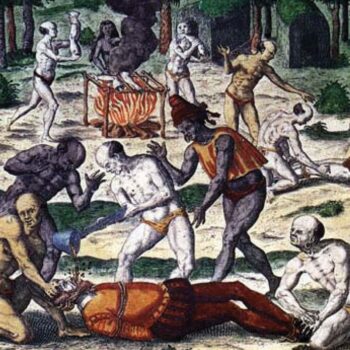
Chuck Mertz, host of This Is Hell (broadcast across Chicago on WNUR since 1996), talks with historian Gerald Horne about his latest book, The Dawning of the Apocalypse. Horne explores the terrains of race, religion, capital and slavery across the 16th century trans-Atlantic world. As European powers pillaged Africa and the Americas of people and resources, their destruction created the enduring formations of life in the 21st century--white supremacy and rapacious capitalism...

Gerald Horne on “Who Belongs?” podcast: EP 28 – Settler colonialism, the insurrections of the 1960s, and today

Gerald Horne on “Who Belongs?” podcast: EP 28 – Settler colonialism, the insurrections of the 1960s, and today

Listen to Professor Gerald Horne, author, most recently, of The Dawning of the Apocalypse, talk with Marc Abizeid and Erfan Morandi, hosts of the podcast Who Belongs? A Podcast on Othering & Belonging. Professor Horne has written on a spectrum of issues and events including the early settler colonial period of the US, the Haitian and Mexican revolutions, labor politics, civil rights, profiles of WEB Du Bois and revolutionary artist Paul Robeson, to name just a few. The interview focuses on the uprisings of the 1960s, structural racism, and the transformative currents of today. Listen, below, or at Who Belongs?/SoundCloud

Via Jacobin magazine’s “Stay at Home” videos: Gerald Horne on the 1960s Urban Uprisings and Their Legacy

Via Jacobin magazine’s “Stay at Home” videos: Gerald Horne on the 1960s Urban Uprisings and Their Legacy

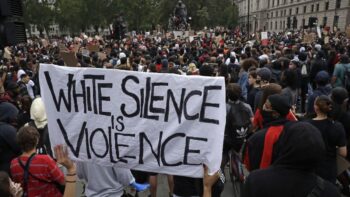
Bhaskar Sunkara, editor and publisher of Jacobin magazine and Catalyst journal, joins Gerald Horne, Professor of History and African-American Studies at the University of Houston, to discuss the police brutality that led to the Watts rebellion in 1965 and how its legacy can be understood in light of today's recent events. Watch, below or at Jacobin (Also keep in touch with Jacobin's ongoing live-stream lectures)

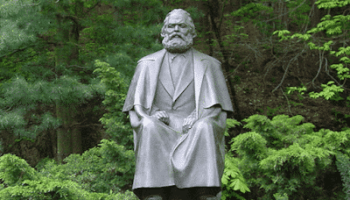
Tearing Down White Supremacist Monuments Isn’t Empty Symbolism: Gerald Horne on The Real News

Tearing Down White Supremacist Monuments Isn’t Empty Symbolism: Gerald Horne on The Real News

Gerald Horne, author of the recently published The Dawning of the Apocalypse: The Roots of Slavery, White Supremacy, Settler Colonialism, and Capitalism in the Long Sixteenth Century, talks to Jacqueline Luqman of The Real News Network about how the monuments that are coming down represent "more than just the people they honor -- they symbolize the brutal legacy of white supremacy, racism, colonialism, and genocide we live with today..."

A Celebration of Black Liberation & Day to Remember the “Horrific System That Was Slavery”: Gerald Horne on Democracy Now!

A Celebration of Black Liberation & Day to Remember the “Horrific System That Was Slavery”: Gerald Horne on Democracy Now!

Author and historian Gerald Horne, author of the just published The Dawning of the Apocalypse, talks with Amy Goodman, host of Democracy Now!: “June 19 is Juneteenth, celebrating the day in 1865 when the last enslaved Black people in the United States learned they had been freed from bondage. We speak with Gerald Horne, who says that while the story of Juneteenth is ‘much more complicated and much more complex than is traditionally presented,’ increased recognition of the day ‘provides an opportunity to have a thorough remembrance of this horrific system that was slavery.’”