Category: Monthly Review Press /

Counterfire reviews Cal Winslow’s “Radical Seattle: The General Strike of 1919”

Counterfire reviews Cal Winslow’s “Radical Seattle: The General Strike of 1919”

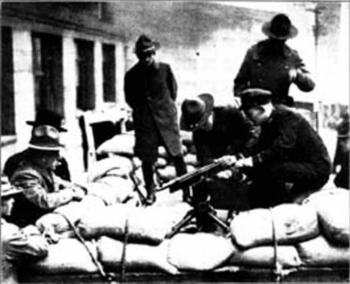
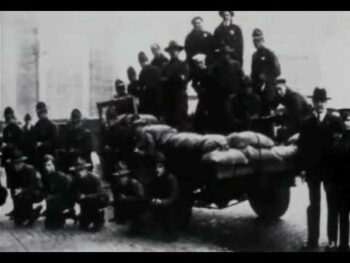
"On Thursday February 6, 1919, at 10:00 am, Seattle’s workers struck. The Seattle general strike is the only general strike in US history. It lasted for five days during which nothing in Seattle moved. Hotel guests were politely informed that room service and restaurant facilities would resume after the strike. Telephone operators, women’s barbers, Japanese service workers, lumbermen, shingle weavers, longshoremen, and just about everybody else, came out on strike in support of Seattle’s shipyard workers...."

Our Place in the World: A Journal of Ecosocialism considers “Cuban Health Care”

"This book gives an excellent account of the nature, history and achievements of the Cuban health system. It is fairly lengthy, quite detailed, heavily documented, and easy to read. It has implications and lessons that go well beyond the health of people, to the nature of healthy social systems, dramatically evident in the comparison the book gives between Cuba and the USA..."

When Washington (Almost) Went Socialist: Seattle’s General Strike of 1919: Listen to Cal Winslow tell it…

When Washington (Almost) Went Socialist: Seattle’s General Strike of 1919: Listen to Cal Winslow tell it…

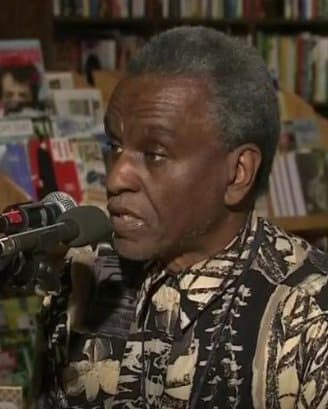
Cal Winslow, labor activist, educator, and author of the recently released Radical Seattle: The General Strike of 1919, talks about the amazing popular takeover of of Seattle over a hundred years ago, when, on a grey winter morning in February 1919, 110 local unions shut down the entire city. Start listening, about 8 minutes into Letters and Politics, hosted by Mitch Jeserich, on Radio KPFA...

Re-Organizing Labor: CounterPunch looks at “Tell the Bosses We’re Coming”

Re-Organizing Labor: CounterPunch looks at “Tell the Bosses We’re Coming”

U.S. labor is in bad shape. Unions have long been on the decline, and the Supreme Court rules against them regularly. So do lower courts. Much of the problem, writes Shaun Richman in his newly published Tell the Bosses We’re Coming, is that labor law is rooted in the Commerce Clause. ... But, Richman argues, it has not succeeded. Employers love to have their grievances moved to the courts and this happens regularly. So now unions are stuck with decades of lousy court decisions and a playing field sharply tilted against them...

Stephanie Urdang remembers anti-apartheid activist Jennifer Davis on KPFA’s “Africa Today”

Stephanie Urdang remembers anti-apartheid activist Jennifer Davis on KPFA’s “Africa Today”

Jennifer Davis, champion of majority rule in South Africa and leader in the anti-apartheid movement in the United States, died last November at the age of 85. On Saturday, July 11 (11:00a.m. EDT), she will be remembered in a memorial sponsored by AllAfrica, a news aggregator of voices by, and about Africa. On July 6, Stephanie Urdang, Jennifer's lifelong friend and author of a memoir, Mapping My Way Home: Activism, Nostalgia, and the Downfall of Apartheid South Africa, as well as several books on African independence struggles, talked with Walter Turner, host of Africa Today on radio station KPFA...

Marx’s Ecology: Materialism and Nature–John Bellamy Foster via Cosmonaut

Marx’s Ecology: Materialism and Nature–John Bellamy Foster via Cosmonaut

“The Cosmonaut team inaugurates the ecology series by discussing John Bellamy Foster’s seminal book Marx’s Ecology on its twentieth anniversary. Join Niko, Ian, Matthew, and Remi as they discuss the context of this work, and how it started a rediscovery of Marx’s ecological politics. They discuss how ecology informed Marx’s understanding of the world since his doctoral thesis, the relationship between Marx, Darwin, and Malthus and the concept of metabolic rift.”