Category: Monthly Review Press /

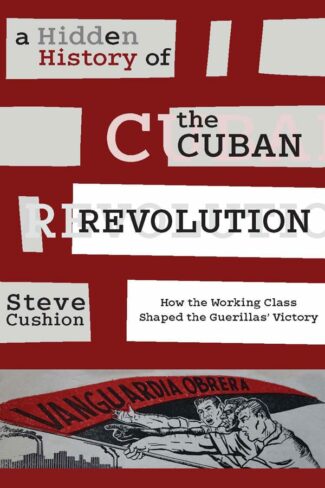
Organized labor against Batista: International Journal of Cuban Studies reviews A Hidden History of the Cuban Revolution

Organized labor against Batista: International Journal of Cuban Studies reviews A Hidden History of the Cuban Revolution

London-based trade union activist Steve Cushion has written an invaluable contribution to our understanding of victory of the Cuban revolutionary forces in 1959 by focusing on the role of organized labor in the defeat of the Batista dictatorship. Leaning heavily on the labor archives of the Institute of Cuban History in Havana and interviews with participants in the struggles, Cushion fashions a well-written and well-researched account of the role of the working class struggles and their interplay with the rural guerrilla army and the armed urban under-ground….

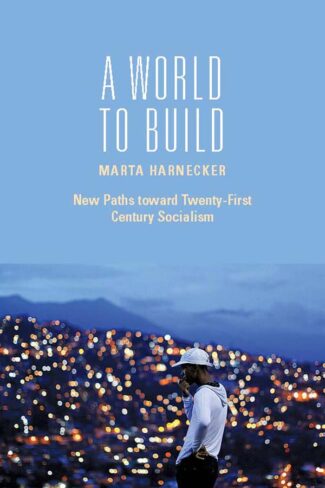
Marta Harnecker: “Nobody can deny that a new revolutionary subject has been created in Venezuela”

Marta Harnecker: “Nobody can deny that a new revolutionary subject has been created in Venezuela”

Q: You are coming to Greece for a Conference on the actuality of Marx’s theoretical system. In the midst of a severe international financial crisis, what lessons can we draw from Marx’s critique of political economy?
MH: I believe it is incredible how Marx anticipated what would happen in the world in regards to the development of the capitalist mode of production. To name only a few things: he announced the tendency to concentrate more and more in less hands (look at transnationals today), the conscious technical application of science to the process of production in general and especially to the exploitation of soil (look at robotic and transgenic agriculture), the entanglement of all peoples in the net of the world market, and, with this, the growth of the international character of the capitalist regime (look at globalization), and so on.

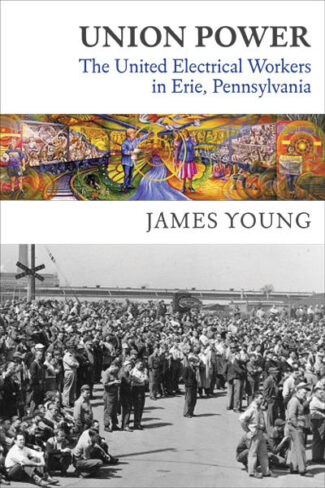
New! Union Power: The United Electrical Workers in Erie, Pennsylvania

New! Union Power: The United Electrical Workers in Erie, Pennsylvania

The United Electrical Workers Union, built by hundreds of rank-and-file worker-activists in the quintessentially industrial town of Erie, Pennsylvania, was able to transform the conditions of the working class largely because it went beyond the standard call for living wages to demand quantum leaps in worker control over workplaces, community institutions, and the policies of the federal government itself. James Young’s book is a richly empowering history told from below, showing that the collective efforts of the many can challenge the supremacy of the few.

Melrose on Lebowitz: The Socialist Imperative

Melrose on Lebowitz: The Socialist Imperative

‘The socialist imperative,’ according to Michael A. Lebowitz, is to ‘end capitalism and build a society of associated producers oriented to the full development of human potential.’ To move beyond capitalism, to understand how capitalism is failing and why it ought to be superseded today, as a matter of urgency, is the primary purpose of Lebowitz’s The Socialist Imperative: From Gotha to Now, a collection of essays based mostly on previous papers, books, and contributions. ‘The necessity to end the capitalist system and to replace it with that inverse situation oriented to the worker’s own need for development is undeniable’ insists Lebowitz. ‘Very simply,’ he concludes his first chapter, ‘if we are to have any dreams, we must end capitalism now, by all means possible….’

Michael Lebowitz on Marx’s Capital: “If you don’t understand the Second Product, you understand nothing”

Michael A. Lebowitz, author of several MRP books, among them, The Socialist Imperative: From Gotha to Now, explains that “If you don’t understand the Second Product in Capital, you understand nothing.” This talk took place at the international conference, “150 years Karl Marx’s Capital, Reflections for the 21st century,” January 14-15, in Athens, Greece. The conference was sponsored by the Rosa Luxembourg Stiftung.

Marta Harnecker: How to read Capital today, lessons from Latin America

Marta Harnecker, author of A World to Build: New Paths toward Twenty-First Century Socialism, explains “How do read Capital today, lessons from Latin America.” This talk took place at the international conference, “150 years Karl Marx’s Capital, Reflections for the 21st century,” January 14-15, in Athens, Greece. The conference was sponsored by the Rosa Luxemburg Stiftung

“Wisdom in the room”: Alan Wieder talks about Studs Terkel on WOMR-FM

In light of how the mass media got the U.S. populace all wrong covering the recent presidential election, Alan Wieder, author of Studs Terkel: Politics, Culture, but Mostly Conversation, talked to Ira Wood on radio station WOMR, 92.1 fm about Studs Terkel, and the art of being in touch with America.

The Socialist Imperative reviewed by Green Social Thought

The Socialist Imperative reviewed by Green Social Thought

“In recent years Michael A. Lebowitz, a writer associated with the Monthly Review current of socialist thought, has produced a number of books regarding practical matters involved with the building of socialism. In his most recent book The Socialist Imperative: from Gotha to Now Mr. Lebowitz has presented a collection of essays expanding upon the themes of his earlier works, including some rather interesting insights into the weakness of the Yugoslavian model as well as making links between his views on a socialist alternative and environmental concerns.

“Crucial Critique of Free-Market Fundamentalism”: America’s Addiction to Terrorism review by Counterfire

“Crucial Critique of Free-Market Fundamentalism”: America’s Addiction to Terrorism review by Counterfire

As well as explaining in detail some of the biggest issues faced by society today, Giroux very eloquently connects the dots between them and highlights their roots within the neoliberal project. Giroux discusses torture, militarisation, surveillance, racism, education and austerity among other things and draws the links to the military-industrial-academic complex. In this review, I will go through some of Giroux’s arguments and his suggestions for working-class resistance against them.