Category: Monthly Review Press /

A Hidden History of the Cuban Revolution reviewed in Counterfire

A Hidden History of the Cuban Revolution reviewed in Counterfire

Cushion is able to make a substantial case that the working-class contribution to the revolution has been severely underestimated, and that in fact Castro’s guerrilla movement would not have been able to take power without working-class militancy. The story is detailed and intricate, but full of interest, beginning with the defeat of the 1933 general strike, which first brought Batista to political leadership in Cuba, but concentrating on the years of the latter’s dictatorship proper, from March 1952, to the consolidation of Castro’s government in 1959

New! Studs Terkel: Politics, Culture, but Mostly Conversation

New! Studs Terkel: Politics, Culture, but Mostly Conversation

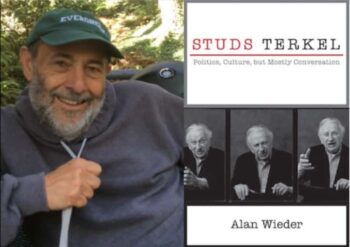
Studs Terkel was an American icon who had no use for America’s cult of celebrity. He was a leftist who valued human beings over political dogma. In scores of books and thousands of radio and television broadcasts, Studs paid attention—and respect—to “ordinary” human beings of all classes and colors, as they talked about their lives as workers, dreamers, survivors. Alan Wieder’s Studs Terkel: Politics, Culture, but Mostly Conversation is the first comprehensive book about this man.

John Bellamy Foster speaks at the Marxism 2016 Conference

July 2, 2016, London: John Bellamy Foster, editor of Monthly Review, discusses the theoretical and programmatic challenges that the Anthropocene, a dangerous new epoch in planetary history, poses for socialists in the 21st century.

E.P. Thompson and the Making of the New Left reviewed in New Politics

E.P. Thompson and the Making of the New Left reviewed in New Politics

E.P. Thompson (1924–1993) wore several hats during his life. His magnum opus as a historian was The Making of the English Working Class, one of the greatest history books written in the twentieth century in any language. He fought tirelessly for nuclear disarmament in the 1980s, which almost surely took years off his life. He may well be least remembered for being a founder of the British New Left. For this reason, Cal Winslow’s selection of Thompson’s writings from the late 1950s to the early 1960s is especially welcome and timely—though not surprising, since Winslow was a student of Thompson’s at the University of Warwick and is a longtime activist and writer.

If We Can’t Stop a Pipeline, How Can We Overthrow Capitalism?: Facing the Anthropocene reviewed by Green Left Weekly

We are living in a time of unparalleled ecological breakdowns and the crisis is much worse than most people realise. There are other books that tell this harrowing story, but Ian Angus’s Facing the Anthropocene is different…. Angus makes clear that ‘a 4°C world would not just be warmer: almost all the world will be thrust into a new climate regime’. It would mean today’s record-breaking temperatures would become the new normal… Unlike many of the other recent books published about the Anthropocene, Angus’s book devotes a lot of space to exploring the social and economic causes of the crisis.

“Ideas for the Struggle”: 12 essays by Marta Harnecker

“Ideas for the Struggle”: 12 essays by Marta Harnecker

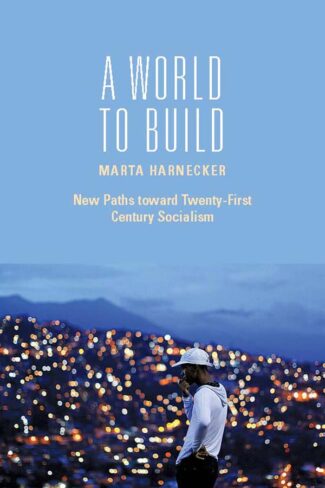
Marta Harnecker, author of over eighty books and monographs in several languages, including A World to Build: New Paths toward Twenty-First Century Socialism, wrote 12 articles on political activism and revolutionary vision, published in Venezuela in 2004. These articles were revised and updated this year, and now appear, translated by Federico Fuentes, on the Old and New Project website, with an introduction by the editors

The Politics of the Right reviewed in Race & Class

The Politics of the Right reviewed in Race & Class

When it was made, Socialist Register’s decision to devote its 2016 issue to the far Right was prescient; when published late last year it was more than timely. Now, both it and this review are in danger of being overtaken by the phenom- enon they’re describing. If the far Right was on the march in 2015, its progress is even more alarmingly visible now.