Monthly Review Press

New! The Socialist Imperative by Michael Lebowitz

New! The Socialist Imperative by Michael Lebowitz

Lebowitz explores the obvious but almost universally ignored fact that as human beings work together to produce society’s goods and services, we also “produce” something else: namely, ourselves. Human beings are shaped by circumstances, and any vision of socialism that ignores this fact is bound to fail, or, at best, reproduce the alienation of labor that is endemic to capitalism. But how can people transform their circumstances in a way that allows them to re-organize production and, at the same time, fulfill their human potential? Lebowitz sets out to answer this question first by examining Marx’s Critique of the Gotha Programme, and from there investigates the experiences of the Soviet Union and more recent efforts to build socialism in Venezuela. He argues that socialism in the twenty-first century must be animated by a central vision, in three parts: social ownership of the means of production, social production organized by workers, and the satisfaction of communal needs and communal purposes. These essays repay careful reading and reflection, and prove Lebowitz to be one of the foremost Marxist thinkers of this era.

A Freedom Budget for All Americans reviewed by Marx & Philosophy Review of Books

A Freedom Budget for All Americans reviewed by Marx & Philosophy Review of Books

Paul Le Blanc and Michael D. Yates have recently identified a political point of entry that has the potential to galvanize wide public support and focus political discussion and debate on the most glaring (historical) weaknesses of capitalism as a mode of production and to begin to nudge public awareness toward the deep contradictory ontology that is capitalism.

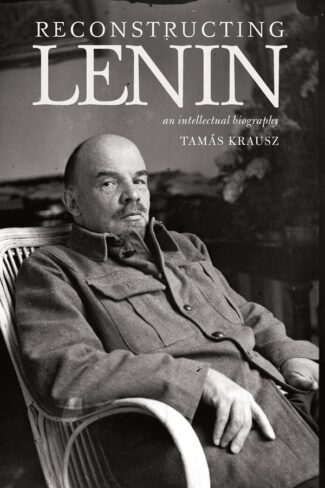
Reconstructing Lenin reviewed by International Socialism

Reconstructing Lenin reviewed by International Socialism

Reconstructing Lenin is a thoughtful and compelling study of Lenin. Tamás Krausz reveals Lenin as an activist revolutionary whose thoughts were shaped by immediate political events but who also at the same time never strayed far from a coherent theoretical framework. As a work of scholarship it deserves to be up there with Lars Lih’s Lenin Rediscovered.

Race in Cuba reviewed in Science & Society

Race in Cuba reviewed in Science & Society

Race in contemporary Cuba is a delicate and hotly contested issue. What most agree is that pre-1959 Cuba was characterized by a stark racial inequality which, rooted in a relatively recent history of slavery (abolished only in 1886), was addressed after January 1959 by legally eliminating its more evident institutional manifestations, by a social program which particularly benefited those at the bottom of the old social structure, and by a mass emigration which initially was predominantly (83.5%) white. More recently, we know that after the 1990s’ traumatic crisis (following the Soviet and socialist bloc collapse) and the unprecedented changes to counter that crisis (including increased tourism and toleration of the U. S. dollar), inequality partly returned, as remittances from relatives abroad disproportionately benefited whites.

Hell’s Kitchen and the Battle for Urban Space reviewed in New York History

Hell’s Kitchen and the Battle for Urban Space reviewed in New York History

Hell's Kitchen's tenements have long captured the attention of reformers, scholars, and the American public. In Hell's Kitchen and the Battle for Urban Space, Joseph J. Varga combines a sophisticated use of critical space theory, with a nuanced investigation of social relations among residents, reformers, and state agencies, to shed light on development in this notorious neighborhood during the Progressive Era's transformative years. Utilizing Henri Lefebvre's understanding of space as "lived, conceived and perceived," Varga reveals that the physical features of the area, social relationships of work and home, reform efforts, ethnic and racial alliances, and government allotment of funds played a role in creating and giving meaning to space on Manhattan's Middle West Side.

Labor in the Global Digital Economy reviewed in The Progressive Populist

Labor in the Global Digital Economy reviewed in The Progressive Populist

Who is the cybertariat? Why care? Ursula Huws, author of Labor in the Global Digital Economy: The Cybertariat Comes of Age (Monthly Review Press, 2014), has answers as a class-based technology shapes our world. An historical continuity emerges in her writing. This approach casts context on the current moment.

Blowing the Roof Off the Twenty-First Century reviewed in Too Much online

Activist University of Illinois scholar Robert McChesney has for some time now been a compelling voice on the "political economy of communication," an emerging new discipline that's probing how our media go about entrenching "the privileges of those at the top." This field, McChesney argues in this engaging new book, belongs on our political center stage. Our deeply unequal social order, he explains, has simply ceased working for average people.

Read an excerpt from Robert McChesney’s Blowing the Roof Off the Twenty-First Century in Social Policy magazine

The major premises of the media reform movement remain unchanged: communication systems develop largely as a result of policies, since there is no such thing as a natural "default" course of development. From the development of copyright and postal subsidies for newspapers at the dawn of the Republic to the licensing of telephone, broadcasting, and cable TV monopolies, the state has been in the middle of the creation of the media. For example, the Internet's shift from an anti-commercial, egalitarian institution in the early 1990s to a "whoever makes the most money by any means necessary wins" undertaking was not foreordained by the gods. It was the province of politics.