Monthly Review Press

Gerald Horne makes you think – about the lie of the docile subject, from America to Palestine (Watch: Conscious Mindset)

Gerald Horne makes you think – about the lie of the docile subject, from America to Palestine (Watch: Conscious Mindset)

One main thread runs through every aspect of every story: Stories of Black rebellion and resistance. When Horne tells of Texas' efforts to secede and the impact of the arsons of 1860, allegedly set by slaves, he comments, "Our enemies are the ones who put out the rumor that we're docile, because they want us to be docile today."  That's fallacious, he says. "Arsons were one of our favorite tools. Arson, poisonings, insurrections, murders." And in fact, during the Madison administration, Africans actually joined the British in torching the White House in 1814, sending James and Dolly fleeing.

Repeated attempts at a coup in Venezuela have failed, an an extraordinary cost (EXCERPT: Extraordinary Threat)

Repeated attempts at a coup in Venezuela have failed, an an extraordinary cost (EXCERPT: Extraordinary Threat)

"...In 2018, Venezuela was only able to import $11.7 billion in goods, according to Torino Capital. The impact on medicine imports was especially destructive. According to U.S. economist Mark Weisbrot, while its economy was still growing in 2013, Venezuela was importing about $2 billion per year in medicine. By 2018, that amount had fallen to an astonishing low of $140 million—an especially horrifying development because medicines are much more difficult to substitute with local production than food. It is impossible to deny that a collapse in medicine imports has killed thousands of people between 2017 and 2018, as Mark Weisbrot and U.S. economist Jeffrey Sachs argued in a paper published in April 2019. Weisbrot and Sachs cite a 31 percent increase in general mortality in the 2017–2018 period, according to a survey by anti-Maduro Venezuelan academics. That increase works out to an extra forty thousand deaths...."

Chavista Government or Chavismo movement? (Listen: This is Hell)

Seemingly the only people supporting the opposition and their supposed leader, Juan Guaidó, are outsiders like the United States government and the Biden administration, which continues to recognize Guaidó as President despite Guaidó never getting a vote...

Michael Tigar recounts the story of Terry Nichols (Listen: For the Defense)

Michael Tigar recounts the story of Terry Nichols (Listen: For the Defense)

Federal criminal defense attorney David Oscar Markus periodically interviews famed trial lawyers about their most fascinating cases for his podcast, "For the Defense." This week, he featured Michael Tigar, published several times by Monthly Review. Markus introduces the episode: "Michael Tigar is exactly what action is all about... I mean, in 1999 there was a vote for lawyer of the century: Clarence Darrow was #1, Thurgood Marshall was #2, and you know who was #3?"

Gerald Horne with Charisse Burden-Stelly on the longue durée of apocalypse

Interviewer Charisse Burden-Stelly begins, "....apocalypse represented, for African and indigenous folks, the end of life as they knew it—that is, a life free from enslavement, genocide, and ongoing violence wrought by the insatiable drive of the group that came to be known as “whites” for endless profit. This ending was simultaneously the beginning of a capitalist world economy rooted in racial hierarchy, imperial domination, and militarized social relations, of which neoliberalism is merely the most recent enunciation."

Read: A deep review of Horne’s “Jazz and Justice” (Counterfire)

Read: A deep review of Horne’s “Jazz and Justice” (Counterfire)

"...from the world of Jelly Roll Morton and Kid Ory through to that of the Marsalis family, with the common thread being New Orleans, often cited as the birthplace of the music...an anatomy of resistance; at every stage, despite Jim Crow, gangsters and extreme violence, jazz developed and bloomed...."

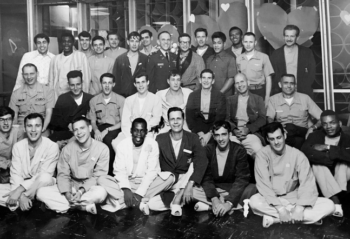
Why the sudden interest in Vietnam era movies? Coauthor of “Dissenting POWs” weighs in

Why the sudden interest in Vietnam era movies? Coauthor of “Dissenting POWs” weighs in

"'Why do we go back?' she asked sardonically, 'because they go back,' the pro-war hawks and military establishment. The 'patriarchy,' as she put it, ruminates the defeat in Vietnam like a bad sandwich growling in its stomach through a night that will not end. The defeat in Vietnam struck at a pillar of American manhood. Vietnam veterans would sometimes be chided by older veterans: they had won their war; Vietnam veterans had lost—what kind of men were they?"