Monthly Review Press

Marx’s Ecology: Materialism and Nature–John Bellamy Foster via Cosmonaut

Marx’s Ecology: Materialism and Nature–John Bellamy Foster via Cosmonaut

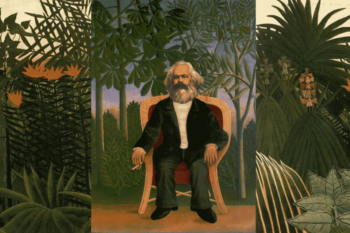
“The Cosmonaut team inaugurates the ecology series by discussing John Bellamy Foster’s seminal book Marx’s Ecology on its twentieth anniversary. Join Niko, Ian, Matthew, and Remi as they discuss the context of this work, and how it started a rediscovery of Marx’s ecological politics. They discuss how ecology informed Marx’s understanding of the world since his doctoral thesis, the relationship between Marx, Darwin, and Malthus and the concept of metabolic rift.”

Making an ecological worldview: International Socialism reviews “The Return of Nature”

Making an ecological worldview: International Socialism reviews “The Return of Nature”

Since John Bellamy Foster published Marx’s Ecology in 2000, the idea that Karl Marx had little to say on environmental issues has become untenable. Marx’s Ecology has rightly become a classic. Beginning with Marx’s doctoral thesis on ‘The Difference Between the Democritean and Epicurean Philosophy of Nature’, and tracing the development of his thought throughout his life, Foster’s book demonstrated the way that ecological questions were at the heart of Marxism—a ‘broad ecological worldview’...

Gerald Horne back on Diaspora Music, via Black Power 96 Radio…

Gerald Horne back on Diaspora Music, via Black Power 96 Radio…

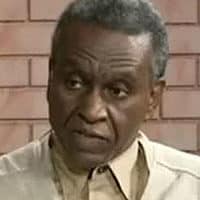
Historian and prolific author Gerald Horne talks with host Norman “Otis” Richmond (aka Jalal) about a wide range of current topics, and his most recent book, The Dawning of the Apocalypse: The Roots of Slavery, White Supremacy, Settler Colonialism, and Capitalism in the Long Sixteenth Century. The book is a riveting revision of the “creation myth” of settler colonialism and how the United States was formed...

When Washington (Almost) Went Socialist: Seattle’s General Strike of 1919: Listen to Cal Winslow tell it…

When Washington (Almost) Went Socialist: Seattle’s General Strike of 1919: Listen to Cal Winslow tell it…

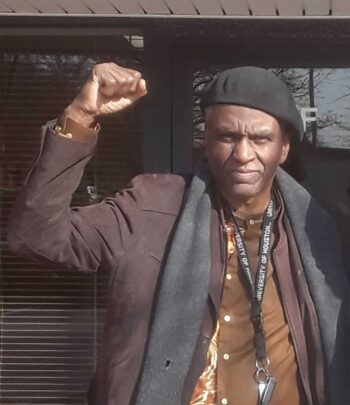
Cal Winslow, labor activist, educator, and author of the recently released Radical Seattle: The General Strike of 1919, talks about the amazing popular takeover of of Seattle over a hundred years ago, when, on a grey winter morning in February 1919, 110 local unions shut down the entire city. Start listening, about 8 minutes into Letters and Politics, hosted by Mitch Jeserich, on Radio KPFA...

New! Cuban “Health Care: The Ongoing Revolution”

New! Cuban “Health Care: The Ongoing Revolution”

Quiet as it’s kept inside the United States, the Cuban revolution has achieved some phenomenal goals, reclaiming Cuba’s agriculture, advancing its literacy rate to nearly 100 percent—and remaking its medical system. Cuba has transformed its health care to the extent that this “third-world” country has been able to maintain a first-world medical system, whose health indicators surpass those of the United States at a fraction of the cost. In Cuban Health Care, Don Fitz combines his broad knowledge of Cuban history with his decades of on-the-ground experience in Cuba to bring us the story of how Cuba’s health care system evolved and how Cuba is tackling the daunting challenges to its revolution in this century....

Senior Women Web reviews “Mythologies of State and Monopoly Power” by Michael E. Tigar

Senior Women Web reviews “Mythologies of State and Monopoly Power” by Michael E. Tigar

This is a law book written for a general audience. Tigar has been a law professor most of his life; in these pages one can learn much from his vast legal and historical knowledge. ¶ Multiple chapters are spread out over five "mythologies": Racism, Criminal Justice, Free Expression, Worker Rights and International Human Rights. ¶ His discussion of these mythologies is not neutral; he has a point of view and it's generally from the left....

JONUS, Journal of Nusantara Studies, reviews “Can the Working Class Change the World?”

JONUS, Journal of Nusantara Studies, reviews “Can the Working Class Change the World?”

Can the Working Class Change the World? is not written suddenly. Throughout the last decade, capitalism has been increasingly discussed and debated, both by the right and left wing. This is because many people are struggling with economic downturn, wide income gap, unemployment, poverty and environmental crisis. The Lehman Brothers collapse in 2008, almost brought down the global financial system. Later in 2011, the Occupy Wall Street movement began and spread to several countries to protest against the 1%. And in 2018, Ray Dalio, a multibillionaire who is also the founder of Bridgewater Associates, himself admits that capitalism does not function for most people. Today, the assets of the 26 richest individuals in the world is equivalent to the assets of half the world’s citizens (Elliott, 2019). But, if capitalism now has failed, the question is: who fix it?

How Big Agriculture & Capitalism Are Making Pandemics Like Coronavirus More Likely: Rob Wallace on RT

How Big Agriculture & Capitalism Are Making Pandemics Like Coronavirus More Likely: Rob Wallace on RT

Rob Wallace, author of Big Farms Make Big Flu: Dispatches on Infectious Disease, Agribusiness, and the Nature of Science, talks to Afshin Rattans, host of RT's Going Underground, about how, in recent history, deforestation and land use changes driven by global capital have caused more epidemics, and why the emergency response to the latest Coronavirus is ineffective at solving problems such as deadly pathogens...