Monthly Review Press

New! Trump in the White House: Tragedy and Farce

New! Trump in the White House: Tragedy and Farce

In Trump in the White House, John Bellamy Foster does what no other Trump analyst has done before: he places the president and his administration in full historical context. Foster reveals that Trump is merely the endpoint of a stagnating economic system whose liberal democratic sheen has begun to wear thin.

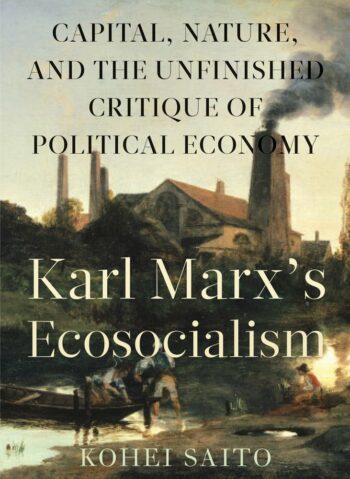
New! Karl Marx’s Ecosocialism: Capital, Nature, and the Unfinished Critique of Political Economy

New! Karl Marx’s Ecosocialism: Capital, Nature, and the Unfinished Critique of Political Economy

Karl Marx has frequently been described as a “Promethean.” According to critics, Marx held an inherent belief in the necessity of humans to dominate the natural world, in order to end material want and create a new world of fulfillment and abundance through a planned socialist economy. Understandably, this perspective has come under sharp attack, not only from mainstream environmentalists but also from ecosocialists, many of whom reject Marx outright. Kohei Saito’s Karl Marx’s Ecosocialism lays waste to accusations of Marx’s ecological shortcomings. Delving into Karl Marx’s central works, as well as his natural scientific notebooks—published only recently and still being translated—Saito also builds on the works of scholars such as John Bellamy Foster and Paul Burkett, to argue that Karl Marx actually saw the environmental crisis embedded in capitalism.

Socialist Worker talks to Ian Angus about Saving the Planet

Socialist Worker talks to Ian Angus about Saving the Planet

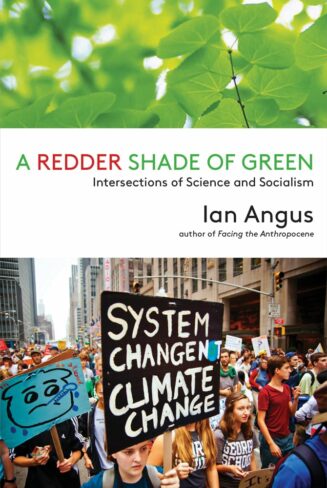
How can we save the planet and stop catastrophic climate change? Recently, Ian Angus, author of Facing the Anthropocene: Fossil Capitalism and the Crisis of the Earth System and the recently released A Redder Shade of Green: Intersections of Science and Socialism, talked to Socialist Worker‘s Dave Sewell about just that.

Gerald Horne talks to Utrice Leid via the Progressive Radio Network

Gerald Horne talks to Utrice Leid via the Progressive Radio Network

Historian Gerald Horne, author of over 30 books, including the forthcoming "The Apocalypse of Settler Colonialism: The Roots of Slavery, White Supremacy, and Capitalism in Seventeenth-Century North America and the Caribbean," talks to veteran news anchor and analyst, Utrice Leid about some of the major trouble spots in the world today and their connections to U.S. globalist agendas.

Gerald Horne on the NAACP’s travel advisory for Missouri

Gerald Horne on the NAACP’s travel advisory for Missouri

Thinking of going to Missouri? Think again. Gerald Horne, author of several books on the history of racism and injustice in the Americas, including the forthcoming The Apocalypse of Settler Colonialism: The Roots of Slavery, White Supremacy, and Capitalism in Seventeenth-Century North America and the Caribbean, talks to Sharmini Peries of The Real News Network about the NAACP’s first statewide travel advisory, for the state of Missouri. ¶ “Not only may we be returning to the bad old days of Jim Crow and US apartheid, but we may be going beyond that to the era of 1857 Dred Scott…”

Eve of Destruction…Or Revolution? Counterpunch reviews Creating an Ecological Society

Eve of Destruction…Or Revolution? Counterpunch reviews Creating an Ecological Society

‘In order to replace capitalism with an ecological society we need a revolution.’ That modest sentence is how Fred Magdoff and Chris Williams begin the last chapter of their new book. Although the chapter is the end of the book, it is also an opening to a new direction, a new movement. It is also the essence of the entire text. Capitalism is the reason our biosphere is collapsing and the only way humanity and the rest of earth’s species can survive is by ending capitalism….

“The most important book…in years is John Smith’s Imperialism in the 21st Century”–OffGuardian review

“The most important book…in years is John Smith’s Imperialism in the 21st Century”–OffGuardian review

That first chapter goes on to consider two other products, iPhones and coffee. These too are produced in the global south for consumption in the north. Although very different products, Smith’s teasing out of the socioeconomic relations they embed shows their commonality. All are created under conditions of a super-exploitation which mainstream economics is at pains to conceal or obscure by a ‘value chain’ orthodoxy that would have us believe an iPhone made in China for $80 retails in the west for $800 not through exploitation but because the activities of shipping, advertising and packaging add $720 of value….