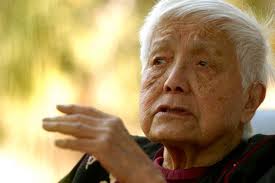
Grace Lee Boggs, 1915 – 2015
February 20, 2024
Celebrating the life of the activist and author, who died on the morning of October 5 The following essay by Grace Lee Boggs, which originally appeared in Monthly Review magazine,... READ MOREFebruary 20, 2024
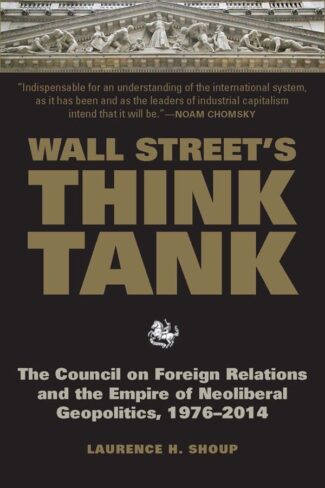
Contemporary history is neither a series of random occurrences nor the predetermined plaything of a small cabal of super-empowered conspirators. The truth is somewhere in-between. A sizeable cadre of class- and system-conscious deep-state and imperial planners from the heights of concentrated private and governmental power join together to shape the outlines of much of recent history.
February 20, 2024
Few figures loom larger in the making of the first, late 1950s, New Left than E.P. Thompson and C. Wright Mills. Both were big. Both fit uneasily, to say the least, in the company of any established intelligentsia.
February 20, 2024
Lebowitz explores the obvious but almost universally ignored fact that as human beings work together to produce society’s goods and services, we also “produce” something else: namely, ourselves. Human beings are shaped by circumstances, and any vision of socialism that ignores this fact is bound to fail, or, at best, reproduce the alienation of labor that is endemic to capitalism. But how can people transform their circumstances in a way that allows them to re-organize production and, at the same time, fulfill their human potential? Lebowitz sets out to answer this question first by examining Marx’s Critique of the Gotha Programme, and from there investigates the experiences of the Soviet Union and more recent efforts to build socialism in Venezuela. He argues that socialism in the twenty-first century must be animated by a central vision, in three parts: social ownership of the means of production, social production organized by workers, and the satisfaction of communal needs and communal purposes. These essays repay careful reading and reflection, and prove Lebowitz to be one of the foremost Marxist thinkers of this era.

February 20, 2024
Paul Le Blanc and Michael D. Yates have recently identified a political point of entry that has the potential to galvanize wide public support and focus political discussion and debate on the most glaring (historical) weaknesses of capitalism as a mode of production and to begin to nudge public awareness toward the deep contradictory ontology that is capitalism.
February 20, 2024
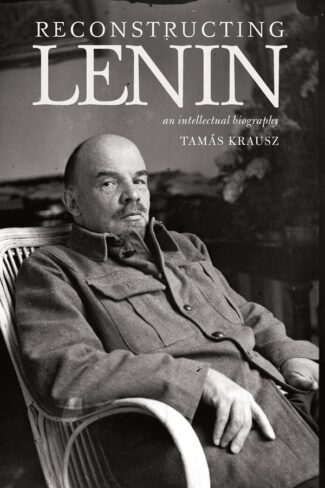
Reconstructing Lenin is a thoughtful and compelling study of Lenin. Tamás Krausz reveals Lenin as an activist revolutionary whose thoughts were shaped by immediate political events but who also at the same time never strayed far from a coherent theoretical framework. As a work of scholarship it deserves to be up there with Lars Lih’s Lenin Rediscovered.
February 20, 2024
Race in contemporary Cuba is a delicate and hotly contested issue. What most agree is that pre-1959 Cuba was characterized by a stark racial inequality which, rooted in a relatively recent history of slavery (abolished only in 1886), was addressed after January 1959 by legally eliminating its more evident institutional manifestations, by a social program which particularly benefited those at the bottom of the old social structure, and by a mass emigration which initially was predominantly (83.5%) white. More recently, we know that after the 1990s’ traumatic crisis (following the Soviet and socialist bloc collapse) and the unprecedented changes to counter that crisis (including increased tourism and toleration of the U. S. dollar), inequality partly returned, as remittances from relatives abroad disproportionately benefited whites.
February 20, 2024
In both of these books John Tully gives us histories of remarkable businesses and their human consequences seen from the vantage point of a red–green critic of capitalism. Rubber and its cousin gutta-percha were exploited long before plantation businesses sprang up.
February 20, 2024
The ‘left’ has been reborn many times over the last two centuries. Every renewal has carried with it traditions from past phases, with greater or lesser degrees of continuity, while establishing new relations and alliances in response to the changing structures of capitalism. This can be seen in the transition between radical Jacobinism and early forms of socialism, or between the Chartist movement and later nineteenth-century trade-union and socialist movements, and in other moments in the history of working-class politics. E. P. Thompson was a figure who both recaptured these transitions in his historical writing, and participated in a major re-orientation of left politics after the Soviet Union’s suppression of the Hungarian revolution in 1956.
February 20, 2024
Monthly Review Press author Steve Early first met Bernie Sanders in 1976 during a Vermont political campaign. Today, writing in Jacobin magazine and interviewed on Alternative Visions radio, Early reflects on how organized labor should respond to Sanders's bid for the Democratic Party presidential nomination.