Category: Monthly Review Press /

Trump’s ‘Patriotic Education’ a Call for White Supremacy and Fascism: Gerald Horne talks to Paul Jay on theAnalysis.news

Trump’s ‘Patriotic Education’ a Call for White Supremacy and Fascism: Gerald Horne talks to Paul Jay on theAnalysis.news

1619 vs. 1776? Trump’s recent speech attacking the New York Times 1619 Project and vaunting his own "1776 Project" is an attempt to rally his base, writes journalist Paul Jay, to create a McCarthyite campaign against the left, and devise conditions for hanging on, even if Trump loses the election. Hear historian and author Gerald Horne's on take on all this, as he joins Paul Jay on theanalysis.news podcast...

Anticipating the U.S. presidential election, Gerald Horne talks to The Platypus Review

Anticipating the U.S. presidential election, Gerald Horne talks to The Platypus Review

Daniel Jacobs: What led you to research the history of the 16th and 17th centuries with respect to the settler colonial project?
Gerald Horne: A number of factors led me in that direction. One is that I was looking for synthetic overviews of the 16th and 17th centuries and was unable to find those overviews. You can find studies and monographs that deal with various aspects of those two centuries and, as my footnotes suggest, I draw upon those various studies extensively. The second point is when I started on this road I was generally dissatisfied with the origin stories, which I refer to often as creation myths, of the founding of the United States of America..."

CubaSi reviews Don Fitz’s “Cuban Health Care: the Ongoing Revolution”

CubaSi reviews Don Fitz’s “Cuban Health Care: the Ongoing Revolution”

After the triumph of the Revolution, Cuba set phenomenal goals, the biggest of all being the remaking of its medical system as a free service for all: health as a human right. Don Fitz comprehensively charts the 61 years that transformed Cuba’s health service into one of the best in the world, where people are placed at the very heart of the system...

New! “Free Speech and the Suppression of Dissent During World War I”

New! “Free Speech and the Suppression of Dissent During World War I”

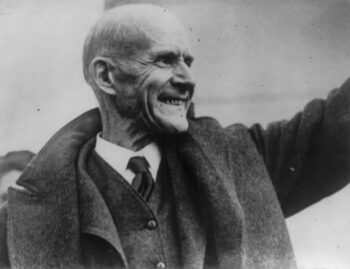
World War I, given all the rousing “Over-There” songs and in-the-trenches films it inspired, was, at its outset, surprisingly unpopular with the American public. As opposition increased, Woodrow Wilson’s presidential administration became intent on stifling antiwar dissent. Presidential candidate Eugene Debs was jailed, and Deb’s Socialist Party became a prime target of surveillance operations, both covert and overt. Drastic as these measures were, more draconian measures were to come. In Free Speech and the Suppression of Dissent During World War I, Eric Chester reveals that out of this turmoil came a heated public discussion on the theory of civil liberties—the basic freedoms that are, theoretically, untouchable by any of the three branches of the U.S. government.

New! “Dead Epidemiologists: On the Origins of COVID-19”

New! “Dead Epidemiologists: On the Origins of COVID-19”

The COVID-19 pandemic shocked the world. It shouldn’t have. Since this century’s turn, epidemiologists have warned of new infectious diseases. Indeed, H1N1, H7N9, SARS, MERS, Ebola Makona, Zika, and a variety of lesser viruses have emerged almost annually. But what of the epidemiologists themselves? Some bravely descended into the caves where bat species hosted coronaviruses, including the strains that evolved into the COVID-19 virus. Yet, despite their own warnings, many of the researchers appear unable to understand the true nature of the disease—as if they are dead to what they’ve seen...

Marx, humanity and the rift in nature: Green Left reviews “The Robbery of Nature”

Marx, humanity and the rift in nature: Green Left reviews “The Robbery of Nature”

John Bellamy Foster’s Marx’s Ecology, published in 2000, brought awareness of Karl Marx and Fredrich Engel’s writings on and relevance to, environmental thinking. His latest work, The Robbery of Nature, written with Brett Clark, demonstrates the importance of understanding nature and society with a Marxist perspective....

UK’s Socialist Review considers Fosters and Clark’s “The Robbery of Nature”

UK’s Socialist Review considers Fosters and Clark’s “The Robbery of Nature”

The Robbery of Nature draws on and develops the theories of Marx and Engels to understand why capitalism has such a destructive influence on the natural world. Central to Fosters and Clark’s argument is that, under capitalism, human beings and the natural environment are the original sources of wealth, but it is only the labour of workers that generates value....

America’s settler colonialist roots explain how we see property rights: Gerald Horne on The Real News Network

America’s settler colonialist roots explain how we see property rights: Gerald Horne on The Real News Network

Historian and author Gerald Horne, most recently, of The Dawning of the Apocalypse: The Roots of Slavery, White Supremacy, Settler Colonialism, and Capitalism in the Long Sixteenth Century, talks with Jacqueline Luqman on The Real News Network about how the colonization of the United States helped create the American obsession with property rights and property damage over people's rights...