Category: Reviews /

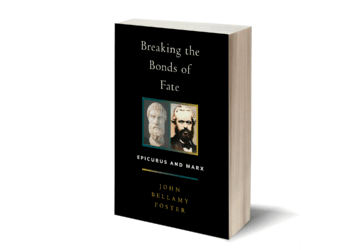
John Bellamy Foster’s “Breaking the Bonds of Fate”

John Bellamy Foster’s “Breaking the Bonds of Fate”

The latest: "Epicurus set up schools, first in Lampsacus (in modern day Turkey), then later in Athens. Other philosophical schools in the city used public space for lectures and attracted young, well educated, aristocratic Greek men. His critique of the ruling classes that dominated these schools that “'Nothing is enough for those for whom enough is too little' is as applicable today as in his age...."
Steve Cushion’s “Slavery in the British Empire and its Legacy in the Modern World”

Steve Cushion’s “Slavery in the British Empire and its Legacy in the Modern World”

The latest: "And what of those who had been 'freed'? They received precisely nothing, in fact worse than nothing because they were required to remain in their former owners’ service for four years, although this was now referred to as an “apprenticeship”. The change in British law naturally made no difference to the fate of enslaved people in the USA’s southern states but Cushion, rightly, goes to some lengths to show how British capital continued to benefit..." One of the most impressive things about Steve Cushion is his extremely active approach to engaging the public around the topic of reparations, and using his books as a means of pushing for meaningful change on the ground....

In the public eye: Contributors to “A Land With A People”

Riham Barghouti: "I was raised on liberation songs and dabka and political debates that went long into the night. I walked the streets of NY in protest from 2nd Avenue in front of the Israeli embassy to Atlantic Avenue through the largest Arab community in NY at the time....for me it was not a question of if I would resist but merely how I would contribute to my people’s struggle...Participating in the book gave me hope…it is a manifestation of my vision of liberation. What this book epitomizes is that it does not matter if you are a queer Southern Palestinian woman, a Muslim Gazan man, a self-identified Palestinian Jew, a refugee living in Syria, Lebanon or Jordan, or an Israeli Jew raised in a kibbutz, you are my people. The dichotomy is not one of Israeli vs. Palestinian or Jew v. Muslim and Christian; It is one of colonizer vs. anti-colonizer, it is one of those that maintain and perpetuate oppression and those that oppose it. It is one of zionist vs. anti-zionist...."
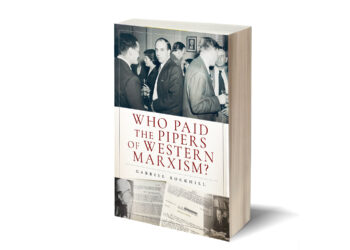
Gabriel Rockhill’s “Who Paid the Pipers of Western Marxism?”

Gabriel Rockhill’s “Who Paid the Pipers of Western Marxism?”

The latest: "The book is structured in three parts: first, outlining the 'imperial intellectual apparatus' of the Cold War; second, a detailed examination of the Frankfurt School’s integration into U.S. and West German institutions, with a focused case study on Herbert Marcuse's documented ties to U.S. government projects; and finally, a conclusion contrasting what he terms 'imperial' Marxism with anti-imperialist traditions...."
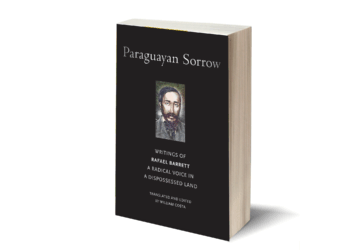
William Costa’s translation of “Paraguayan Sorrow”

William Costa’s translation of “Paraguayan Sorrow”

Barrett has always been close to the hearts of Paraguayan radicals, who, along with his progeny, have kept his memory alive. And he is known throughout the Southern Cone of South America, though his work has suffered long periods of relative neglect there. However, there has been a resurgence of interest in his life and work. We hope that with the publication of this first English translation of his major work, which includes his powerful set of essays The Truth of the Yerba Mate Forests, the life and works of Rafael Barrett will inspire readers in the English-speaking world. His words speak to today’s workers and peasants as they did to their Paraguayan counterparts more than 100 years ago....
In the public eye: Helena Sheehan

In the public eye: Helena Sheehan

Socialist History: Issue 67, by Dianne Kirby “The cover of part two of Helena Sheehan’s autobiography, Until We Fall: Long Distance Life on the Left, is inspired by Geliy Korzhev’s... READ MORE

Offering hope to the left (Until We Fall reviewed in ‘Morning Star’)

Already in the early 1980s if not before: “It was clear to most of us that socialism couldn’t survive without radical democratisation ... it had to be based on consent.” Nevertheless, for Sheehan as for many of us on the left, the demise of the socialist bloc represented a defeat and the restoration of capitalism. It was “the most dramatic upheaval, politically and psychologically,” Sheehan says.