Monthly Review Press

Cal Winslow reflects on the Seattle General Strike of 1919

Cal Winslow reflects on the Seattle General Strike of 1919

Cal Winslow, author of Radical Seattle: The General Strike of 1919, talks to Sasha Lilley, host of KPFA’s Against the Grain:
While the United States is in the throes of upheaval over police murders, we take a historical look back at another time of great social ferment: a century ago, when the workers of Seattle shut that city down. The first major general strike in the United States coincided with the last widespread pandemic — the Spanish influenza….


General Strike 100 Years Ago Shows Us Hope for Today: Labor Notes reviews “Radical Seattle”

General Strike 100 Years Ago Shows Us Hope for Today: Labor Notes reviews “Radical Seattle”

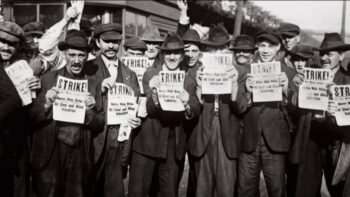
For five days in 1919, union members took control of the city of Seattle. They arguably ran it better, and certainly more justly, than it had ever been run before. ¶ The strike began when waitresses, laundry workers, streetcar workers, and more—65,000 union workers in all—walked off the job on February 6, 1919, to support striking shipyard workers. ¶ Thousands of workers volunteered to keep Seattle’s essential services operating. People were fed at 21 different locations; on February 9, volunteers served more than 30,000 meals....

New York City Monthly Review Office Closure

The Monthly Review office in New York City is presently closed due to the COVID-19 pandemic. During this period, we ask that you please email our office rather than call, if at all possible. Voice mail will be answered as we are able.

Zillah Eisenstein offers up “A Manifesto of Sorts for COVID-19”

Zillah Eisenstein offers up “A Manifesto of Sorts for COVID-19”

COVID-19 like most disease is democratic—it can affect anyone, although with differing options to respond to it. The world, including the US, is not democratic. This does not bode well. But we can move forward because simple individualism contradicts the interdependency of this COVID crisis. ‘We’ all suffer when one person circulates with symptoms—and we will flourish if we accept responsibility to isolate/distance and protect one another....

Anti-Capitalist Hotbed: Counterpunch on Cal Winslow’s “Radical Seattle”

Anti-Capitalist Hotbed: Counterpunch on Cal Winslow’s “Radical Seattle”

Popular uprisings are rarely as spontaneous as the mainstream press often makes them out to be. Instead, from the Paris Commune to the Arab Spring and beyond, they are more often the result of extended grassroots organizing, previous actions and strikes, and even legislative campaigns. The rates of participation are almost always linked to the amount of organizing that took place weeks, months and even years before the event takes place. ¶ It is this understanding that makes Cal Winslow’s recently published book Radical Seattle such an excellent history....

How capitalism interlocks with imperialism: Counterfire reviews Intan Suwandi’s “Value Chains”

How capitalism interlocks with imperialism: Counterfire reviews Intan Suwandi’s “Value Chains”

Capitalism has always been international in nature. Even reaching back to its earliest embryonic form, in the concentrations of industry and merchant capital in Renaissance Italy, capital depended upon a European-wide trading market. The system’s true emergence came in the context of the European conquest of the Americas, its trading outposts in Asia, and the establishment of the Atlantic slave trade. An international hierarchy enabled by atrocity, war and plunder has always been central to the functioning of capitalism...

Delusions of the American Revolution: Science & Society looks at “The Apocalypse of Settler Colonialism”

Delusions of the American Revolution: Science & Society looks at “The Apocalypse of Settler Colonialism”

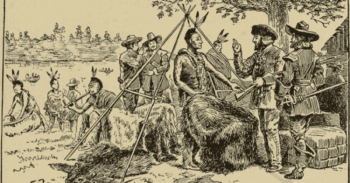
In this comprehensive study of the connections among capitalism, slavery and white supremacy, Gerald Horne, the Moores Professor of History and African American Studies at the University of Houston and the author of more than 30 scholarly books, takes a deep dive into the 17th century, revealing fallacies in what later ages have said about the earlier ones, showing the slow and steady consolidation of axes of differentiation in the service of capital, and ultimately connecting the choice in 2016 of “a vulgar billionaire” with the cross-class coalition that originated in the colonial settlements of the New World....