Category: Monthly Review Press /

How does L.A.’s racial past resonate now? Gerald Horne joins a discussion

How does L.A.’s racial past resonate now? Gerald Horne joins a discussion

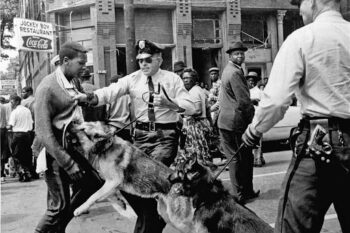
To explore what's going on now in the streets, in light of how "Black people’s lives have remained vulnerable and unprotected by the very government that abolished the institution of slavery," Marcus Anthony Hunter, chair of the department of African American Studies at UCLA, and author of three books, assembled five noted authors and journalists of color, including Gerald Horne, author of the forthcoming The Dawning of the Apocalypse...


Seattle’s General Strike 100 Years Ago Shows Us Hope for Today: Labor Notes reviews Cal Winslow’s book

Seattle’s General Strike 100 Years Ago Shows Us Hope for Today: Labor Notes reviews Cal Winslow’s book

For five days in 1919, union members took control of the city of Seattle. They arguably ran it better, and certainly more justly, than it had ever been run before. ¶ Thousands of workers volunteered to keep Seattle’s essential services operating. People were fed at 21 different locations; on February 9, volunteers served more than 30,000 meals. Milk distribution was organized at 35 locations. Garbage was picked up. No crime was reported during these five days.... ¶ Contrast Seattle 1919 with today’s unfolding horror. We’re all witnessing what it looks like when a shutdown and the provision of essential services are administered by capital and a pro-corporate government. ¶ The Seattle General Strike was not just an event in labor history. It was a testament to what workers can achieve when they organize, and it has sharp lessons for today....

The Point Is to Change It: Dollars & Sense reviews Yates’s “Can the Working Class Change the World?”

The Point Is to Change It: Dollars & Sense reviews Yates’s “Can the Working Class Change the World?”

Yates begins with a detailed description of the world-wide working class. Who they are: most wage laborers, the reserve army of labor (unemployed, involuntary part-timers and discouraged workers), unpaid reproductive workers, and most peasants and laborers. How many: several billion spread across the globe. According to Yates, there are more people in the working class than many might suppose....

Las Vegas Democratic Socialists of America review “What Every Environmentalist Needs to Know About Capitalism”

Las Vegas Democratic Socialists of America review “What Every Environmentalist Needs to Know About Capitalism”

Fred Magdoff and John Bellamy Foster’s excellent 2011 book, What Every Environmentalist Needs to Know About Capitalism, is essential reading for ecosocialists and environmentalists of any political tendency. At 160 pages, the book does an exceptional job of describing how capitalism is directly connected to ecological degradation and why its abolition is necessary in preventing ecological catastrophe. This review will attempt to summarize the fundamental arguments of the book and its case for ecosocialism. The book goes over more than discussed below, so make sure to read the whole thing for more useful information and details....

New! “The Dawning of the Apocalypse: The Roots of Slavery, White Supremacy, Settler Colonialism, and Capitalism in the Long Sixteenth Century”

New! “The Dawning of the Apocalypse: The Roots of Slavery, White Supremacy, Settler Colonialism, and Capitalism in the Long Sixteenth Century”

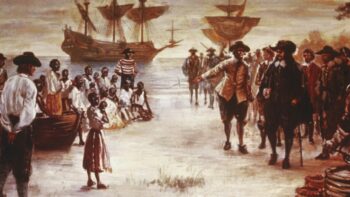
August 2019 saw numerous commemorations of the year 1619, when what was said to be the first arrival of enslaved Africans occurred in North America. Yet in the 1520s, the Spanish, from their imperial perch in Santo Domingo, had already brought enslaved Africans to what was to become South Carolina. The enslaved people here quickly defected to local Indigenous populations, and compelled their captors to flee. Deploying illuminating research, The Dawning of the Apocalypse is a riveting revision of the “creation myth” of settler colonialism and how the United States was formed....

Senior Women Web reviews “Mythologies of State and Monopoly Power” by Michael E. Tigar

Senior Women Web reviews “Mythologies of State and Monopoly Power” by Michael E. Tigar

This is a law book written for a general audience. Tigar has been a law professor most of his life; in these pages one can learn much from his vast legal and historical knowledge. ¶ Multiple chapters are spread out over five "mythologies": Racism, Criminal Justice, Free Expression, Worker Rights and International Human Rights. ¶ His discussion of these mythologies is not neutral; he has a point of view and it's generally from the left....

Gerald Horne: The History of Police in the U.S. & Connections to Slavery

Gerald Horne: The History of Police in the U.S. & Connections to Slavery

Gerald Horne, whose book The Dawning of the Apocalypse: The Roots of Slavery, White Supremacy, Settler Colonialism, and Capitalism in the Long Sixteenth Century is just out, talks to Margaret Prescod, host of Sojourner Truth Radio, about the legacy of policing in the U.S. How did it start? What impact did its history have on what's happening in policing today? And what is the inter-relationship between the legacy of slavery and genocide against Indigenous people, policing and mass incarceration practices of today?

JONUS, Journal of Nusantara Studies, reviews “Can the Working Class Change the World?”

JONUS, Journal of Nusantara Studies, reviews “Can the Working Class Change the World?”

Can the Working Class Change the World? is not written suddenly. Throughout the last decade, capitalism has been increasingly discussed and debated, both by the right and left wing. This is because many people are struggling with economic downturn, wide income gap, unemployment, poverty and environmental crisis. The Lehman Brothers collapse in 2008, almost brought down the global financial system. Later in 2011, the Occupy Wall Street movement began and spread to several countries to protest against the 1%. And in 2018, Ray Dalio, a multibillionaire who is also the founder of Bridgewater Associates, himself admits that capitalism does not function for most people. Today, the assets of the 26 richest individuals in the world is equivalent to the assets of half the world’s citizens (Elliott, 2019). But, if capitalism now has failed, the question is: who fix it?