November 1, 2025
In Aeschylus’s play
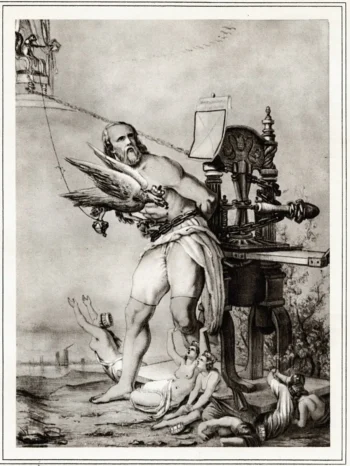
Prometheus Bound, the Prometheus is a revolutionary figure. Defying divine interdiction to bring fire to humanity, the Titan has since been adopted by thinkers from the Enlightenment to today to represent revolutionary forces in human existence. So, John Bellamy Foster asks in November’s Review of the Month, what is “Prometheanism,” and how has the term been used (and misused) in discussions of Marx, the ecological crisis, and sustainable human development?
October 1, 2025
In this interview with Xu Tao and Lv Jiayi, John Bellamy Foster discuss the history and present of ecological Marxism. Foster explores origins of the term
Anthropocene and its predecessors, the concept of degrowth, the continuing influence of metabolic rift theory, and the cutting-edge issues facing young scholars of degrowth today.
September 1, 2025
Jayati Ghosh illuminates how capitalism has exacerbated inequality not only due to market forces, but as a result of how wealthy countries and firms based within them have tilted the scales toward themselves, disenfranchising the rest of the world in the process. This pervasive economic inequality, Ghosh concludes, undermines the idea and practice of true democracy.
June 1, 2025
In this third installment of
MR's series on the MAGA movement, John Bellamy Foster explores the dramatic shift in U.S. imperialism that began with the first Trump presidency and has accelerated in his second. The shift, Foster explains, is not one driven by anti-imperialism and anti-militarism but rather represents a hard shift to the right fueled by hypernationalism and the goal of recapturing U.S. power on the world stage.
May 1, 2025
John Bellamy Foster presents a rogue's gallery of the fascist ideologues insidiously pushing the MAGA agenda, from the Heritage Foundation and its Project 2025 to neo-Nazi YouTubers and cultural influencers. "The political and ideological successes of the MAGA movement," Foster writes, "were made possible in part by a liberal-left that abandoned the working class economically and politically."
April 1, 2025
John Bellamy Foster revisits and critiques the contention that the U.S. capitalist class is not a "governing" class, or indeed a class-conscious bloc in any sense. However, he writes, the fact that the ruling-class oligarchy is now openly wielding power on the national and international stages as part of the Trump regime shows that the overwhelming political influence of the capitalist class is no longer in dispute as this alignment pushes the country deeper into neofascism.
March 1, 2025
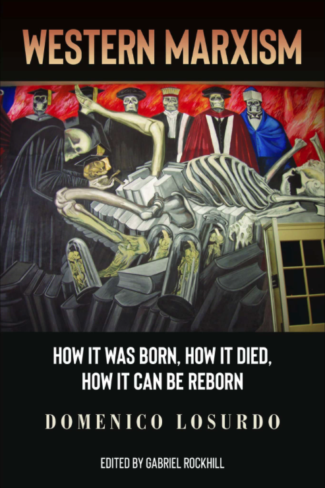
John Bellamy Foster and Gabriel Rockhill assess the history and influence of Western Marxism, defined not geographically, but by a rejection of the Marxism developed in the Soviet Union, in the Global South, and even in classical Marxism. This strain of Marxist thought, birthed in the imperial core, represents a concession to the dominance of U.S. ideology, rather than to correct the pressing issues confronting society today.
February 1, 2025
Over the last quarter century—and especially since the beginning of Israel's latest genocidal incursion into Palestine in October 2023—the term "settler colonialism" has proliferated in academic and popular discourse. In February's "Review of the Month," John Bellamy Foster connects readers to thinkers from around the globe and across time to illustrate the phenomenon of settler colonialism as a dimension of imperialism, and thus capitalism, driven by a rapacious extractivism that threatens the whole of humanity.
January 1, 2025
In January's Review of the Month, John Bellamy Foster and Brett Clark revisit the legacy of scientist and
MR author Richard Levins, from his "red diaper" infancy to his agroecological work in Cuba and his contributions to Marxian ecological thinking as a whole. "As a dialectical ecologist," they write, "Levins proposed that we ask the big questions, as part of understanding why the world came to be organized in a particular way, and how it might be different."
December 1, 2024
December's Monthly Review begins the fiftieth-anniversary celebration of Harry Braverman's seminal work, Labor and Monopoly Capital (Monthly Review Press, 1974), with this Review of the Month by John Bellamy Foster, which explores the connections between Marx's "collective worker," Braverman's "collective scientist," and the struggle against the degradation of work in the digital age.