October 1, 2026
Large-scale investment toward the good of all society, Karl Marx once wrote, "presupposes that society be able to wait." The capital that funds just and sustainable human development, in other words, must operate at time scales much longer than short-term gain and transitory profit margins. Siyuan Liu situates this idea within the Chinese notion of "patient capital" and the institutional requirements for planning a just and equitable future—and a changed horizon for capital.
September 1, 2026
Paul Buhle reviews
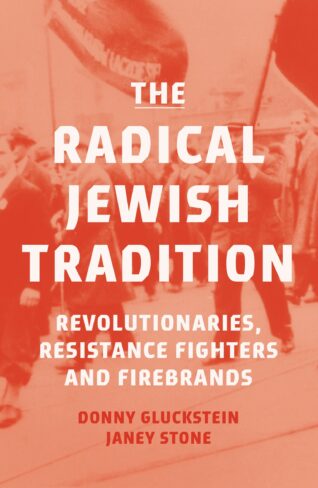
The Radical Jewish Tradition by Donny Gluckstein and Janey Stone. The book, Buhle writes, is a window onto "the antinomies of nineteenth-century Jewish life"—including the growing movement against Zionism and for socialism among Eastern European Jews. This authors, Buhle notes, also tells the story of Jewish communists in Britain, the United States, and beyond, taking into account the wide sweep of Jewish left activity globally, situating the present struggles against genocide in Palestine squarely within the legacy of radical Jews everywhere.
July 1, 2026
The world is being roiled by a crisis of meaning, leading to a pervasive sense of despair and stagnation. Helena Sheehan gives an account of the present-day epistemological nihilism resulting from the corrosion of "the foundations of knowledge production"—that is to say, the devaluing of rigorous scientific inquiry and the rise of irrationalism. Marxism provides us with both an understanding of how this crisis of cognition relates to the "Structural Crisis of Capitalism," as well as the socialist opposition that seeks to resolve its manifold contradictions.
May 1, 2026
This month's "Notes from the Editors" dissects recent attacks on historical materialism from so-called social materialism. This way of thinking, the editors write, is profoundly divorced from Marxism, in that it lacks a dialectical foundation and eliminates the ethical domain that is critical to building a revolutionary praxis.
May 1, 2026
Yiwen Chen dives deep into Frederick Engels's
Dialectics of Nature in order to give context to present-day debates surrounding the juxtaposition of the dialectics of nature and Marxist ecology. "It is hardly surprising that Engels's and Marx's ecological ideas are not entirely identical," Chen writes. "Nevertheless, their ideas do possess an inherent consistency."
April 1, 2026
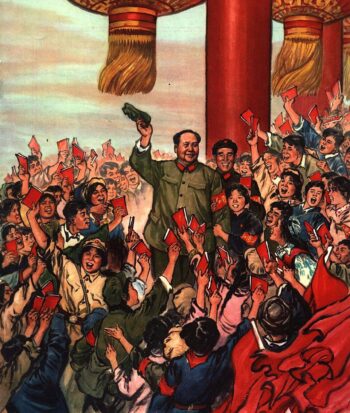
This article examines the resurgence of interest in Mao Zedong among China's youth, particularly at elite universities. This "Mao fever" reflects a complex mindset: indignation toward social inequality, uncertainty within a brutal job market, and a firm anti-imperialist and patriotic stance amidst the "New Cold War." In Mao’s legacy, a new generation is finding the guidance to navigate the sharpening contradictions of the present day.
April 1, 2026
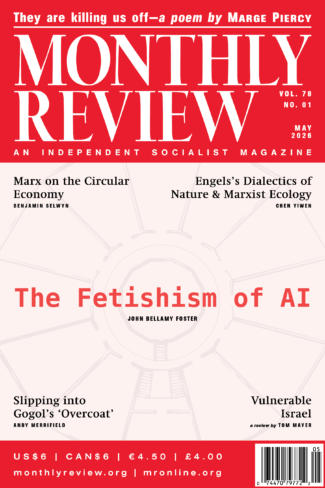
Applying Marxist labor theory to the rise of artificial intelligence and its effects on workers, Te Li presents an understanding of labor in the age of increasing reliance on algorithms and digital technologies. As Li argues: "In the civilization of general intellect labor, where the knowledge economy dominates, knowledge-intensive labor such as scientific research, technological innovation, artistic creation, and education and training will become primary forms of labor."
March 1, 2026
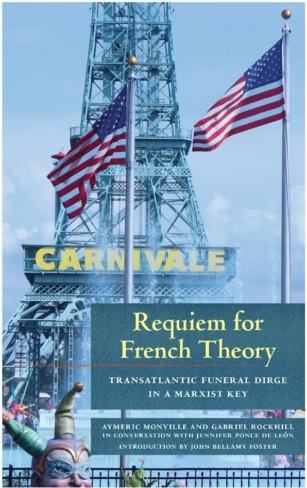
In 1966, Johns Hopkins hosted a seemingly innocuous international conference titled "The Languages of Criticism and the Sciences of Man," featuring leading figures of what would later be known as "French Theory." However, John Bellamy Foster writes, far from a simple meeting of intellectuals, this represented a "politically motivated attempt to create a beachhead for French structuralism in the United States that would counter the radicalization then taking place."
March 1, 2026
Vijay Prashad critiques the argument that colonialism was, at most, ancillary to the transition between capitalism and feudalism in Western Europe. Instead, Prashad argues, "capitalism
as it historically emerged—industrial, global, racialized, and imperial—was inseparable from colonial expropriation." This reality must fuel a Marxist conception of the global struggle for reparations for those who have been oppressed and exploited at the hands of empires past and present.
February 1, 2026
In this talk from the inaugural conference of the Society for Peace, Internationalism, and Ecology, John Bellamy Foster relates the story of Prometheus, as presented in the plays of Aeschylus, to Western Marxism's "dialectic of defeat," in which capitalism is portrayed as an unbreakable bond for the working class. Instead, Foster says, we must recognize Prometheus as a subject who is freed from the seemingly inescapable fetters imposed upon him.