October 1, 2026
Today's resurgence in U.S. imperialist interventions abroad and the concomitant so-called crisis of the "rules-based order" can be explained, Luís Eduardo Fernandes argues, through the category of "legal imperialism, which refers to how the international juridical form is internalized within societies and in the context of dependency, colonialism, unequal exchange, and monopoly capital. "International law and imperialism," Fernandes writes, "do not stand as opposing poles. They are part of the same unity.… Violence is constitutive of the juridical form."
September 1, 2026
In this 1980 talk by Joan Robinson, first published in
MR in 1983, the economist painted a stark picture of global arms race fueled by military capitalism and imperialism. "The important question," she urged, "is not whether the rate of inflation is high or low or can be brought under control but whether our generation will succeed in destroying the world…. Economics should begin to address the important issue of our impending doom."
July 1, 2026
This month's "Notes from the Editors," originally published in May by the
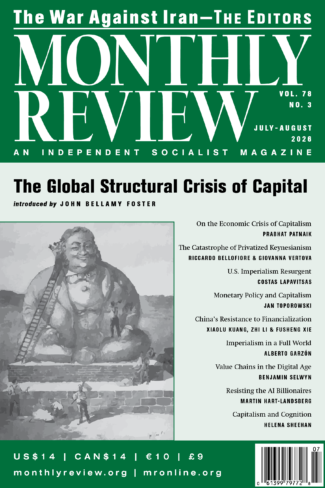
German Quarterly, explores the last few decades of U.S. belligerence in Iran, culminating in the Trump administration's recent acts of war in the region. Together with Israel, the Editors write, the United States "has entrapped itself in an imperialist war that it cannot win," thus underscoring the necessity of a global anti-imperialist peace movement.
July 1, 2026
Considering the "Structural Crisis of Capital" from the perspective of economics, Prabhat Patnaik sheds light on two major aspects that have risen to prominence in our current conjuncture. The first, rampant stagnation and unemployment, is clear and undeniable. The second, particular to the capitalism of the late twentieth century and the shedding of colonies on which imperial nations depended for wealth is particularly salient to Trump's economic strategy of economic recolonization not only through soft power, but direct military action.
July 1, 2026
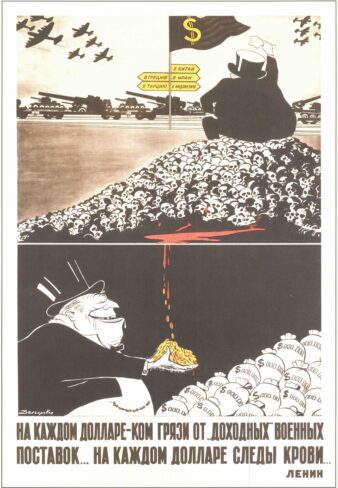
It is quite evident, Costas Lapavitsas begins, that the world is currently ensnared in geopolitical turmoil, perhaps for over a decade. In this article, Lapavitsas provides insight into the inseparable and interlocking mechanisms of dollar dominance and imperialism backed by the escalatory militarism of the second Trump administration. As Lapavitsas notes: "The dollar and the F-35—monetary coercion and military power—are two moments of a single structure of domination."
June 1, 2026
MR associate editor Brett Clark and editor John Bellamy Foster explore "the death drive of late imperialism" and its manifestations in an ecological crisis that is not parallel to, but inseparable from, increasingly open ecofascism in the United States. Drawing from Luckács's
Destruction of Reason and István Mészáros's work on imperialism, Clark and Foster present a materialist analysis that illuminates the cult of unreason so pervasive under capitalism and imperialism while pointing to a path forward that is grounded in the historical-materialist Marxist tradition.
May 1, 2026
A new poem by Marge Piercy.
May 1, 2026
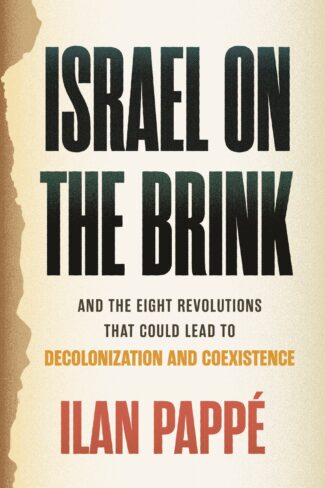
In this review of Ilan Pappé's
Israel on the Brink, Tom Mayer considers the famed historian's assessment of the increasingly precarious Zionist state. In the book, Mayer writes, readers will find a thoughtful consideration of the past, present, and potential events that could shape a new vision for Palestine.
April 1, 2026
Michael Viola explores the building of the Filipino identity in the context of U.S. imperialism. The broad-reaching effects of this "deadliest phase of imperialism," combined with pervasive anti-Asian racism in the United States, fuels the idea of a collective political project that "comes with the praxis, the power, and the price of a unique lineage" extending across an ocean and intimately connected to the dark history of U.S. militarism abroad.