May 1, 2021
We can analyze the new Biden administration, its personnel, and the policies it is likely to follow, especially on the all-important questions of the climate crisis and U.S. grand strategy toward China, by looking at the Council on Foreign Relations.
March 1, 2021
Despite all of the inevitable contradictions, China stands out in the present planetary emergency in having advanced an ambitious vision of ecological civilization with the strong support of the Chinese population. Paraphrasing C. Wright Mills on Cuba, we do not worry about China's struggle to create an ecological civilization. We worry with it.
March 1, 2021
In 1990, when renowned Indian Marxian economist Prabhat Patnaik asked "Whatever Happened to Imperialism?," once vibrant and influential schools of theories on imperialism were at a postwar historic low. When he left the West to return to India in 1974, imperialism was at the center of all Marxist discussions. But when he came back to the West merely fifteen years later, imperialism already seemed out of fashion. The retreat from the question of imperialism has marked a return of what we can call Second International politics.
March 1, 2021
In December 2002, Isabel Crook, a Canadian anthropologist who had spent most of her life in China and a longtime friend and supporter of Monthly Review, wrote a letter to the MR editors questioning the critical nature of coverage of China's capitalist road to socialism since the ascendance of Deng Xiaoping in the late 1970s. This short exchange with Harry Magdoff reflects the complex ways in which dedicated socialists sought to address changes in China and the clarity of the ideas expressed.
February 1, 2021
We remember our good friend and comrade, Leo Panitch, one of the great socialist intellectuals of all time, who died on December 19, 2020, age 75.
February 1, 2021
The Western European powers appropriated economic surplus from their colonies, materially and substantially aiding their own industrial transition from the eighteenth century onward, as well as the diffusion of capitalism to the regions of new European settlement. In the case of India, the concept of drain is based on the fact that a substantial part of its earnings was never permitted to accrue to the country; it was instead appropriated by the ruling power: Britain.
January 1, 2021
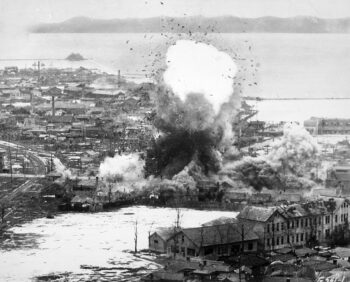
The Korean War, which broke out on June 25, 1950, can be considered the epicenter of bombing as an instrument of war. For one, it was the first—and, so far, the last—time since 1945 that the United States seriously considered using atomic weapons during the course of an imperial war. It was the first war that the United States did not win. It ended in a stalemate—an armistice—that continues until today. Kinetic fighting was suspended, but the war continues (though only by one side) by what is conveniently but simplistically called sanctions.
December 1, 2020
The United States is now in a New Cold War with Russia and China, with the focus increasingly on the latter and involving a direct challenge to U.S. hegemony over the world economy.
October 1, 2020
This special issue of Monthly Review, "China 2020," is the product of a long period of cooperation with critical Chinese Marxist scholars. This has resulted in an extensive series of articles on contemporary Chinese social and economic relations since 2012, to which most of the authors in the present issue have previously contributed. It takes on a special significance due to the growing conflict between the United States and China, making critical Marxist analysis in this area all the more important.
October 1, 2020
In the twenty-first century, all signs are pointing to another period of hegemonic struggle over the world economy, this time between the United States and China, although complicated in this case by the unique, indeterminate aspects of the post-revolutionary Chinese social formation, which is neither entirely capitalist nor entirely socialist.