October 1, 2026
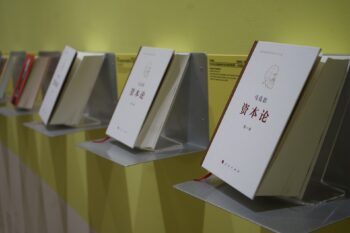
Large-scale investment toward the good of all society, Karl Marx once wrote, "presupposes that society be able to wait." The capital that funds just and sustainable human development, in other words, must operate at time scales much longer than short-term gain and transitory profit margins. Siyuan Liu situates this idea within the Chinese notion of "patient capital" and the institutional requirements for planning a just and equitable future—and a changed horizon for capital.
October 1, 2026
Paul Buhle reviews
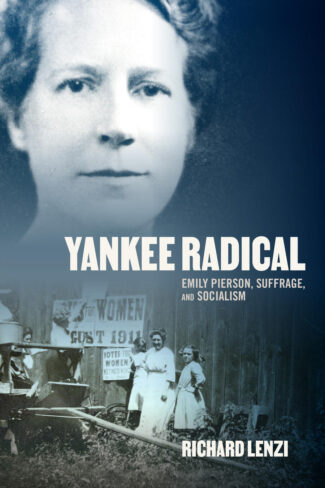
Emily Pierson: A Yankee Radical, a new biography of the eponymous Christian radical and communist organizer. As a "strong willed" woman born at the nineteenth century and living well into the twentieth, Pierson is a figure whose work spanned the fight for women's suffrage, public health, the labor movement, and the Russian, Chinese, and Cuban Revolutions, traveling to the latter countries toward the end of her life. As a writer, teacher, churchgoer, and worker, Pierson, Buhle writes, was a presence to be reckoned with throughout her lifetime.
July 1, 2026
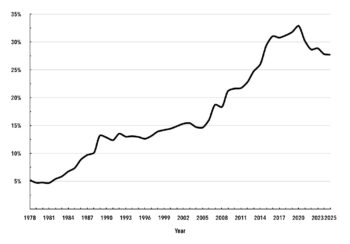
Over the last half-century, the "financial explosion"—manifest in the unrestrained expansion of financialization and its tools and institutions—has fundamentally reshaped the global economy, impacting countries throughout the Global North and South. China, however, has proven to be a distinctive case. Xiaolu Kuang, Zhi Li, and Fusheng Xie probe the question of how and why China has managed to maintain its emphasis on production above finance, and the development all above the accumulation of capital.
June 1, 2026
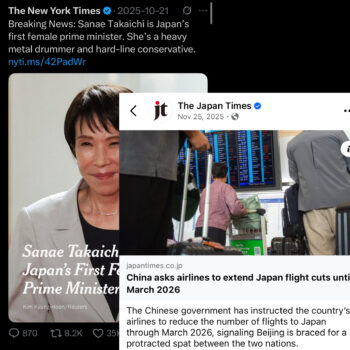
"In the contemporary era of stagnant monopoly-finance capital," Jianlu Bi and Ting Zhou begin, "the maintenance of global hegemony…necessitates the systemic colonization of digital consciousness. In examining the presentation of Sino-Japanese political tension across three media outlets, the authors describe digitally manufactured hatreds that "serve a vital imperialist function: the prevention of horizontal class solidarity" that may threaten U.S. hegemonic power in East Asia.
April 1, 2026
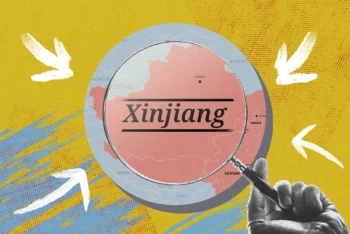
What is really happening in Xinjiang? Vijay Prashad and Tings Chak write: "There is no evidence of a policy of physical annihilation of the Uyghur peoples by the Chinese government, unlike say, direct evidence of extermination by the Israeli government against the occupied Palestinian people. There are no mass graves and no accusations of systematic killing—the hallmarks of a genocide."
April 1, 2026
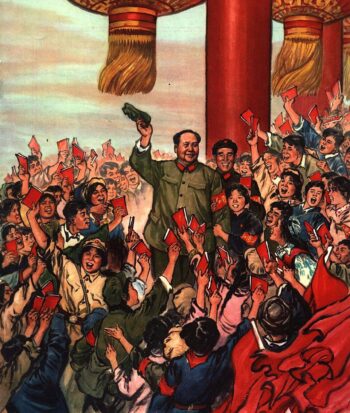
This article examines the resurgence of interest in Mao Zedong among China's youth, particularly at elite universities. This "Mao fever" reflects a complex mindset: indignation toward social inequality, uncertainty within a brutal job market, and a firm anti-imperialist and patriotic stance amidst the "New Cold War." In Mao’s legacy, a new generation is finding the guidance to navigate the sharpening contradictions of the present day.
March 1, 2026
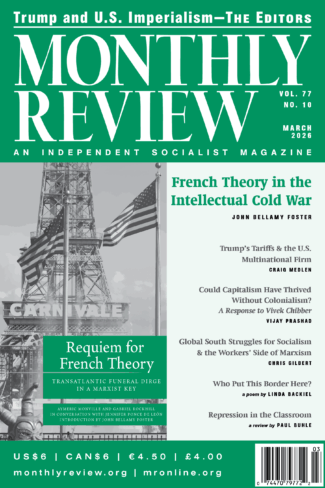
"To make sense of present developments,"
MR editors write in this month's "Notes from the Editors," "it is essential to understand the dialectic of continuity and change in U.S. imperial grand strategy." By charting the evolution from post-Second World War dominance to the collapse of the Soviet Union and the eventual demise of the "Unipolar Moment," the Editors tie the reactionary impulses of MAGA to the raw shows of imperial force driven by Trump's policies.
March 1, 2026
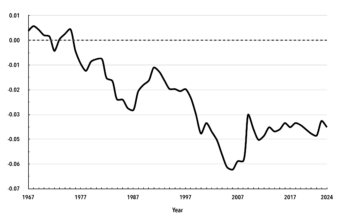
Craig Medlen dissects the logic behind the Trump administration's efforts to impose tariffs as a way to counteract "unfair" U.S. trade deficits. Situating these deficits in the longer history of U.S. trade hegemony and its crumbling position in the global economy, Medlen uses incontrovertible data to illustrate how mainstream economic orthodoxy fails to acknowledge the effects of foreign inputs that integral to the workings of U.S. monopoly capital.
February 1, 2026
Speaking before at the Opening Ceremony of the Fourth World Conference on Marxism in Beijing, John Bellamy Foster discusses the development of eco-Marxism and its relation to Marxist theory. Here, Foster argues, "eco-Marxism as we know it today is not simply another branch of Marxism," but is a pathway to the projects of complete socialism and ecological civilization.
January 1, 2026
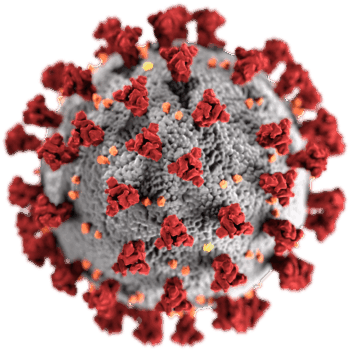
David E. Perlman and Ashly Vigneault explore the linkages between humanity's metabolic rift with nature and the accelerating emergence of epidemics, which are fundamentally related to the capitalist mode of production and concomitant alienated social metabolism. Using historical and epidemiological research that extends from the rise of the bubonic plague to the emergence of COVID-19, Perlman and Vigneault are able to deftly tie these concepts to the breach of planetary boundaries that threatens all of humanity.