January 1, 2025
Against a backdrop of political turmoil and a popular uprising, Aasim Sajjad Akhtar examines how the contradictions of liberal democracy have played out in Pakistan. Exploring the dynamic between the U.S.-backed, militarized Pakistani political elite and the rise of reactionary politician Imran Khan, Akhtar shows how Khan has employed empty anti-imperialist rhetoric to mobilize a discontented populace—and how this could be counteracted with a genuine anti-imperialist movement.
January 1, 2025
A new poem by Marge Piercy.
October 1, 2024
Shakespeare's Richard III famously immortalized the eponymous king as a scoundrel and tyrant, thirsty for power and blood. Using economic data spanning centuries, Thomas Lambert questions the truth of this spurious reputation: Was Richard III indeed a murderous despot bent on absolute rule? Or a myth propagated by Tudor allies aiming to ingratiate themselves to the new dynasty?
September 1, 2024
In an interview with Brazilian magazine Margem Esquerda, John Bellamy Foster shares with Fabio Querido, Maria Orlanda Pinassi, and Michael Löwy the formative experiences that contributed to his work as a young activist and, later, a preeminent scholar of ecological Marxism. The interview concludes with a message to the ecological left in Brazil and elsewhere: "Whatever solutions there are to the present planetary crisis must, in historical-materialist terms, arise from concrete social formations, on the basis of which the new revolutionary transformations will take place."
June 1, 2024
What is "Red Africa"? Through an extended treatment of Kevin Ochieng Okoth's Red Africa: Reclaiming Revolutionary Black Politics (Verso, 2023), Vijay Prashad and Mikaela Nhondo Erskog illuminate the potential for a reinvigorated socialist politics in Africa. In turning away from Afropessimism and Decolonial Studies, the authors catalog the on-the-ground realities at play in pan-African and Marxist social movements today.
June 1, 2024
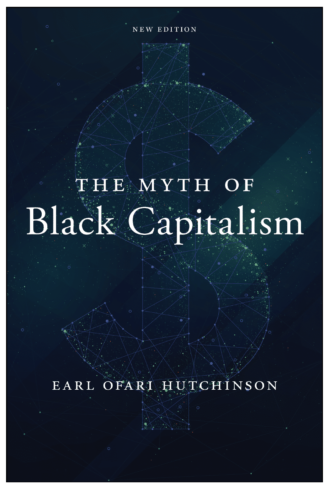
The Myth of Black Capitalism, Earl Ofari Hutchinson reflects on the relevance of his work more than fifty years after its initial publication. Even despite the promotion of wealthy Black individuals as model capitalists and COVID recovery schemes purported to help Black entrepreneurs, "Little had changed except the desperation of countless numbers of near penniless, distressed Black small business owners."
April 1, 2024
In a world of convergent crises, leading voices have called for radical changes to food, financial, and energy systems. However, these fail to account for a deeper systemic crisis: unfettered and accelerating of capital accumulation. In this article, M. Graziano Ceddia and Jacopo Nicola Bergamo provide a more comprehensive narrative, one which emphasizes capital as a social relation—and the potential of the environmental proletariat to dismantle its dominance.
May 1, 2023
The success of the telecommunications industry in India has been heralded as a "miracle." But a miracle for whom? The answer, Rahul Varman writes, has clearly been the capitalist class, who, over three decades, have amassed tremendous wealth and power through the machinations of large firms, in collusion with the Indian government.
October 1, 2022
New York City is facing a crisis in its urban ecosystem. As wealthy developers and real estate mega-projects rupture the connections between people and the social and spatial webs making up the city's once-rich undergrowth, how can city-dwellers nurture and restore their metropolitan habitat?