September 1, 2023
What is the New Washington Consensus? In this month's Notes from the Editors, MR editors discuss Washington's fundamental shift in its approach to China, moving from an emphasis on neoliberal globalization toward a new, more aggressive policy pursuing U.S. military and industrial supremacy.
July 1, 2023
Chris Gilbert examines the ecological aspects of Venezuela's project of communal socialism, as well as its relation to the country's inherited extractive economy. These democratically run communities present an alternative to the extractivist and productivist social relations driving the planet to ruin.
July 1, 2023
As the impending planetary crisis looms ever-closer, Martin Hart-Landsberg proposes a new focus on the Second World War industrial conversion experience, in which production and consumption were guided by central planning agencies. These successes and pitfalls of this period provide many useful lessons for activists and organizers working toward planned degrowth.
June 1, 2023
As the Pentagon gains approval for yet another record-breaking budget, the editors examine a perennial question: Why does the United States oligarchy need such an outsized military machine in the modern era? The answer is found in the current era of naked imperialism, accompanied, as always with deadly militarism.
May 1, 2023
This month, MR editors examine elements of the New Cold War rarely discussed in the mainstream media: the U.S. sabotage of the Nord Stream pipeline, which ensured Europe's continued reliance on U.S. natural gas, and U.S. plans to transport B61-12 nuclear warheads to locations within striking distance of Russian targets.
May 1, 2023
The working class is being robbed, both through outright expropriation and the more hidden exploitation of countless workers who are struggling to make ends meet while capitalists pocket the surplus value they produce. Fred Magdoff and John Bellamy Foster dissect the neoliberal assault on the working class that is spurring a new generation of labor organizing.
May 1, 2023
Lula's electoral victory may have reinvigorated the Brazilian left, but the destruction wrought by ultraconservative ex-president Jair Bolsonaro presents a monumental task for the new government. Rosa Marques and Paulo Nakatani review the challenges Lula has faced with an eye to those still to come.
May 1, 2023
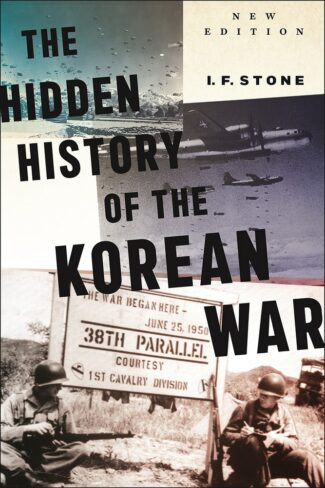
First published in 1952, I. F. Stone's Hidden History of the Korean War was a stunning indictment of the U.S. war machine and the mass media's unquestioning acceptance of the government's deception. In their new introduction, Tim Beal and Gregory Elich explore Hidden History's continuing relevance to current events, including the rapidly escalating New Cold War.
May 1, 2023
In this prescient article from 1995, former MR editors Harry Magdoff and Paul M. Sweezy show that, through their own profligacy, the ruling classes have lost their capacity for political rule. The way forward, Magdoff and Sweezy write, is an "organized, militant struggle," and with victory necessarily leading to the overthrow of capitalist rule.
April 1, 2023
"There is no longer any question that the United States is waging a New Cold War," MR editors write in this month's "Notes from the Editors." This war, waged not only against Russia, but increasingly against China, whose approach to global governance is seen as a threat to U.S. imperialism.